
Blooming
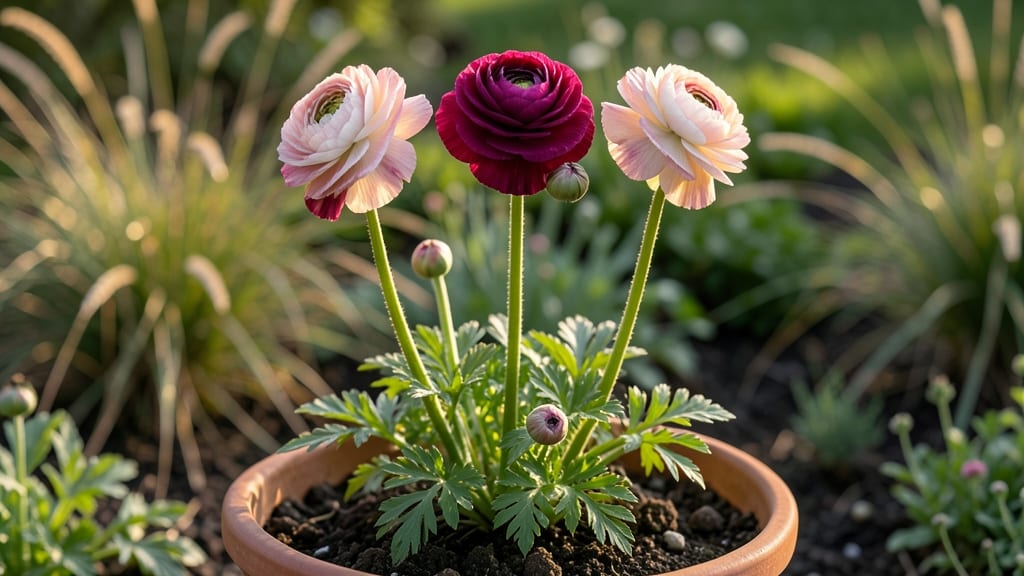
Ranunculus do not bloom all summer: most varieties flower primarily in early to mid-spring, with some heat-tolerant hybrids reblooming briefly in late summer or fall depending on your growing zone and care routine.
Ranunculus are cool-season flowers at heart, which means their natural bloom cycle aligns with spring's milder temperatures. 🌸 The classic varieties—like the papery-layered 'Persian' types—typically peak in March through May, then fade as summer heat arrives.
Even heat-tolerant hybrids usually only extend blooming into early autumn, especially in cooler regions like USDA zones 5-7.
What's interesting is how climate plays a role: gardeners in Southern California might see a second flush in late summer, while those in the Midwest may only get one spring display unless they take proactive steps like deadheading or adjusting watering schedules.
For those hoping to enjoy ranunculus longer, the key lies in variety selection and maintenance. Cool-season types will naturally decline as temperatures rise, but heat-tolerant hybrids can be coaxed into reblooming with proper care—think consistent moisture, afternoon shade during peak heat, and regular deadheading to encourage new buds.
The trade-off? You'll likely sacrifice the dramatic spring displays for more modest late-season blooms. It's all about managing expectations while maximizing what each season offers.
💡 In This Article
- Ranunculus Bloom Seasons by Variety and Climate
- Extending Ranunculus Blooms: Pruning and Care Tips
Ranunculus bloom seasons by variety and climate
Ranunculus are fundamentally cool-season flowers, meaning their biological clock syncs with spring's moderate temperatures—typically 50-65°F during the day and cooler nights. This is why most varieties peak between late March and early May, when days lengthen but haven't yet reached summer's intense heat.
The classic Persian ranunculus, with its delicate layered petals, follows this pattern precisely—its buds form in response to the increasing daylight of early spring, a process called vernalization, where cold exposure triggers flowering.
The key difference lies in heat tolerance: traditional ranunculus varieties wilt under 85°F+ temperatures, while modern hybrids (like 'Penny' or 'Buttercup' series) can handle up to 90°F with afternoon shade.
In USDA zones 8-10, these hybrids might produce a second, smaller bloom cycle in late summer (August-September), but the flowers will be 30-50% smaller than spring displays and less vibrant.
For example, a 'Persian White' ranunculus might yield 2-inch blooms in spring but only 1-inch flowers in fall—this shrinkage occurs because the plant diverts energy to bulb storage rather than flower production.
Climate plays a surprising role in bloom timing. In coastal regions (like Pacific Northwest), where summers are mild (75°F average), ranunculus may continue blooming into June. Meanwhile, inland areas with hotter summers (e.g., Arizona) see spring blooms fade by early May unless gardeners provide shade cloth or adjust watering.
The USDA zone 5-7 sweet spot offers the longest natural bloom window—often 6-8 weeks—because the gradual temperature rise aligns with the plant's ideal conditions. 🌿
Variety selection is your first tool for extending blooms. Cool-season types (like 'Stargazer' series) are best for spring displays, while heat-tolerant hybrids (e.g., 'Penny' series) are your bet for late summer.
Even within hybrids, color matters: darker petals (e.g., deep reds) absorb more heat and may bloom 1-2 weeks later than pastels. For example, a 'Buttercup Pink' ranunculus might start blooming in early April, while a 'Black Velvet' variety could wait until mid-April in the same climate.
What most gardeners overlook is the soil temperature impact—ranunculus bulbs need soil at 55-60°F to sprout. In warm climates, planting bulbs in fall (October-November) ensures they experience winter chilling, which primes them for earlier spring blooms.
Conversely, in cold zones (USDA 3-4), bulbs planted in late winter (February) may bloom 2-3 weeks later because the ground stays frozen longer. This timing difference explains why Northern gardeners often see ranunculus in May, while Southern growers enjoy them by April.
Here's the trade-off: while heat-tolerant hybrids can rebloom, they rarely match spring's abundance. A single stem in late summer might produce 3-5 flowers compared to 10-15 in spring. The secret to maximizing late blooms?
Plant two batches: one in fall for spring, another in early summer for autumn. This staggered approach mimics nature's rhythm while giving you 3-4 months of total bloom time. 💫