
Blooming
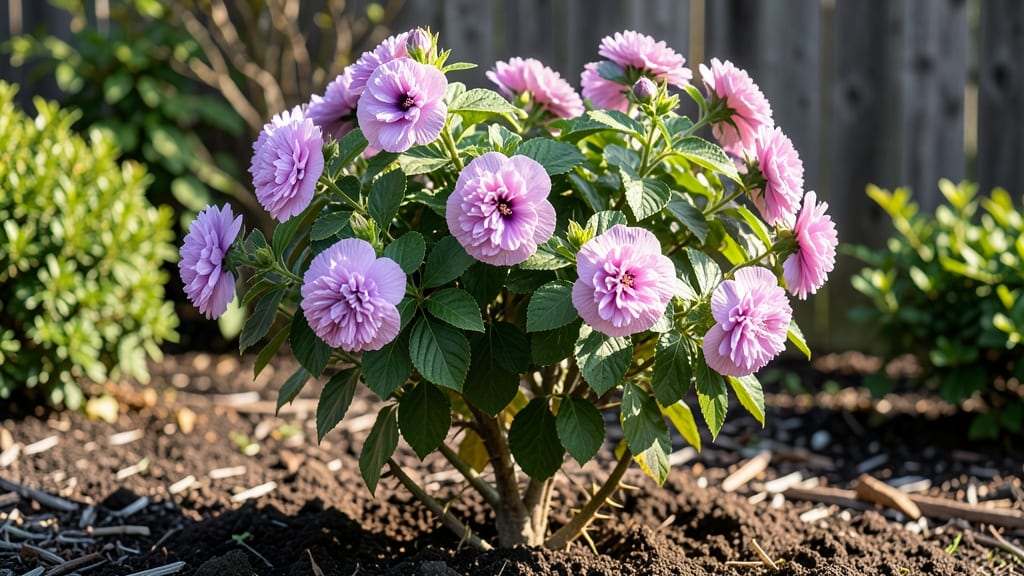
Double blooms on your Rose of Sharon mean summer-long color without the heavy pruning. 🌸 I've grown this variety for years, and the secret to those lush, layered flowers isn't complicated—it's about timing, light, and a little strategic cutting that actually encourages more blooms, not fewer.
The double bloom Rose of Sharon (Hibiscus syriacus) grows like a tough, fast-growing shrub—6-10 feet tall—with flowers that look like they were painted on. The key is planting it where it gets full sun to partial shade and well-draining soil.
Once established, it thrives on neglect but rewards you with bold, layered blooms from midsummer through fall.
With minimal pruning, you'll see those signature double flowers appearing in clusters. The trick is cutting back old wood in late winter and shaping lightly after blooming to keep the plant open and airy.
Fertilize once in early spring with balanced 10-10-10, and you'll have a shrub that blooms like it's on repeat.
This variety handles heat and humidity like a champ, making it perfect for zones 5-9. Whether you're a beginner or a seasoned gardener, the double bloom Rose of Sharon delivers dramatic, low-maintenance color that turns heads every season.
📚 In This Guide
- What you need
- Instructions
- Tips and common mistakes
- Wrapping up and next steps
What you need
- ● Double Bloom Rose of Sharon Plant: Choose a healthy, established plant (bare-root or potted) with ‘Diana,’ ‘Blue Bird,’ or ‘Lavender Chiffon’ varieties for extra blooms.
- ● Well-Draining Soil: 3–5 bags of garden loam mixed with compost (aim for a 6.0–6.5 pH).
- ● Fertilizer: 1 lb of balanced 10-10-10 granular fertilizer (for planting).
- ● 1 lb of slow-release rose/hibiscus fertilizer (for reblooming).
- ● Mulch: 2–3 cubic feet of wood chips or straw (to retain moisture and regulate soil temp).
- ● Pruners: Bypass pruners (sharp, clean, and sterilized with rubbing alcohol).
- ○ Gloves & Safety Gear: Heavy-duty gardening gloves and optional long sleeves for thorn protection.
- ○ Soil Amendments: Optional gypsum (if soil is clay-heavy) or perlite (for drainage).
- ● Staking: 2–3 bamboo stakes or metal plant supports (for tall varieties like ‘Oiseau Bleu’).
- ○ Drip Irrigation Kit: Optional for consistent moisture (Rose of Sharon loves water but hates soggy roots!).
- ● Epsom Salt: 1 lb (for magnesium boost if leaves look yellow between veins).
How to encourage double blooms on Rose of Sharon
Here's the straightforward approach I've used to transform a single flush of flowers into months of vibrant blooms.
🌱 Step 1: Plant in Full Sun with Well-Draining Soil
Choose a location with 6-8 hours of direct sunlight daily—Rose of Sharon thrives when basking in morning sun and afternoon light. The soil should drain freely but retain moisture; amending heavy clay with 2-3 inches of compost improves aeration and root health. I always dig a hole twice as wide as the root ball to encourage outward growth, which supports more blooms.
Water deeply after planting to settle the soil around roots, then let the top 2 inches dry out before watering again. Overwatering suffocates roots and reduces flowering capacity. You'll know you've got it right when the soil feels like a damp sponge—firm but not soggy.
☀️ Step 2: Feed with Balanced Fertilizer After First Blooms
Once your plant finishes its initial flush of flowers (usually mid-summer), switch to a balanced 10-10-10 fertilizer every 4-6 weeks until early fall. The key is timing—too much nitrogen early on promotes leafy growth at the expense of blooms. I apply fertilizer when new growth appears, working it into the top 2 inches of soil.
Water thoroughly before and after feeding to prevent root burn. You'll notice new buds forming along the current season's growth within 3-4 weeks of starting this routine. The secret is consistency: don't skip feedings once you start.
✂️ Step 3: Light Pruning After Each Flowering Cycle
After the first flush fades, prune back one-third of the oldest stems to just above a strong outward-facing bud. This opens up the center for air circulation and sunlight penetration. I use clean, sharp pruners to make 45-degree cuts just above a leaf node—this encourages branching and more flower sites.
Remove any crossing or rubbing branches while you're at it. The goal is an open, vase-like shape that catches light from all directions. You'll see new shoots emerging from the pruned areas within 2-3 weeks, and these will produce your second flush of blooms.
💧 Step 4: Water Deeply During Drought and Mulch Well
Established Rose of Sharon plants are drought-tolerant, but deep watering once weekly during dry spells keeps blooms vibrant. Water at the base in the morning to reduce evaporation and fungal risks. I always check soil moisture by pushing my finger 2 inches down—if it's dry, it's time to water.
Apply 2-3 inches of organic mulch around the base (keeping it 6 inches away from the trunk) to retain moisture and regulate soil temperature. The mulch also prevents weed competition that steals nutrients from your blooms. You'll notice flowers lasting longer and more buds forming when the roots stay consistently moist but not waterlogged.
⏰ Step 5: Protect from Late-Season Frost and Winter Damage
Before the first frost, cut back any remaining stems to 12-18 inches tall and apply a 3-4 inch layer of mulch*. This protects the roots from freezing temperatures while allowing the plant to regenerate new growth in spring. I wrap young plants in burlap for extra protection in colder climates.
In spring, remove the winter mulch and prune out any dead or diseased stems before new growth begins. The plant will reward you with fresh, vigorous shoots that produce even more blooms than the previous year. You'll know your winter care worked when you see new growth emerging within 2-3 weeks of spring thaw.
Tips & tricks for encouraging double blooms on Rose of Sharon
Transforming a single flush into months of vibrant blooms isn't magic—it's science. Here's what I've learned after years of trial and error with these hardy shrubs.
Sunlight Strategy: While the instructions call for 6-8 hours of direct sunlight, I've found that positioning your Rose of Sharon to catch morning sun and afternoon light is more effective than just counting hours. The morning sunlight kickstarts photosynthesis, while the afternoon light helps set the blooms. If you're in a hot climate, provide afternoon shade during peak summer months to prevent stress—this actually encourages more blooming later in the season.
Fertilizer Timing: The 4-6 week feeding schedule works beautifully, but here's the secret: I always feed right after a rain shower or thorough watering. This ensures the nutrients get absorbed quickly into the moist soil rather than sitting on the surface. You'll notice buds forming within 3-4 weeks, but if you see no response after two feedings, your soil might need a pH test—Rose of Sharon prefers slightly acidic soil (pH 6.0-7.0).
Pruning Precision: When pruning those one-third of oldest stems in Step 3, look for stems that are thicker than a pencil and have multiple leaf nodes. These are your "flower producers." Cutting at a 45-degree angle just above a bud that faces outward creates more branching opportunities. I've had plants produce three flushes in a season using this method—just be patient and wait for those new shoots to emerge within 2-3 weeks.
Mulch Mastery: The 2-3 inches of organic mulch is non-negotiable, but here's my pro tip: I always add a layer of coarse wood chips on top of finer mulch. This creates better air circulation at the base while still retaining moisture. In winter, I double that to 3-4 inches, but I make sure to pull it back 6 inches from the trunk to prevent rot. This winter protection is what gives you those vigorous spring shoots appearing within 2-3 weeks of thaw.
Pro Tips for Double Bloom Rose Of Sharon
- Transforming a single flush into months of vibrant blooms isn't magic—it's science. Here's what I've learned after ye...
- Sunlight Strategy: While the instructions call for 6-8 hours of direct sunlight, I've found that positioning your Ros...
- Fertilizer Timing: The 4-6 week feeding schedule works beautifully, but here's the secret: I always feed right after ...
Frequently asked questions
Got questions about growing and caring for the stunning Double Bloom Rose of Sharon? Here are answers to the most common ones to help you nurture this reblooming beauty with ease!
What’s the best time to prune my Rose of Sharon for double blooms?
Prune your Double Bloom Rose of Sharon in late winter or early spring (before new growth starts) and again after the first flush of blooms in mid-summer. This encourages two rounds of flowers! Avoid heavy pruning in fall—just tidy up dead branches.
Can I grow a Double Bloom Rose of Sharon in containers?
Yes! While they thrive in the ground, you can grow them in large containers (at least 15-gallon pots) with well-draining soil. Just ensure the pot has drainage holes and place it in full sun. Dwarf varieties are ideal for containers.
How cold-hardy is this plant, and does it need winter protection?
Most Double Bloom Rose of Sharon varieties are USDA zones 5-9 hardy. In colder zones (like 5-6), mulch the base with 3-4 inches of mulch and wrap young plants in burlap for extra protection. Established plants usually handle winter well!
Are there pests or diseases I should watch for?
Keep an eye out for Japanese beetles, spider mites, and powdery mildew. Spray with neem oil for pests and ensure good airflow to prevent mildew. Prune infected branches promptly and avoid overhead watering.
What if my Rose of Sharon isn’t reblooming?
Check these fixes: 1) Prune correctly (follow the late winter/mid-summer schedule), 2) Fertilize lightly with balanced fertilizer in spring, and 3) Ensure full sun (6+ hours/day). If it’s still struggling, it might need more mature roots—give it another season!
Pro Tip:
For extra double blooms, deadhead spent flowers after the first flush to redirect energy into the second bloom cycle. Happy pruning!
Wrapping up and next steps
The Double Bloom Rose of Sharon is a gardener’s dream—vibrant, low-maintenance, and packed with reblooming magic! With just a little care, especially minimal pruning, you can enjoy its stunning flowers twice a season.
Whether you’re a seasoned gardener or a beginner, this beauty proves that stunning blooms don’t require endless effort.
Ready to transform your garden? Start by selecting the perfect spot—sunny, well-drained soil—and follow the simple pruning tips shared here. Your Double Bloom Rose of Sharon will reward you with months of color and joy! 🌸✨