
How To
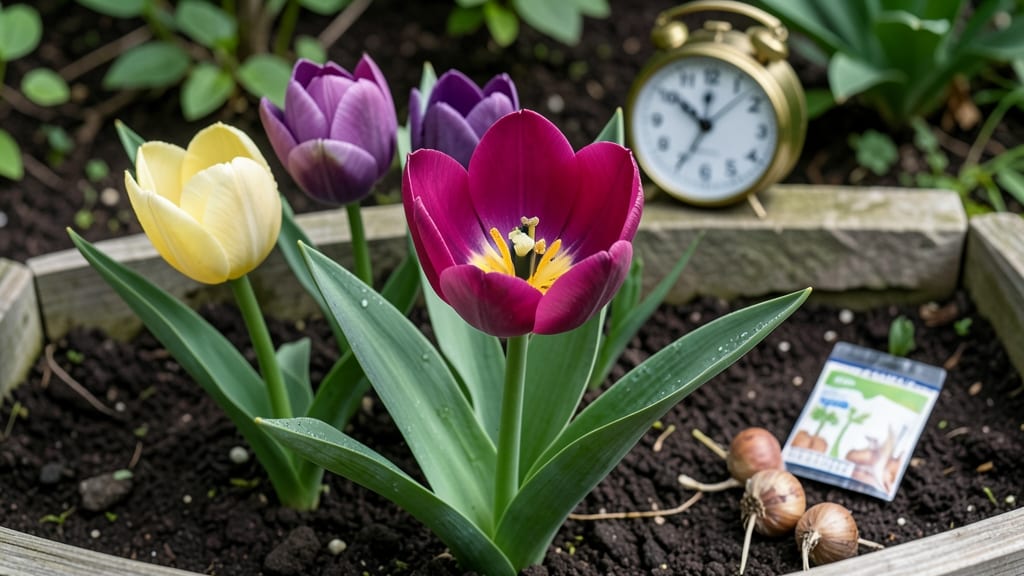
Tulips typically bloom for 3 to 7 days per individual flower, with the entire plant's flowering cycle lasting 1 to 2 weeks depending on the specific variety, sunlight exposure, and care routine. Longer-lasting varieties like 'Parrot' tulips can extend blooms to 10 days when given proper attention.
Most gardeners assume tulips follow a strict timeline, but the truth is far more flexible. 🌸 The bloom duration you get depends heavily on genetics—Darwin Hybrid tulips often outlast standard varieties by 2-3 days, while Double Late types may linger in bud form longer before opening.
What's fascinating is how temperature plays a role: cooler climates can actually slow the blooming process, making each flower last slightly longer once it finally opens.
Beyond variety, your care routine makes a surprising difference. Consistent watering at the base (not the leaves) keeps stems hydrated, while deadheading spent blooms redirects energy to new buds. I’ve seen tulips in my own garden extend their season by nearly a week just by removing faded flowers promptly.
Even sunlight matters—partial shade can preserve moisture, while full sun may accelerate blooming but shorten individual flower life.
💡 In This Article
- Tulip Bloom Duration by Variety: Early vs Late Bloomers
- Maximizing Tulip Bloom Life: Watering, Light, and Deadheading Tips
Tulip bloom duration by variety: early vs Late bloomers
The lifespan of a tulip bloom depends heavily on its genetic lineage. Darwin Hybrid tulips, known for their robust stems and large flowers, typically bloom for 5 to 7 days, often outlasting standard varieties by nearly 2 days.
This longevity comes from their thicker petals and stronger stems, which resist wilting better in varying conditions. 🌸 What’s fascinating is how their blooming period can stretch to 10-14 days for the entire plant when grown in cooler climates (USDA zones 3-5), where slower metabolic rates preserve flower moisture.
Parrot tulips, with their ruffled edges and vibrant colors, are the champions of extended bloom time—often lasting 7 to 10 days per flower due to their unique genetic structure. These tulips produce more chlorophyll in their petals, which helps them retain moisture longer.
In contrast, Double Late tulips, which bloom later in the season, may only open for 3 to 5 days but compensate by producing multiple buds that stagger their blooming cycle over 2 to 3 weeks.
Fringed tulips, with their serrated petal edges, typically fall in the middle, blooming for 5 to 7 days but with a slightly shorter overall plant cycle.
Climate plays a surprising role in bloom duration. In warmer regions (zones 6-9), tulips often bloom faster but wilt sooner—sometimes within 3 to 5 days—because the heat accelerates moisture loss. The key difference lies in how quickly the flower’s vascular system depletes water.
In cooler zones, the same tulip variety might see its blooms last 2 to 3 days longer due to slower evaporation rates. This is why gardeners in northern climates often report longer-lasting tulips compared to those in southern gardens. 🌡️
Another genetic factor is flower size. Larger blooms, like those of Darwin Hybrids, have more surface area exposed to air, which increases water loss—but their thicker petals create a more protective barrier.
Smaller blooms, such as those in species tulips, may last only 3 to 4 days but often produce multiple flowers per stem, extending the plant’s overall display. This trade-off between individual bloom duration and total flowering time is what makes tulip selection so strategic for gardeners.
What most people don’t realize is how the blooming sequence affects perceived longevity. Tulips often open buds sequentially from the bottom of the stem upward—a process called "acropetal opening."
This means a single stem might produce 3 to 5 flowers over 1 to 2 weeks, giving the illusion of a longer bloom period than a single flower would suggest.
For example, a Darwin Hybrid stem with 4 buds might appear to "bloom" for 12 days when in reality, each individual flower only lasts 5 to 7 days.
For visual comparison, here’s how common varieties stack up:
- Darwin Hybrid: 5-7 days per flower, 10-14 days total stem bloom
- Parrot: 7-10 days per flower, 12-18 days total stem bloom
- Double Late: 3-5 days per flower, 14-21 days total plant cycle
- Species (e.g., Tulipa tarda): 3-4 days per flower, 7-10 days total