
Propagation
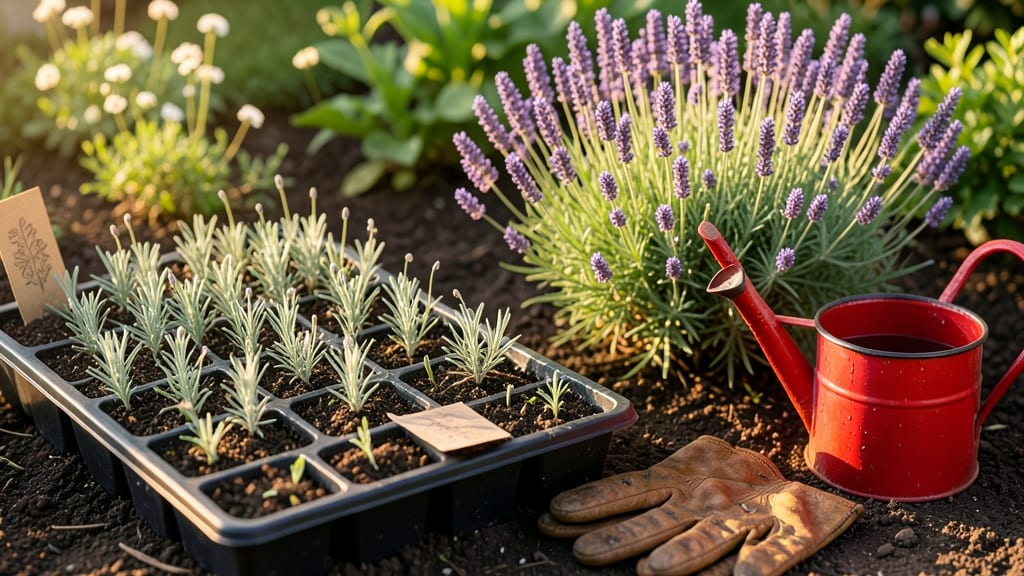
Growing lavender from seed to bloom typically takes 1-3 years, with most varieties needing two full growing seasons before producing flowers. Hardy types like English lavender may bloom in as little as 1-2 years in cooler zones (5-7), while Mediterranean varieties like Spanish lavender often require 3 years or longer in warmer climates. Seed-started plants mature more slowly than cuttings or nursery-grown lavender.
This timeline reflects lavender's unique growth pattern—it prioritizes establishing a strong root system before flowering, which is why seed-grown plants take longer than propagated varieties. 🌱 For example, 'Hidcote' lavender often blooms faster in cooler climates, while 'Grosso' may need extra time in heat-prone areas.
The key factors are your local USDA zone, soil drainage, and sunlight exposure—all of which can shave months off the waiting period if optimized properly.
If you're eager to see blooms sooner, consider starting with nursery plants instead of seeds, as they skip the early growth stages. Even with seeds, proper care like well-draining soil and minimal fertilization can help lavender reach maturity faster.
Just remember: patience pays off when it comes to lavender's fragrant rewards!
💡 In This Article
- Lavender Germination and Growth Stages to First Bloom
- Speeding Up Lavender Blooms: Variety and Climate Hacks
Lavender germination and growth stages to first bloom
The journey from lavender seed to first bloom begins with a 6-12 month germination and seedling stage, where the plant focuses entirely on developing its root system and early foliage.
Unlike many annuals, lavender seeds contain a hard outer shell that requires stratification (cold treatment) for 2-4 weeks to break dormancy—this mimics winter conditions and signals the seed it's safe to sprout.
Once germinated, seedlings produce their first true leaves (not the initial cotyledons) after about 4-8 weeks, marking the start of photosynthesis-driven growth.
What most gardeners overlook is that lavender's flowering mechanism is triggered by a combination of day length and temperature thresholds. For example, English lavender (Lavandula angustifolia) typically needs 10-12 hours of daylight and daytime temperatures between 60-75°F to initiate bud formation.
In contrast, Mediterranean varieties like Spanish lavender (Lavandula stoechas) often require longer daylight exposure (14+ hours) and warmer conditions (75-85°F)—explaining why they bloom later in cooler climates.
The plant won't flower until its root system reaches a depth of at least 12-18 inches, which can take 9-15 months depending on soil conditions.
The first visible sign of progress is the emergence of woody stems in the second year, which signals the plant is mature enough to support flower spikes.
Here's where climate plays a critical role: In USDA zones 5-7, English lavender often blooms in its second spring (18-24 months total) because cooler temperatures slow early growth, allowing roots to develop more gradually.
Meanwhile, in zones 8-10, the same variety might take 2.5-3 years because rapid spring growth can stress the plant before it's ready to flower.
One fascinating mechanism is how lavender's flowering hormones (florigen proteins) respond to environmental cues. When day length increases in spring, the plant's apical meristems (growth points) receive signals to shift from vegetative growth to reproductive mode.
However, if temperatures spike above 90°F during this transition, the process stalls—this is why lavender often skips blooming in its first year in hot climates. The plant essentially "waits" until conditions are optimal, which can push the timeline to 3 years or more.
To visualize the progression, imagine a lavender seedling in zone 6: Year 1 focuses on root and stem development (no flowers), Year 2 produces woody stems and small buds (first blooms appear in late spring/early summer), and Year 3 reaches full maturity with abundant flowers.
The key takeaway is that lavender's slow start is an evolutionary adaptation—its deep roots help it survive drought, and delayed flowering ensures the plant has enough energy to produce fragrant, viable seeds.
For those in warmer climates, the solution lies in strategic planting: Sow seeds in early fall (not spring) to take advantage of winter's natural stratification, then provide afternoon shade during the first summer to prevent heat stress.
This approach can shave off 6-12 months from the blooming timeline by aligning growth stages with favorable conditions.