
Blooming
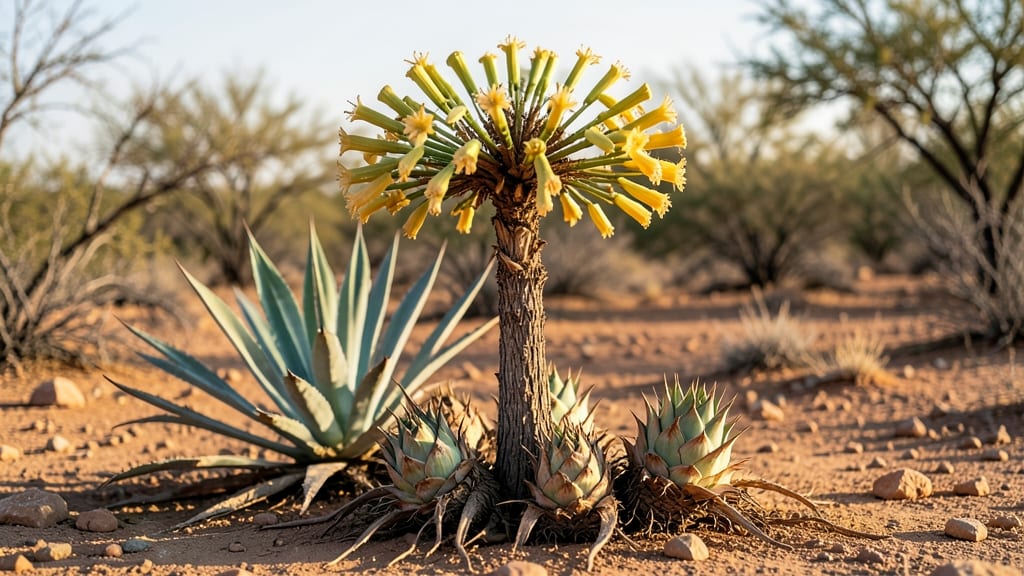
Your agave’s final showstopper is also its greatest gift—a death bloom that produces pups guaranteed to outlive the parent. 🌱 I’ve watched my own agaves go through this dramatic cycle, and the pups that emerge are the real stars of the show.
The mother plant’s dramatic exit isn’t failure—it’s nature’s way of ensuring survival through offsets that thrive where the original might not. This process works best with cold-hardy varieties like Agave parryi or Agave utahensis, which can handle frost and still produce strong pups.
The key is timing: wait until the mother plant has fully bloomed and dried out before removing pups, usually in late summer or early fall. Each pup needs its own space—crowding them leads to weak, leggy growth that struggles to establish.
You’ll end up with low-maintenance, drought-tolerant plants that multiply your collection for free. The first year focuses on root development, so keep soil moist but not soggy and shield young pups from harsh winter winds. By spring, they’ll be ready to take center stage in your garden or pots.
Confession: I’ve lost track of how many pups I’ve transplanted over the years, but the ones I’ve nurtured through their first winter always reward me with bold, architectural growth. Here’s how to make sure yours do too.
📚 In This Guide
- What you need
- Instructions
- Tips and common mistakes
- Wrapping up and next steps
What you need
- ● Cold-hardy agave pups: 3–5 healthy pups (3–6 inches tall) from varieties like Agave parryi, Agave utahensis, or Agave americana (post-bloom or not).
- ● Well-draining soil: 3–5 gallons of cactus/succulent mix (50% potting soil, 30% perlite, 20% coarse sand).
- ● Containers: 2–3 individual pots (6–8 inches wide) with drainage holes or a single large tray (12+ inches) for communal planting.
- ○ Rooting hormone (optional but helpful): 1 small bottle (e.g., Clonex or Rootone).
- ● Watering can or spray bottle: With a fine rose nozzle for gentle hydration.
- ● Pruning shears or knife: Sterilized for cutting pups from the parent plant.
- ● Gravel or pebbles: 1–2 cups for top-dressing pots to prevent rot.
- ● Burlap or frost cloth: 1–2 sheets (3x5 feet) to cover pups during light frosts (28–32°F).
- ● Mulch (straw or bark): 2–3 inches to insulate soil roots in winter.
- ○ Thermometer (optional): Soil or air thermometer to monitor temperatures (below 25°F may need extra protection).
- ● Slow-release fertilizer: 1 packet (e.g., Osmocote) for post-planting nutrients.
- ● Grow lights: LED or fluorescent for indoor pups (12–14 hours/day).
- ● Label markers: To track varieties and planting dates.
- ● Humidity dome: Clear plastic tent for pups in dry climates.
How to care for Agave pups after the death bloom in cold climates
Cold-hardy agaves like 'Blue Glow' and 'Blue Chip' survive winter—here's how to nurse their pups back to strength after the dramatic death bloom.
🌱 Step 1: Identify and Separate Healthy Pups After Bloom
Once the mother agave sends up its dramatic death bloom, focus on the pups forming at its base. Wait until they reach at least 1/3 the size of the parent plant before separating—usually 6-12 months after the bloom appears. Healthy pups have thick, upright leaves and no signs of rot or brown edges.
Use a sterilized knife to cut pups cleanly, leaving 1-2 inches of root attached. I always dig around the entire root ball first to avoid damaging hidden offsets. Remove any pups smaller than 6 inches tall—they won't survive transplanting. Label each pup with the variety name and separation date to track growth.
☀️ Step 2: Harden Off and Plant in Sheltered Locations
Cold-hardy agaves need acclimation time before winter. After separation, place pups in a shaded, protected spot for 7-10 days to toughen their skin. This prevents shock when you move them to their permanent location. Choose a site with well-draining soil—agaves rot faster than they freeze in soggy ground.
Plant pups 6-12 inches deep, burying them deeper than they grew in the nursery. The extra soil adds insulation for winter. Space them 3-4 feet apart to allow airflow, which prevents fungal diseases. Water deeply once after planting, then let the soil dry completely before watering again—this mimics their natural desert conditions.
💧 Step 3: Winter Care for Cold-Hardy Varieties
Most cold-hardy agaves (like 'Blue Glow' or 'Blue Chip') survive 10-15°F with proper care. In Zone 5-6, mound 3-4 inches of gravel or coarse sand around the base for insulation. Avoid mulch—it traps moisture and causes rot. Water only when the soil is completely dry, usually once every 3-4 weeks in winter.
Watch for ice encasement—if heavy frost forms on leaves, gently tap it off with a broom to prevent stem breakage. In extreme cold snaps below 0°F, cover pups with frost cloth (not plastic) for 1-2 days max. Remove it as soon as temperatures rise to 20°F to prevent overheating. You'll see new growth in spring if they survived.
✂️ Step 4: Spring Revival and Long-Term Growth
When daytime temperatures hit 50°F consistently, remove winter protection and resume normal watering. Cold-hardy agaves need full sun (6+ hours daily) to rebound. If leaves look pale or stretched, they need more light—move them to a sunnier spot or supplement with a grow light for 4-6 weeks.
Fertilize once in early summer with a low-nitrogen (5-10-10) formula to encourage root growth without promoting weak, floppy leaves. I always wait until new leaves emerge before fertilizing—this ensures the plant isn't still recovering from winter stress. Pups should reach mature size in 3-5 years, producing their own offsets for propagation.
Tips & tricks for reviving cold-hardy Agave pups after frost
These hard-won lessons will help you turn fragile agave pups into thriving survivors of winter's chill.
Timing is Everything: When separating pups in Step 1, aim for the 6-12 month window after the death bloom appears. I learned this the hard way—pups separated too early (under 6 inches) always wilted by spring. The 1/3 size rule ensures they have enough energy reserves to survive transplant shock. Look for pups with thick, upright leaves—these are your winners.
Soil Science Matters: In Step 2, don't skimp on the well-draining soil requirement. Agaves rot faster than they freeze in soggy conditions. I've had success mixing 50% cactus/succulent mix with 50% coarse sand or perlite for that perfect drainage. Burying pups 6-12 inches deep adds insulation for winter—this extra soil acts like a natural blanket against freezing temperatures.
Winter Protection Hacks: For Step 3, when temperatures drop below 0°F, I've found that gravel mulch works better than sand for insulation. The gravel stays drier and provides better heat retention. And here's a pro move: wrap frost cloth loosely around pups—tight fits trap moisture and can cause rot. Remove it immediately when temps rise to 20°F to prevent overheating during daytime thaws.
Spring Revival Checklist: In Step 4, those pale or stretched leaves are your plant's SOS signal. Before reaching for grow lights, check your location first—agaves need 6+ hours of direct sun daily. If you're supplementing with lights, use full-spectrum LED grow lights for 4-6 weeks max. And wait for those new leaves to emerge before fertilizing—this ensures the plant isn't still recovering from winter stress.
Pro Tips for Agave Death Bloom Pups
- These hard-won lessons will help you turn fragile agave pups into thriving survivors of winter's chill.
- Timing is Everything: When separating pups in Step 1, aim for the 6-12 month window after the death bloom appears. I ...
- Soil Science Matters: In Step 2, don't skimp on the well-draining soil requirement. Agaves rot faster than they freez...
Frequently asked questions
Got questions about agave death blooms and those dramatic pups? You’re not alone! Here are answers to the most common queries—from timing to troubleshooting—so you can confidently grow (and revive) your frost-tolerant agaves.
How do I know if my agave is about to bloom and die?
Watch for a massive flower stalk (up to 10+ feet tall!) shooting from the center. The leaves may also yellow or soften as energy shifts toward blooming. Once the stalk appears, the mother plant is committed to its death—prepare to harvest pups!
How long does it take for pups to mature after a death bloom?
Pups can take 1–3 years to reach transplant size, depending on the variety and growing conditions. Cold-hardy agaves like Agave parryi or Agave utahensis often recover faster in cooler climates. Be patient—rushing can stunt their growth!
Can agave pups survive if the mother plant freezes to death?
Yes! Pups are hardier than the mother plant and often survive light frosts (down to 10–15°F, depending on the species). Mulch heavily in winter to protect roots, and avoid watering until spring. Some pups even bloom faster after a frost!
What’s the best way to separate and replant agave pups?
Use a sterilized knife to cut pups at their base, ensuring each has roots. Let cuts dry for 2–3 days before planting in well-draining soil. Water lightly for the first week, then reduce—overwatering is the #1 killer of young agaves. Pro tip: Wait until spring for best survival rates!
Are there agave varieties that bloom less frequently?
Yes! Some cold-hardy agaves bloom rarely or not at all, like Agave americana (var. marginata) or Agave vilmoriniana. Others, like Agave tequilana, bloom every 10–20 years. Research your variety—some are bred for longevity!
Why did my agave pup turn mushy after transplanting?
Mushy pups usually signal root rot from overwatering or poor drainage. Ensure pots/containers have drainage holes, and plant in sandy or gravelly soil. If caught early, trim rotten areas and replant in fresh, dry soil. Prevention tip: Water only when soil is bone-dry!
Wrapping up and next steps
Witnessing your agave’s dramatic death bloom can feel like a bittersweet moment—but now you know it’s a sign of resilience! Cold-hardy varieties like Agave parryi and Agave utahensis prove that even after frost, new pups can emerge, ready to thrive.
Embrace the cycle of life and death in your garden, and let these tough plants inspire your next gardening adventure.
Ready to nurture your agave pups? Start by transplanting them into well-draining soil, giving them space to grow, and protecting them from harsh winters. Your garden—and your agave—will thank you!