
Blooming
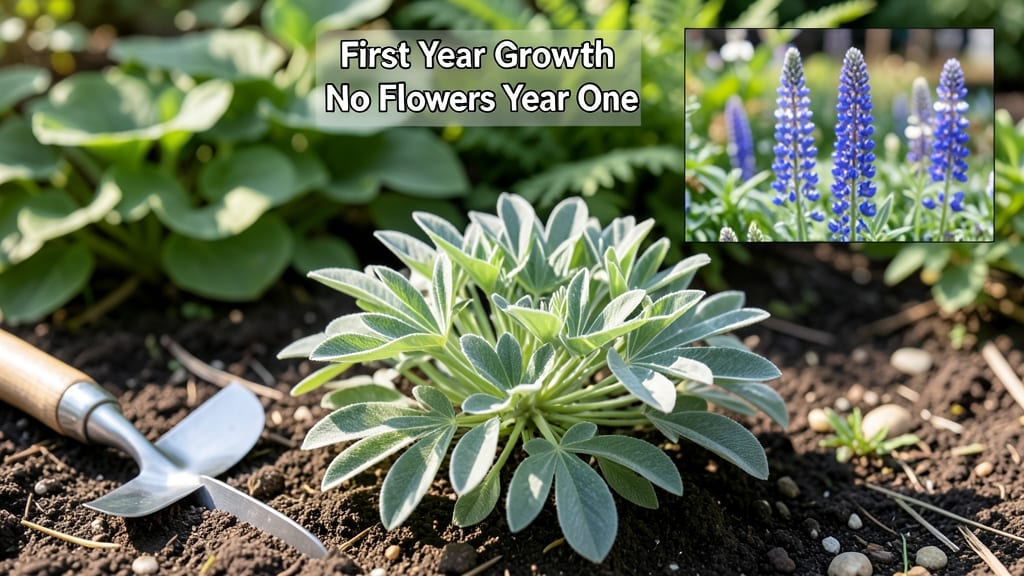
Lupines do not typically bloom the first year, as they prioritize building deep root systems. Some fast-growing types like Lupinus polyphyllus may produce a few flowers if planted early with ideal care, but most varieties wait until their second or third year for full blooms.
Lupines are what gardeners call "patient plants"—they invest their early energy into growing extensive root networks that anchor them for years to come. 🌱 This deep-rooted strategy helps them survive droughts and poor soil conditions, which is why most varieties hold off on flowering until they've established themselves.
The few exceptions, like Lupinus polyphyllus or Lupinus arboreus, can be coaxed into blooming sooner with rich soil, consistent moisture, and early spring planting. Think of it like saving up for a big purchase: lupines are building their "emergency fund" (roots) before splurging on flowers.
What's fascinating is how this behavior varies by species. Annual lupines, for example, might produce flowers in their first year since they have only one season to reproduce, while perennial varieties take their time.
If you're eager to see blooms sooner, focus on well-draining soil with plenty of organic matter and avoid over-fertilizing with nitrogen—this encourages root growth over foliage. Patience pays off, though: once established, lupines can reward you with vibrant blooms for a decade or more.
💡 In This Article
- Why Most Lupines Skip Flowering in Year One
- Fastest-Blooming Lupine Varieties for First-Year Flowers
Why most lupines skip flowering in year one
Lupines prioritize root development over flowering in their first year because they're what botanists call "deep-rooted perennials." Their primary energy goes into creating extensive taproots that can reach 3-6 feet deep, allowing them to access moisture and nutrients from lower soil layers.
This strategy helps them survive droughts and poor soil conditions common in their native habitats. 🌱 The root system can account for up to 70% of the plant's biomass by the end of the first season, leaving little energy for flower production.
The flowering process requires significant metabolic resources, including sugars produced through photosynthesis. Lupines allocate these resources to root growth first because established roots provide stability and nutrient access for future blooms. This energy allocation follows a survival-first principle—similar to how trees invest heavily in root systems before producing fruit.
The plant's hormonal balance shifts to favor root growth hormones like auxins while suppressing flowering hormones like florigen until conditions are optimal.
Dormancy cycles also play a role in this behavior. Many lupine varieties undergo a period of winter dormancy in their first year, during which they focus on root expansion rather than above-ground growth.
This dormancy helps them survive cold temperatures while building reserves for spring. 💫 Biennial lupines, like Lupinus albus, follow a two-year cycle where they produce only leaves in the first year and flowers in the second, while perennial varieties may take three years to reach full flowering potential.
Light exposure triggers flowering in lupines, but the plant won't initiate this process until it's physiologically ready. Even with adequate sunlight, a young lupine won't bloom if its root system isn't sufficiently developed.
This is why you might see some leaf growth in the first year but no flowers—it's the plant's way of ensuring it has a strong foundation before devoting energy to reproduction.
The transition to flowering typically occurs when the root system reaches a critical mass of about 10-15% of the plant's total biomass.
Soil quality significantly influences this process. In nutrient-poor soils, lupines may delay flowering even longer as they work to build their root systems.
The nitrogen-fixing bacteria in their root nodules (which convert atmospheric nitrogen into usable forms) also require time to establish, further delaying flowering until the plant has sufficient resources. This is why well-amended soil with organic matter can sometimes coax earlier blooms from fast-growing varieties.
Understanding this process helps explain why some gardeners see sparse blooms in the first year with certain varieties.
While most lupines wait until their second or third year for full blooms, the few that do flower earlier are typically those with faster root development rates or those planted in exceptionally rich conditions.
The key takeaway is that lupines are investing in long-term survival rather than immediate reproduction—a strategy that pays off with decades of blooms once established.