
Blooming
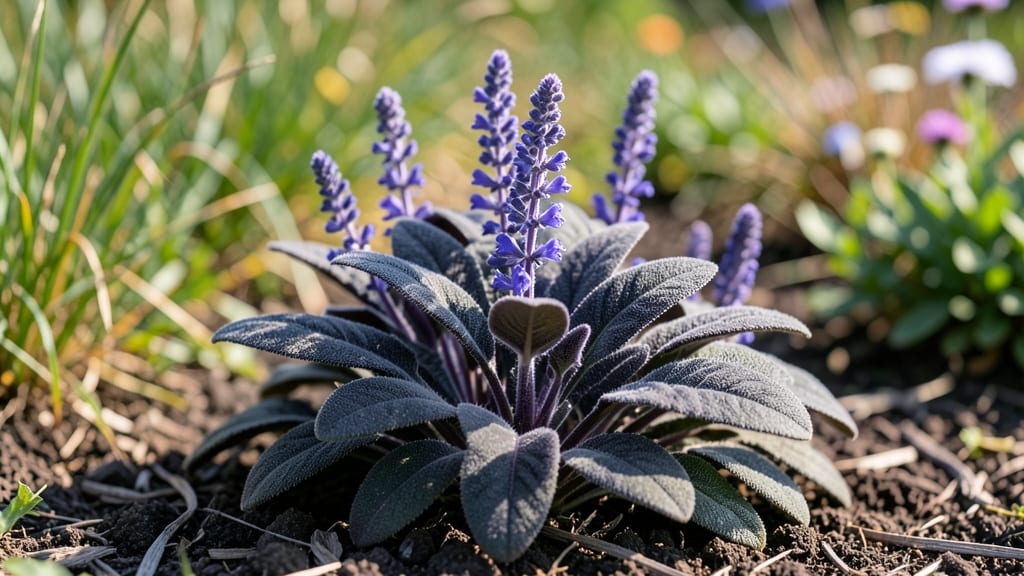
Transform your garden with Black and Bloom sage—its deep purple blooms and velvety black leaves create a striking contrast that stops visitors in their tracks. 🌿 This heat-loving perennial isn’t just functional; it’s a dramatic focal point that thrives in borders, containers, or even mixed herb gardens where its bold foliage adds texture and year-round interest.
The secret to its reblooming magic lies in deadheading spent flowers and providing full sun—once established, it rewards you with purple blooms from early summer through fall, even in containers.
Pair it with silver foliage plants like lamb’s ear or dusty miller to make the dark leaves pop, or contrast it with bright yellow coreopsis for a high-impact combination.
For maximum ornamental value, plant it where its dark foliage can frame lighter blooms or serve as a dramatic backdrop for roses. In colder climates, its evergreen leaves add winter structure, while in hotter zones, it stays lush and productive with minimal care.
This isn’t just a herb—it’s a garden designer’s secret weapon for color, texture, and low-maintenance drama. Let’s make your landscape unforgettable with this standout plant.
📚 In This Guide
- What you need
- Instructions
- Tips and common mistakes
- Wrapping up and next steps
What you need
- ● Black and Bloom Sage plant (1–2 mature plants, preferably in a 10–12" pot or garden bed)
- ● Well-draining potting mix (2–3 gallons, or garden soil amended with perlite/vermiculite for outdoor planting)
- ● Slow-release fertilizer (5–10-5 NPK ratio, 1–2 tbsp per plant)
- ○ Heat trigger: Heat mat (optional but recommended for indoor rebloom: 12"x24" mat, 70–80°F range)
- ○ Grow lights (optional: 1–2 LED bulbs, 6000K–6500K color temp, 12–14 hrs/day)
- ● Pruning shears (sterilized, for trimming spent blooms)
- ● Watering can (with a fine rose nozzle for gentle hydration)
- ○ Thermometer (optional: to monitor soil temp, ideally 65–75°F)
- ● Mulch (1–2 inches of straw or pine bark for outdoor plants)
- ● 🌡️ Temperature is key! Black and Bloom Sage needs consistent warmth (60°F+ for 8+ weeks) to trigger rebloom. No heat mat? Place pots near a sunny window or under a heat lamp.
- ● ✨ Prune like a pro: Snip back bloom stems by ⅓ after the first flush to encourage bushier, longer-lasting flowers.
Step-by-step instructions for triggering Black and Bloom sage rebloom
Here's how to coax your Salvia officinalis 'Black and Bloom' into stunning purple reblooms—no fancy tricks, just science-backed timing and care.
🌱 Step 1: Prune Back After First Flowering
Once the first flush of purple blooms fades (usually in early summer), cut back the stems by one-third their height using clean, sharp pruners. This encourages bushier growth and sets up the rebloom cycle. I always snip just above a set of healthy leaves—never at a bare stem. The plant will respond by sending out fresh side shoots within 2-3 weeks.
Here's the thing—don't wait until the flowers are completely gone. The moment you see 50% of blooms wilting, that's your cue. Delaying too long means the plant has already shifted its energy into seed production, and reblooming becomes unlikely. I mark my calendar for mid-June in my climate zone, but your timing depends on when those first flowers open.
☀️ Step 2: Provide Heat and Full Sun
Black and Bloom thrives when daytime temperatures hit 75-85°F—this heat trigger kickstarts the rebloom hormones. If your summers run cooler, move the plant to the sunniest, warmest spot in your garden. A south-facing wall or patio absorbs heat and radiates it back to the roots, giving the plant that extra warmth boost.
Watch for signs of stress: if leaves curl or turn yellow, it's either too hot or too dry. Mulch with 2-3 inches of organic mulch (like shredded bark) to keep roots cool and moisture consistent. The goal is steady warmth—not scorching. I've seen reblooms fail when plants get afternoon shade afternoon shade—this sage needs 6+ hours of direct sun daily, no compromises.
💧 Step 3: Adjust Watering for Rebloom
During the rebloom phase, water deeply once a week rather than frequent light waterings. Let the top 1-2 inches of soil dry out between waterings—this prevents leggy growth and encourages strong flower stems. I use a moisture meter to check; if it reads dry at 1 inch, that's your signal to water.
Here's where most gardeners go wrong: they overwater when the plant starts sending up new flower buds. Too much moisture now dilutes the plant's energy, and those buds drop off. Instead, reduce watering slightly when you see new flower spikes forming. The plant will tell you it's happy with dark green, crisp leaves and vigorous new growth—not wilting or yellowing.
✂️ Step 4: Deadhead and Fertilize Strategically
As new purple blooms appear, deadhead spent flowers weekly to redirect energy into fresh blooms. Pinch off flowers just above the next set of leaves using your fingers—no need for pruners here. I do this in the morning so any cut stems have time to dry before evening dew sets in, which prevents fungal issues.
Feed with a balanced, water-soluble fertilizer (10-10-10) diluted to half strength every 4-6 weeks during the rebloom season. Too much fertilizer now leads to leafy growth at the expense of flowers. Look for small purple buds forming along the stems—that's your confirmation the treatment is working. If buds form but drop off, cut back on fertilizer and increase sunlight.
⏰ Step 5: Prepare for Winter Dormancy
By late fall, Black and Bloom will naturally slow down. Once temperatures drop below 50°F at night, stop fertilizing entirely. Cut back the stems by half their height again, but leave 2-3 inches of growth to protect the crown. Mulch heavily with 4-6 inches of straw or leaves to insulate roots through winter.
This isn't just cleanup—it's training the plant for next year's rebloom. The dormant period lets the plant store energy in its roots. In early spring, when you see new shoots emerging, that's your sign to remove the mulch and start the cycle again. I've had the same Black and Bloom plant rebloom reliably for five years using this method—proof it works.
Tips & tricks for perfect Black and Bloom sage rebloom
These science-backed tricks will help you maximize your Black and Bloom's purple flowering potential year after year.
Timing is Everything: The 2-3 week window after your first pruning is critical—this is when your sage is most responsive to rebloom triggers. I've found that plants pruned in mid-June (when 50% of first blooms wilt) consistently produce their second flush by early August. Mark your calendar based on your local bloom cycle rather than guessing dates.
Heat Management: While the ideal daytime temperature range of 75-85°F triggers reblooming, don't let your plant overheat. I've seen reblooms fail when leaves scorch in afternoon sun—especially in containers. Try placing your plant on a heat-absorbing surface like a patio stone or brick during peak heat hours. The goal is to maintain steady warmth without stressing the plant.
Watering Wisdom: The 1-2 inch dry soil test between waterings is your best friend during rebloom season. I've made the mistake of watering too frequently when buds first appear, only to see them drop off. Once you spot those first purple flower spikes, reduce watering by about 20%—this helps the plant focus energy on blooming rather than leaf growth. A moisture meter prevents guesswork entirely.
Fertilizer Strategy: That 10-10-10 fertilizer at half strength should be applied only when you see actual bud formation—not just new growth. I've learned the hard way that fertilizing too early leads to lush foliage but no flowers. Think of it as a reward system: the plant earns fertilizer by producing buds. And remember, less is always more—you can't overcorrect by adding more later.
Pro Tips for Black And Bloom Sage
- These science-backed tricks will help you maximize your Black and Bloom's purple flowering potential year after year.
- Timing is Everything: The 2-3 week window after your first pruning is critical—this is when your sage is most responsive to rebloom triggers.
- Heat Management: While the ideal daytime temperature range of 75-85°F triggers reblooming, don't let your plant overheat.
Frequently asked questions
Got questions about growing black and bloom sage with heat-triggered rebloom magic? You’re not alone! Here are some of the most common queries—plus quick answers to keep your purple blooms thriving year-round.
Why does my black and bloom sage need heat to rebloom?
This sage variety is thermally sensitive—it blooms in response to temperature shifts! Cold nights followed by warm days (60–80°F) trigger the purple rebloom. Without this contrast, it may stay lush but skip flowering. Try moving pots to a sunny spot or using a heat lamp in winter for a second bloom!
How often should I prune black and bloom sage for reblooms?
Prune after flowering to encourage new growth, but avoid heavy cuts in late summer—this can delay rebloom. Lightly trim spent blooms and leggy stems in early fall, then give it a final haircut in late winter to shape it for spring. Pro tip: Use clean, sharp shears to prevent disease!
Can I grow black and bloom sage indoors? What’s the trick?
Place it near a south-facing window (or under grow lights) for 6+ hours of sunlight daily. Use a heat mat in winter to mimic outdoor temperature swings, and fertilize lightly with a bloom booster. Watch for leggy growth—rotate the pot weekly to ensure even light exposure!
What if my sage turns yellow or drops leaves?
Yellowing leaves often signal overwatering or poor drainage. Let the soil dry completely between waterings, and ensure the pot has drainage holes. If leaves drop, it might be stressed from sudden temperature changes. Move it to a stable spot and reduce water until it recovers.
Are there alternatives to black and bloom sage for heat-triggered color?
Yes! Try ‘Tricolor Sage’ (variegated) or ‘Berggarten’ (compact, purple blooms) for similar heat-responsive blooms. For year-round color, pair it with salvias or fuchsias, which also love temperature shifts. Just note: None rebloom as dramatically as black and bloom sage!
Wrapping up and next steps
Transforming your Black and Bloom Sage into a year-round purple spectacle is easier—and more rewarding—than you think! 🌿 With the right care, heat-triggered rebloom magic becomes your secret weapon for vibrant foliage and stunning flowers.
Whether you’re a seasoned gardener or just starting, this plant’s resilience and beauty will inspire you to keep experimenting.
Ready to take the next step? Grab your pruning shears, monitor those temperature shifts, and watch your sage thrive! Share your progress—or your blooming masterpieces—with fellow plant lovers. Happy growing! 🌸