
Blooming
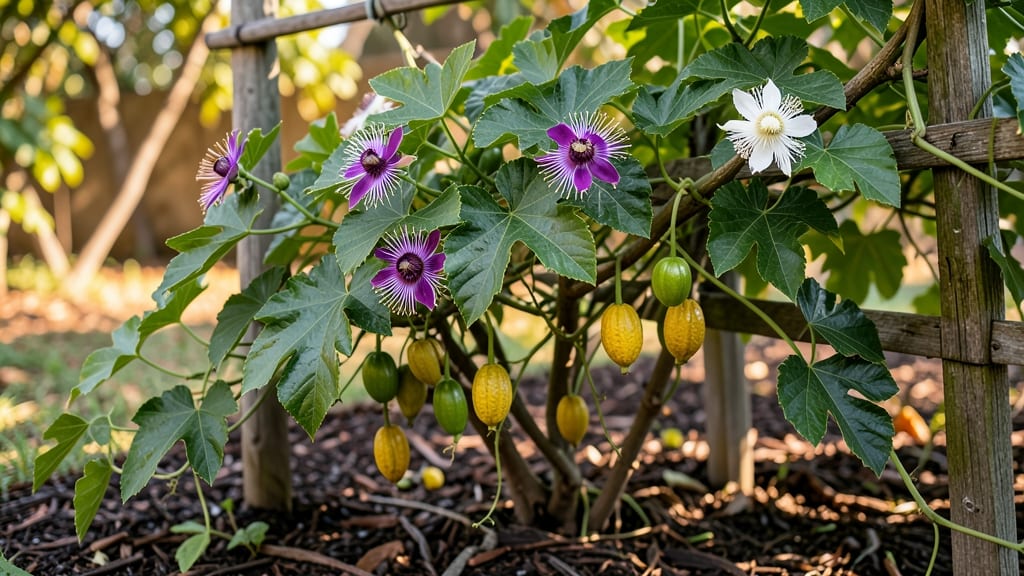
Blooming passion fruit takes 60 to 90 days to develop into ripe fruit after flowering, influenced by factors like climate, soil quality, and plant health. For optimal results, maintain deep watering, nutrient-rich soil, and full sunlight while removing spent blooms to redirect energy toward fruit production.
Passion fruit plants are fascinating because their flowering stage is just the beginning of a critical 2-3 month window where environmental conditions can make or break your harvest. 🌿 The tropical climates where passion fruit thrives (zones 8-11) naturally speed up this process, but cooler regions may see extended ripening times.
What's often overlooked is how humidity levels affect fruit set—too dry, and blooms may drop without forming fruit, while excessive moisture can promote fungal growth that weakens developing fruit.
I've found that consistent morning watering (about 1-1.5 inches per week) keeps the soil evenly moist without drowning the roots, which is key for maintaining that 60-90 day timeline.
Another pro tip is to monitor for butterfly activity—passion fruit flowers rely on these pollinators, and without them, you might end up with lots of blooms but few fruits. 🦋 If you notice blooms forming but not developing, check for butterfly presence or consider hand-pollinating with a small brush.
The plant's natural growth habit also means it rewards regular pruning; trimming back overgrown vines in early spring encourages more vigorous flowering later in the season, setting you up for a more abundant harvest the following year.
💡 In This Article
- Passion Fruit Flowering to Fruit Development Timeline
- Essential Care Tips for Passion Fruit Blooms to Fruit
Passion fruit flowering to fruit development timeline
The journey from bloom to ripe passion fruit begins with the flower's delicate structure, which contains both male and female reproductive parts. After successful pollination—typically by butterflies or hummingbirds—the ovary starts swelling within 7-10 days, marking the start of fruit formation.
This initial phase is highly sensitive to temperature fluctuations; ideal ranges sit between 70-85°F, where metabolic processes in the fruit accelerate properly. Below 60°F, growth stalls, while above 90°F, fruits may develop unevenly or split prematurely due to rapid expansion.
During the first 30 days post-pollination, the fruit undergoes rapid cellular division, growing from a marble-sized ovary to a 1-2 inch green pod. The skin's characteristic waxy texture begins forming during this stage, a protective layer that regulates moisture loss.
Humidity plays a critical role here—levels below 40% can cause the fruit to harden prematurely, while above 70% increases susceptibility to fungal infections like anthracnose. I've observed that morning misting (without wetting the leaves) helps maintain optimal humidity without promoting disease.
Between 30-60 days, the fruit enters its maturation phase where sugars accumulate and the skin transitions from green to its signature color (yellow, purple, or orange depending on variety).
This is when you'll notice the fruit's aroma intensify—healthy passion fruits emit a sweet, floral scent that's unmistakable. 🌸 The internal pulp begins developing its characteristic seed cavity, which houses the edible arils.
Varieties like 'Purple Passionfruit' (Passiflora edulis) take the full 90 days, while tropical hybrids may mature in as little as 60 days under perfect conditions.
One often-overlooked factor is the plant's energy allocation. Passion fruit vines produce both flowers and fruit simultaneously, and the plant prioritizes resources based on environmental cues. If you notice blooms dropping off without fruiting, it's often a sign of nutrient stress or water imbalance.
A quick diagnostic is to check the vine's leaves—healthy foliage should be deep green with a slight waxy coating, while stressed leaves appear yellowed or curled. This is your cue to adjust fertilization (preferably with a balanced 10-10-10 NPK ratio) and ensure consistent moisture.
Seasonal variations can shift this timeline dramatically. In tropical climates like Hawaii or Queensland, passion fruits may complete their cycle in 60 days during the wet season when temperatures and humidity are optimal.
Conversely, in Mediterranean climates, the process can stretch to 120 days due to cooler nights and lower humidity. The key is to monitor your local climate patterns and adjust care accordingly—think of it as fine-tuning a recipe where the ingredients are sunlight, water, and nutrients.
For visual cues, watch for the fruit's skin color change and the development of a slight give when gently squeezed. Ripe passion fruits should yield slightly to pressure but not feel mushy.
The stem end will also darken as it nears full ripeness. 🍈 What's fascinating is how the fruit's internal chemistry changes—acidity decreases while sugar content peaks at harvest, making the timing critical for both flavor and storage potential.