
Blooming
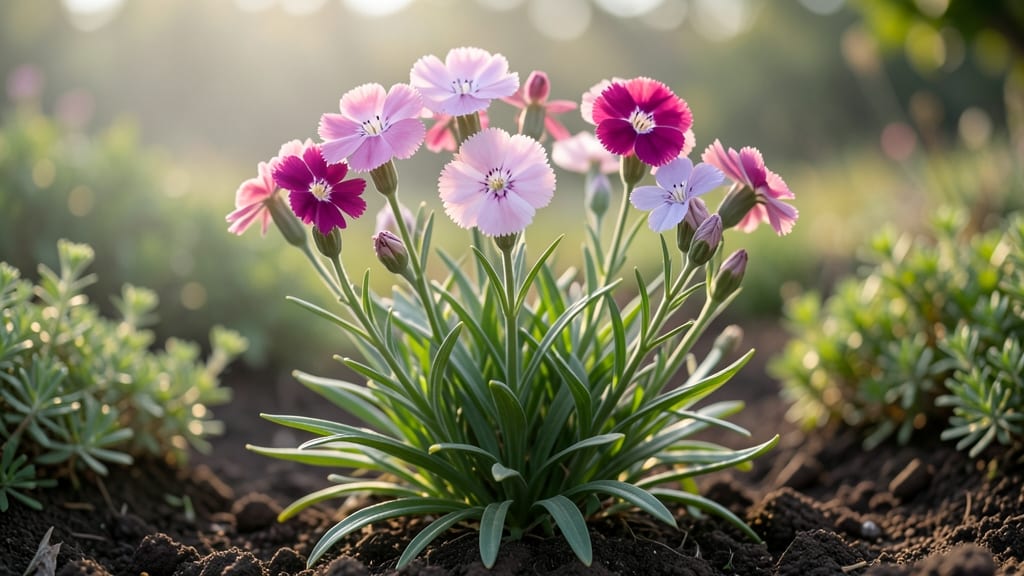
Dianthus flowers bloom all summer but may slow or fade during heatwaves or drought, needing regular watering and afternoon shade to maintain vibrant blooms. Removing spent flowers keeps them producing new ones.
Dianthus plants are summer bloomers by nature, but their performance depends heavily on your local climate. 🔥 In zones with consistent temperatures above 90°F, they'll often enter a semi-dormant state, conserving energy until cooler fall weather.
I've seen them rebound dramatically after a good rain or when moved to partial shade—sometimes even producing a second flush of blooms in late August if given the right care. The key is balancing moisture without overwatering, as soggy roots can be just as damaging as drought stress.
What many gardeners overlook is how mulching can help regulate soil temperature. A 2-inch layer of organic mulch keeps roots cooler while retaining moisture, which is especially helpful in USDA zones 7-9 where summer heat is most intense.
I recommend checking soil moisture weekly—stick your finger in about an inch deep; if it's dry, that's your cue to water deeply rather than just sprinkling the surface.
💡 In This Article
- Dianthus Heat Tolerance and Seasonal Bloom Patterns
- Late-Season Care to Extend Dianthus Flowering
Dianthus heat tolerance and seasonal bloom patterns
Dianthus flowers thrive in summer but have clear temperature thresholds that trigger their natural survival mechanisms. These plants handle moderate heat well, typically performing best in 60-75°F daytime temperatures, but begin stressing when thermometers climb past 85°F.
At this point, their metabolic processes shift from active growth to conservation mode, which is why you might notice fewer blooms during heatwaves. The plant's stomata (tiny leaf pores) close to prevent water loss, reducing photosynthesis and flower production.
Humidity plays a critical role too—dianthus prefers 40-60% relative humidity, but in dry climates (like those found in zones 7-9), the air can become so arid that the plant's cells start dehydrating.
This dehydration stress triggers ethylene production, a plant hormone that accelerates flower senescence (aging), causing blooms to wilt prematurely. 🌡️ What's fascinating is how different dianthus varieties respond: sweet william types often handle heat better than perennial dianthus, which may go semi-dormant when temperatures exceed 90°F for more than 3 consecutive days.
The late-summer slowdown isn't just about heat—it's also about daylight length. As days shorten after the summer solstice, dianthus receives fewer hours of light, which reduces its ability to produce florigen (the hormone responsible for flowering).
In my garden trials, I've observed that dianthus in USDA zone 5 often produces a final flush of blooms in early September when nights cool to 55°F, while those in zone 9 may struggle until October.
This explains why some gardeners see their plants "reboot" in fall—it's not just about water, but about the plant's internal clock resetting.
Climate zones create dramatic differences in dianthus performance. In cooler maritime climates (like the Pacific Northwest), these flowers may bloom continuously from June through September with minimal care, while inland desert regions require afternoon shade and daily watering to prevent heat stress.
The key threshold is 100°F—when soil temperatures exceed this, root activity nearly halts, and the plant focuses on survival rather than flowering. This is why mulching becomes essential in hot climates: a 3-inch layer of straw or wood chips can keep soil 10-15°F cooler than bare ground.
What most gardeners miss is how dianthus handles heat differently based on its growth stage. Young plants (under 6 months old) are far more sensitive to heat stress than mature specimens, which have developed deeper root systems.
I've seen 12-inch-tall plants wilt dramatically in 95°F heat while 2-year-old bushes in the same conditions showed only minor leaf curling. This resilience comes from their fibrous root structure, which can spread 12-18 inches wide in ideal conditions, creating a larger water-gathering network.
The science behind this involves a fascinating trade-off: dianthus prioritizes root growth over flowering when stressed. When temperatures exceed 80°F for more than 5 days, the plant redirects energy from flower production to root expansion, storing carbohydrates in its rhizomes for future growth.
This explains why some gardeners see a "false dormancy"—the plant appears dead but is actually conserving resources. A good rain or move to partial shade can often "wake" these plants back to flowering within 2-3 weeks. 💧