
Blooming
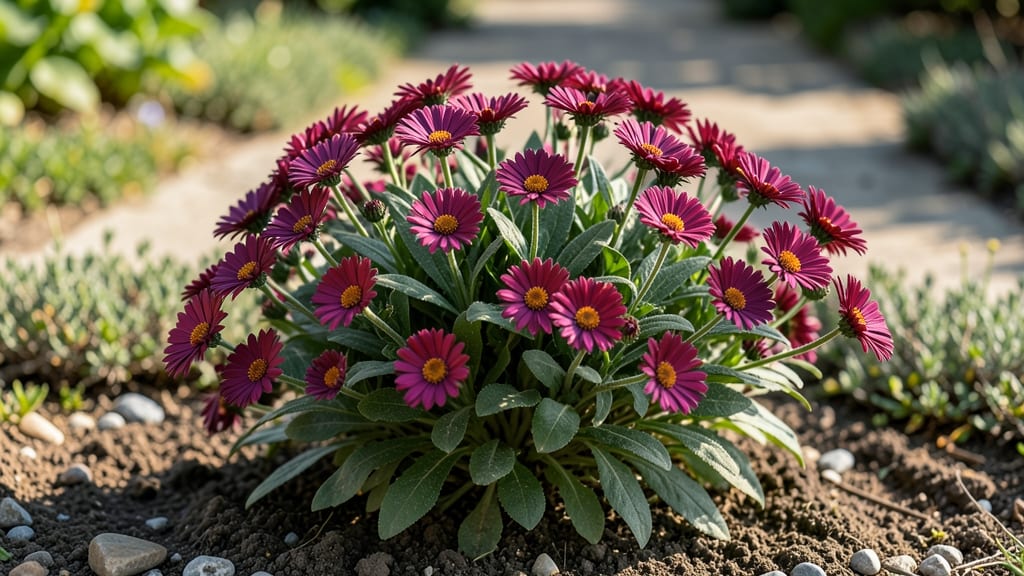
African daisies (Osteospermum) bloom all summer with proper care, producing vibrant flowers from early spring through frost, though peak blooming depends on sunlight, water, and deadheading. Varieties like 'Blue Horizon' or 'Pink Princess' thrive in heat zones 7-10 with consistent blooms if pruned regularly.
African daisies earn their reputation for summer-long color thanks to their unique biology—these plants are native to South Africa, where they evolved to handle intense sunlight and sporadic rainfall. 🌞 Unlike many annuals that fade in heat, their deep root systems store moisture efficiently, while their daisy-like flowers continuously regenerate when you remove spent blooms.
This reblooming habit makes them stand out compared to other summer flowers, which often need replacing every few weeks.
To keep them flowering nonstop, focus on three key factors: consistent moisture (about 1 inch per week), partial shade during peak afternoon heat in zones 8-10, and regular deadheading every 2-3 days.
I've found that mulching with compost helps retain soil moisture while feeding the roots, and fertilizing lightly with a balanced 10-10-10 mix every 6 weeks gives them the nutrients they need without encouraging leafy growth over flowers.
💡 In This Article
- Why African Daisies Keep Flowering Through Summer Heat
- Pro Tips for Prolonging African Daisy Blooms All Season
Why African daisies keep flowering through summer heat
African daisies (Osteospermum) thrive in summer heat thanks to their xerophytic adaptations—a term for drought-resistant traits. Their roots grow deep (often 12-18 inches below soil) to access moisture during dry spells, while their leaves have a waxy coating that reduces water loss through transpiration.
This means they can handle 90-100°F temperatures better than most annuals, which often wilt or stop blooming when thermometers rise above 85°F. 🔥
Their continuous flowering mechanism works through a process called determinate growth, where each flower stem produces one bloom before fading. However, unlike annuals that bloom once and die, African daisies have the ability to regenerate new stems from their base when you remove spent blooms—a technique called deadheading.
This creates a cycle where flowers appear almost daily during peak season, unlike geraniums, which produce fewer blooms over a longer period or petunias that may fade in extreme heat.
Sunlight triggers their blooming cycle through a process called photoperiodism. African daisies need 6-8 hours of direct sun daily to maximize flowering, but they also benefit from afternoon shade in zones 8-10 to prevent heat stress.
The optimal soil pH range of 6.0-7.0 helps them absorb nutrients efficiently, while slightly alkaline soil (pH 7.5+) can reduce iron uptake, causing yellowing leaves—a common issue in hot climates with limestone-rich soil.
Another key factor is their heat-resistant pigments. The vibrant hues of African daisies contain anthocyanins, which not only provide color but also act as antioxidants that protect the plant from UV damage.
This is why varieties like 'Blue Horizon' maintain their deep blues even under intense sunlight, while lighter-colored flowers often bleach out in summer. The combination of these biological traits makes African daisies the perfect choice for gardeners seeking long-lasting summer color with minimal maintenance.
Consider this comparison: While petunias may produce 10-15 blooms per stem but fade after 6-8 weeks, African daisies can generate 20-30 flowers per season from a single plant if properly cared for.
Their ability to rebound from heat stress and continue blooming through frost (in zones 7-10) sets them apart from other summer annuals that typically last only 8-12 weeks before requiring replacement.