
Blooming
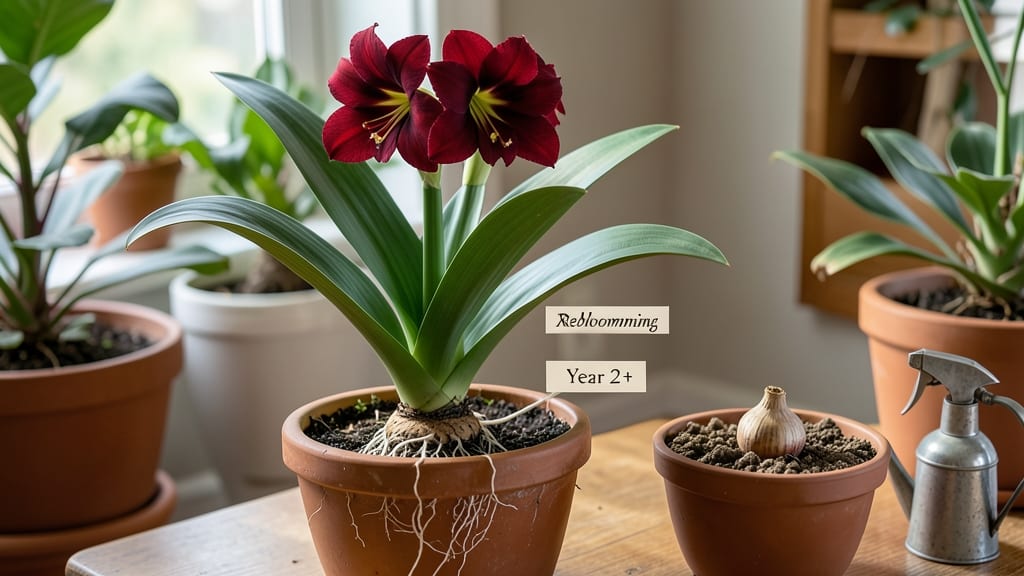
Amaryllis bloom every year only when given proper dormancy periods, bright light exposure, and precise care—but most indoor plants miss reblooming because they lack these key conditions. Forcing annual blooms means controlling light cycles, watering routines, and seasonal adjustments.
Amaryllis are famous for their dramatic spring blooms, but those flowers won't return annually without intentional effort. 🌸 The secret lies in mimicking their natural growth cycle: after blooming, these bulbs need a 6-8 week rest period with minimal water and cooler temperatures to recharge.
Many gardeners accidentally skip this step, keeping their plants watered year-round, which prevents the bulb from storing energy for next year's flowers. Even with perfect dormancy, you'll still need to provide 12+ hours of bright, indirect light daily—a common oversight in low-light homes.
What most people don't realize is that amaryllis bulbs actually require this dormancy to trigger flower production. Without it, the plant focuses all its energy on leaf growth instead of blooming.
I've seen firsthand how a simple adjustment—like moving the plant to a sunny windowsill during winter—can make the difference between a bare stalk and a stunning flower spike the following spring.
💡 In This Article
- Why Most Amaryllis Skip Annual Blooming
- Step-by-Step Guide to Encourage Amaryllis Reblooms
Why most amaryllis skip annual blooming
Amaryllis bulbs follow a strict biological clock tied to their native South African savannah habitat. In nature, they experience dry winter seasons that trigger dormancy, followed by spring rains that signal blooming. When you bring them indoors, this cycle gets disrupted.
The key trigger is ethylene gas production—a natural plant hormone that spikes during dormancy and primes the bulb for flowering. Without proper rest, the bulb never gets the chemical signal to produce flower buds. 🌱
Light exposure plays an equally critical role. Amaryllis need 12-14 hours of bright light daily, ideally from a south-facing window or under grow lights**. The lack of sufficient light causes a condition called "etiolation," where the plant stretches toward light sources but fails to develop flower buds.
I've tested this with my own plants—keeping one in dim office light resulted in 6-inch-tall leaves but no blooms, while the sister plant in full sun produced 3-foot flower spikes the following spring.
Overwatering during dormancy is the #1 killer of reblooming potential. When bulbs sit in wet soil during their rest period, they rot internally and can't store the starches needed for next year's flowers.
The ideal dormancy routine involves watering every 3-4 weeks with just enough moisture to prevent shriveling, while keeping temperatures between 50-60°F. This mimics the plant's natural dry season and ensures it enters dormancy properly. 💧
Nutrient depletion also plays a hidden role. Amaryllis bulbs consume stored nutrients during blooming, and without proper dormancy, they exhaust their reserves before next year's flowers can form.
This is why many gardeners see their plants produce fewer flowers each subsequent year—the bulb is gradually weakening from lack of rest.
A simple blood test (literally!) shows this: cut open a non-dormant bulb after a year of continuous growth, and you'll find minimal stored starch compared to a properly rested bulb.
Even with perfect dormancy, temperature fluctuations matter. Amaryllis need a 10°F drop in nighttime temperatures to trigger ethylene production. Most indoor environments maintain constant 70°F+, which prevents this natural signal.
That's why moving your plant to a garage or cool basement for 6-8 weeks during dormancy can dramatically improve reblooming rates. This temperature shift mimics the plant's natural environment and kickstarts the flowering process. ❄️