
Blooming
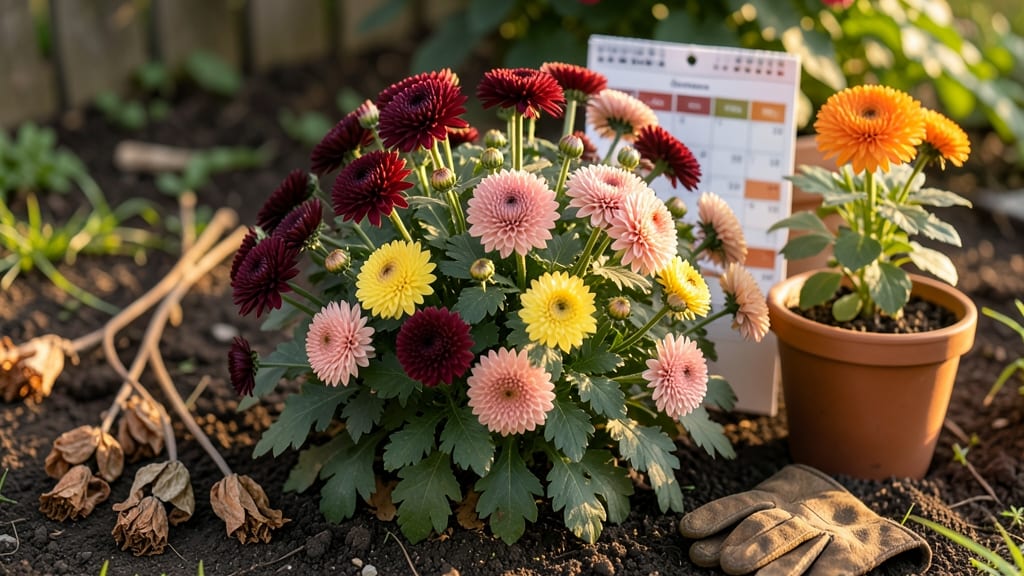
Mums bloom every year when grown as perennials in USDA Zones 5-9, but their reliability depends on the variety. Hardy types like 'Hardy Mums' regrow annually, while tender varieties often die back in winter unless winter-protected or replanted each spring.
Whether your mums return each year depends on their cold resistance and your local climate. 🌱 In colder regions outside Zones 5-9, even hardy varieties may struggle without mulch or frost blankets.
I’ve seen gardeners in Zone 4 successfully overwinter mums by piling leaves or straw around the base—this creates insulation that mimics natural ground cover.
The key difference between annual and perennial mums lies in their root systems: hardy types develop deeper roots that survive winter dormancy, while tender varieties rely on above-ground protection.
For best results, choose varieties labeled "hardy" and plant them in well-draining soil with afternoon shade in hot climates. This combination gives them the resilience to push through spring with vibrant blooms year after year.
💡 In This Article
- Why Some Mums Bloom Annually While Others Don’t
- Best Mum Varieties for Year-Round Blooming
Why some mums bloom annually while others don’t
Chrysanthemums (mums) exhibit different blooming patterns because of their natural growth habits and cold tolerance. Hardy mums develop deep root systems that store energy during winter dormancy, allowing them to regrow in spring.
These varieties enter a natural rest period when temperatures drop below 40°F, but their roots remain alive beneath the soil's insulating layer. In contrast, tender mums lack this deep-rooted resilience and often die back completely when exposed to frost, making them behave more like annuals.
The USDA hardiness zones play a crucial role in determining which mums will return. Varieties like 'Hardy Mums' thrive in Zones 5-9 because they can withstand winter temperatures down to -20°F with proper mulching. 🌱 For example, 'Hardy Bonanza' and 'Dynasity' series are proven performers in colder climates.
Meanwhile, garden mums (commonly sold as annuals) typically survive only in Zones 7-11, where winters rarely drop below 15°F. This zone difference explains why some gardeners see their mums disappear in winter while others enjoy perennial blooms.
Dormancy cycles are another key factor. Hardy mums undergo a gradual transition into dormancy as daylight shortens in fall, while tender types often suffer from sudden cold snaps. The root system's ability to store carbohydrates determines whether the plant can rebound in spring.
A well-established hardy mum might have roots extending 12-18 inches deep, while tender varieties rarely exceed 6 inches. This structural difference means hardy mums can access moisture and nutrients even during winter, while tender types become vulnerable to freeze-thaw cycles.
Climate also affects how mums behave annually. In regions with 100+ frost-free days, tender mums may survive if protected with mulch or row covers. However, in areas with harsh winters (like Zone 3), even hardy varieties need extra insulation.
I've seen gardeners in Minnesota successfully overwinter mums by piling 6-8 inches of straw around the base, creating an insulating barrier that maintains soil temperatures above freezing. This protection mimics the natural ground cover mums would experience in their native Asian habitats.
Light exposure matters too. Mums need 6-8 hours of sunlight daily to store enough energy for winter survival. In hot climates (Zones 8-11), afternoon shade prevents stress that weakens the plant's ability to endure winter.
The combination of proper sunlight, soil drainage, and winter protection determines whether your mums will return each year. Without these elements, even hardy varieties may struggle to rebloom consistently.
What most people don't realize is that mums actually bloom based on daylight hours rather than seasons. When days shorten in fall, the plant's natural response is to produce flowers.
Hardy mums can repeat this cycle annually because their root systems remain intact, while tender types often lack the energy reserves needed for another full bloom cycle after winter. This biological mechanism explains why some mums appear to "come back" while others don't.