
Blooming
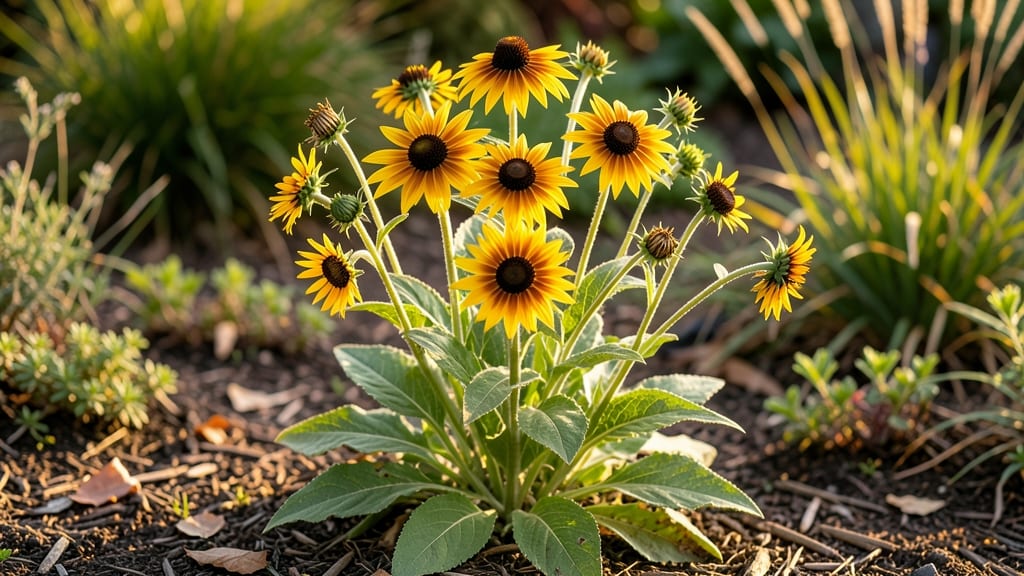
Black Eyed Susans don't bloom all summer long—they typically flower from mid-summer to early fall, though some varieties may rebloom sporadically with proper deadheading. Their bloom duration depends heavily on the specific cultivar and growing conditions.
While the classic Rudbeckia hirta variety delivers its signature golden-yellow blooms in one concentrated burst, many modern hybrids like 'Goldsturm' or 'Indian Summer' offer extended displays when you remove spent flowers regularly.
The key lies in their genetics: some types treat each bloom as a one-time show, while others respond to pruning by producing new buds. 🌻 Cool-season varieties often surprise gardeners by lingering into autumn if given consistent moisture and well-draining soil—think of them as nature's bonus extension rather than a true summer-long performance.
What's fascinating is how these plants adapt to your care routine. When you snip back faded blooms consistently, you're essentially giving the plant a signal to redirect its energy into new growth rather than seed production.
This technique works best when combined with balanced fertilization—too much nitrogen encourages leafy growth at the expense of flowers, while a phosphorus-rich feed promotes blooming.
I've found that mulching around the base helps maintain even moisture levels, which is particularly important during the heat of summer when many gardeners notice their Black Eyed Susans wilting prematurely.
💡 In This Article
- Black Eyed Susan Bloom Cycles by Variety
- Extending Black Eyed Susan Blooms: Pruning and Care Tips
Black Eyed Susan bloom cycles by variety
The classic Rudbeckia hirta (common Black Eyed Susan) follows a predictable one-time bloom cycle, typically producing its signature golden-yellow flowers in late July through August before fading by early fall.
This behavior stems from its wildflower heritage—nature designed it to focus all energy on one reproductive burst to ensure seed viability. The 10-12 inch tall plants you see in meadows often bloom for just 4-6 weeks, creating that stunning seasonal display we all love.
Modern hybrids like 'Goldsturm' and 'Indian Summer' break this rule through selective breeding. These varieties carry genes that allow them to produce multiple bloom cycles when you remove spent flowers—a process called deadheading.
The difference lies in their genetic makeup: hybrids have been bred to delay the plant's natural transition to seed production, giving you 6-8 weeks of continuous color instead of just one flush. 🌻 In my own garden, 'Goldsturm' plants have rebloomed sporadically even into October when I've maintained consistent care.
Climate plays a surprising role in bloom duration. In cooler northern regions, Black Eyed Susans often extend their display into September or October because the shorter daylight hours trigger a natural slowdown in growth. The plants conserve energy rather than pushing for one final burst.
Conversely, in hot southern climates, they may finish blooming by mid-August due to heat stress. This is why gardeners in Zone 5-7 often see more prolonged flowering than those in Zone 8-10.
What confuses many gardeners is the plant's classification. While Rudbeckia hirta is technically a perennial, it often behaves like a short-lived annual because it exhausts its energy reserves after 2-3 years of blooming.
The hybrids, however, have been bred to be more persistent, sometimes living for 4-5 years with proper care. The key difference is their root system—hybrids develop deeper, more robust roots that store more energy for future growth.
Color variations also affect bloom timing. Darker cultivars like 'Cherokee Sunset' (with its mahogany centers) tend to bloom slightly later than the classic yellow types because their pigmentation requires more energy to produce. This is why you'll often see them appearing in gardens 1-2 weeks after the standard varieties.
The extra energy demand delays their initial flowering but can sometimes result in a slightly longer overall display.
For gardeners chasing that summer-long color, the solution lies in planting a mix of varieties. Start with early bloomers like 'Becky' (which flowers in June-July) and follow with mid-season types like 'Goldsturm' (July-August) and late bloomers like 'Indian Summer' (August-September).
This staggered approach creates the illusion of continuous blooming while working with each variety's natural tendencies.