
Blooming
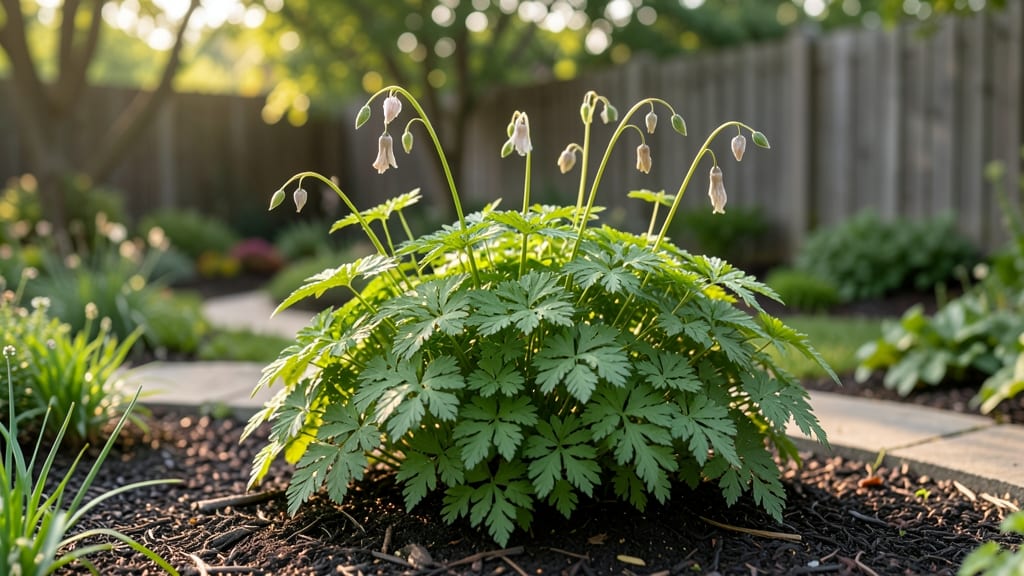
Bleeding hearts do not bloom all summer—they typically flower in spring for 4-6 weeks, with some varieties producing a second, lighter flush in late summer if grown in ideal conditions. Cool nights and consistent moisture extend their blooming season longest.
These plants are actually seasonal bloomers, not continuous producers like impatiens or petunias. 🌸 The classic Dicentra spectabilis variety puts all its energy into one big spring show, while reblooming types like Dicentra eximia may reward you with sporadic late-summer flowers—but don't expect the same lush display.
What you can control is their environment: partial shade, rich organic soil, and regular watering (never soggy) create the perfect conditions for those few extra blooms.
Here's the secret: bleeding hearts are temperature-sensitive. They need cool spring nights (below 60°F) to trigger blooming, which is why summer heat often stunts their second flush.
I've seen gardeners in Zone 5 get 6-8 weeks of blooms by providing afternoon shade during heatwaves—something southern climates rarely achieve naturally.
💡 In This Article
- Bleeding Heart Bloom Cycles Explained
- How to Encourage Longer Blooms in Bleeding Hearts
Bleeding heart bloom cycles explained
Bleeding hearts (Dicentra spp.) are what botanists call short-day plants, meaning their blooming cycles are triggered by specific light durations and temperature cues rather than continuous daylight.
The classic Dicentra spectabilis variety enters dormancy after its spring bloom because the increasing daylight hours (photoperiod) signal to the plant that summer has arrived—its biological clock tells it to conserve energy for next year. This is why you won't see continuous blooms like with day-neutral plants such as impatiens.
The key difference lies in their vernalization requirements—the need for cold exposure to break dormancy. After their spring display, the plant's foliage often dies back completely in summer heat (especially above 80°F), only to regrow from the roots in fall.
Some reblooming varieties like Dicentra eximia (also called fringe bleeding heart) produce sporadic late-summer flowers because they're less sensitive to photoperiod changes, but these blooms are typically 20-30% smaller and less abundant than the spring display. 🌿
Temperature plays a critical role in reblooming potential. The ideal nighttime temperature for continuous blooming is 50-65°F—any warmer, and the plant shifts energy toward leaf production instead of flowers.
This is why gardeners in hot climates (Zones 7+) often see only one spring bloom cycle, while those in cooler regions (Zones 3-5) might get a second, lighter flush in late summer. The 10°F temperature drop between day and night further triggers flowering hormones in these plants.
Another fascinating factor is the plant's carbon allocation strategy. After the spring bloom, bleeding hearts prioritize building root mass and storing nutrients for next year's growth. Only varieties with genetic reblooming traits (like 'Gold Heart' or 'Strawberry Fields') divert some energy to late-season flowers.
Even then, these blooms require consistent soil moisture—dropping below 40% soil moisture can completely halt flower production.
Consider this comparison: While Dicentra spectabilis produces 50-100 flowers per stem in spring, its late-summer rebloom might yield only 10-20 flowers per stem—and those are often on separate stems rather than the dramatic hanging clusters you love. The plant's energy budget simply doesn't allow for summer-long extravagance. 💫
What most gardeners don't realize is that the plant's foliage health directly impacts reblooming potential. Healthy leaves photosynthesize more efficiently, creating the energy reserves needed for late-season flowers.
This is why proper pruning (removing only dead or yellowed leaves) and avoiding nitrogen-heavy fertilizers (which promote leaf growth at the expense of flowers) can make a noticeable difference in your bleeding hearts' performance.