
Blooming
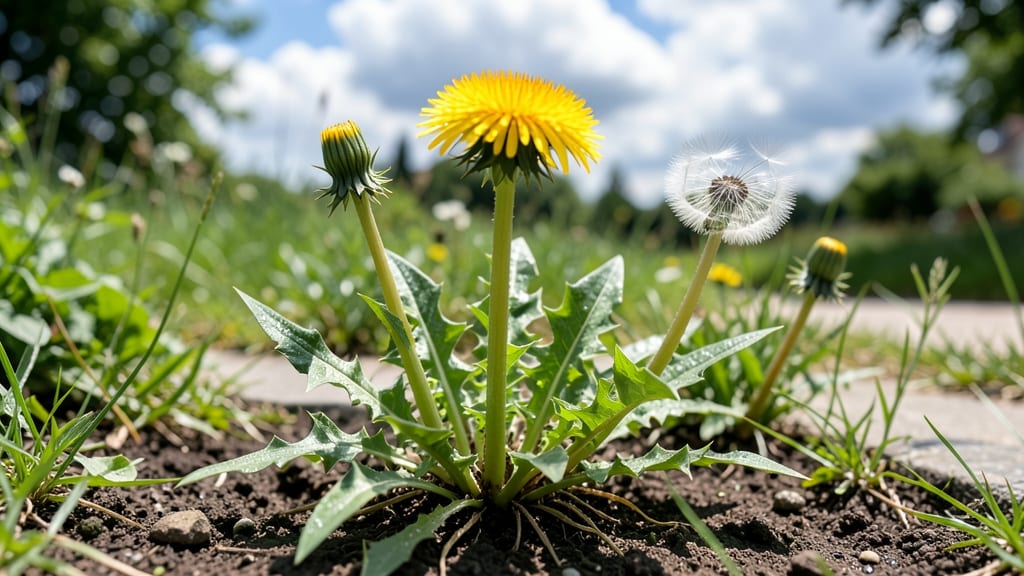
Dandelions don't bloom all summer continuously—they peak in early spring with occasional flowers through late summer, though warmer climates or specific species may extend this period slightly. Their flowering is closely tied to cooler temperatures.
Dandelions follow a natural rhythm where cooler spring weather acts as their bloom trigger, while summer heat often signals a rest period. 🌸 This explains why you might spot occasional blooms in late summer, especially in regions with mild summers or after rain showers that temporarily cool the soil.
The plants actually store energy in their deep roots during summer dormancy, preparing for next year's growth spurt.
What's fascinating is how regional differences play out: Northern climates with cooler summers may see more continuous blooming, while Southern areas might experience just a spring flush followed by a long dormant period.
Even within the same yard, microclimates near trees or buildings can create pockets where dandelions keep flowering later than expected.
💡 In This Article
- Why Dandelions Have Seasonal Bloom Patterns
- Best Regions for Extended Dandelion Flowering
Why dandelions have seasonal bloom patterns
Dandelions follow a precise biological clock where photoperiodism—their response to daylight length—plays a crucial role. These plants detect shortening daylight hours in late summer, signaling their roots to shift energy from flowering to root storage.
This process, called vernalization, ensures they bloom most prolifically when days are cooler and longer, typically between 40-60°F temperatures. 🌱 The bright yellow flowers you see in spring are essentially a survival strategy to produce seeds before summer heat arrives.
Temperature sensitivity explains why you rarely see continuous blooms. When soil temperatures exceed 75°F, dandelions often enter a dormant state, conserving energy in their deep taproots that can extend 6-12 feet underground. This root system acts like a natural battery, storing carbohydrates that fuel next year's growth.
The species Taraxacum officinale (common dandelion) is particularly sensitive to heat stress, which is why summer blooms are usually sporadic and short-lived.
There's also a fascinating contrast between perennial and biennial growth habits. Most dandelions are perennials, meaning they live multiple years, but they may behave like biennials in hot climates—flowering once then dying back.
In cooler regions like USDA Zone 4, they'll often produce multiple bloom cycles per year, while in Zone 8+, they might only flower once annually. This explains why northern gardens see more continuous blooms than southern ones.
The timing also depends on the plant's life stage. Young dandelions (rosette stage) focus on leaf growth, while mature plants prioritize flowering. When you see late-summer blooms, it's often older plants making a final attempt before winter.
The flowers themselves are actually inverted umbels, with each bloom containing 100-200 tiny florets that close by midday—a trait that helps conserve moisture during hot afternoons.
What most people don't realize is how soil moisture interacts with these cycles. Dandelions are drought-tolerant but prefer moderate moisture for flowering. After rain showers that cool the soil, you'll often see a sudden bloom surge—this is the plant responding to temporary relief from heat stress.
The deep roots can access water from 3-5 feet below ground, giving them an advantage in dry conditions that other shallow-rooted plants lack.