
Blooming
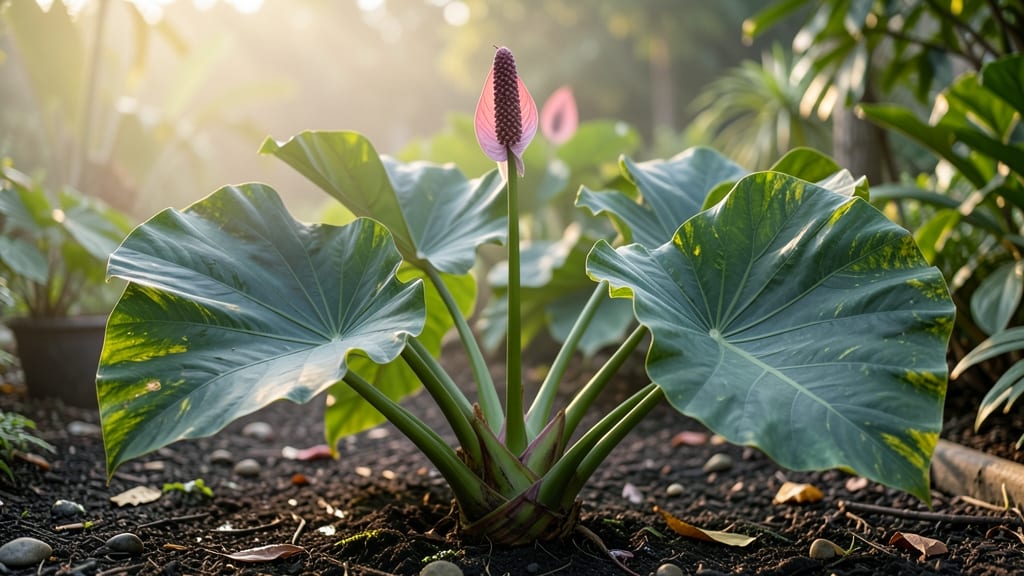
Yes, elephant ears (Colocasia and Alocasia varieties) do bloom flowers, though their dramatic foliage often steals the show. Colocasia 'Black Stem' produces delicate, tropical spathes, while Alocasia varieties may yield unique blooms resembling calla lilies—typically appearing after their bold leaves fully mature.
These tropical plants actually allocate most of their energy to leaf production, reserving just enough for occasional blooms. 🌿 The flowering process is triggered by specific light and temperature conditions, usually in late spring or summer when days lengthen.
What's fascinating is how different varieties prioritize energy differently—some Alocasia types produce showy flowers, while Colocasia varieties often focus more on foliage development. Gardeners who want to encourage blooms should focus on balanced fertilization and proper spacing to prevent overcrowding, which can suppress flowering entirely.
Once flowers appear, they're typically short-lived but serve as a bonus attraction after the main foliage display. The blooms often resemble exotic orchids or calla lilies, adding unexpected visual interest to your garden.
I've found that dividing tubers every 3-4 years helps maintain vigor and increases the likelihood of flowering in subsequent seasons.
💡 In This Article
- How Elephant Ear Flowering Works: Biology and Variety Differences
- Encouraging Blooms in Elephant Ears: Care and Pruning Tips
How elephant ear flowering works: biology and variety differences
The flowering process in elephant ears begins with a fascinating energy trade-off between foliage and blooms. These plants store energy in their tubers during dormancy, and when conditions are right, they allocate resources to either leaf production or flower development.
Colocasia varieties, like 'Black Stem,' typically prioritize dramatic foliage, using only about 10-15% of their energy on blooms. The flowers they produce are often subtle spathes (modified leaves that enclose the flower cluster) with a soft, creamy texture and a faint, sweet aroma—more about visual intrigue than scent.
Alocasia varieties take a different approach. Their blooms resemble exotic calla lilies or jack-in-the-pulpits, with unique spadices (the actual flower structure) that can be quite striking.
The key difference lies in their photoperiod sensitivity: Alocasias often need 12-14 hours of daylight to trigger flowering, while Colocasias may bloom with slightly less light.
Temperature also plays a role—most varieties require soil temps above 65°F to initiate blooming, which is why they typically flower in late spring or summer when warmth combines with increasing daylight.
Here's where it gets botanically interesting: the flowers themselves are often short-lived (lasting just 24-48 hours) but serve as a magnet for pollinators like beetles and flies. The spathes may persist longer, developing a papery texture as they dry.
What most gardeners don't realize is that the flowering process actually exhausts the tuber's energy reserves, which is why plants often need a rest period afterward. This is why you'll see flowering decline in older tubers that haven't been divided in years.
Consider these variety-specific flowering patterns:
- Colocasia: Produces 1-3 spathes per plant, often with a white or pale green hue. The foliage remains the star attraction.
- Alocasia: May yield 5-10 smaller flowers per plant, often with purple or maroon accents on the spadices. Some varieties like 'Polly' produce more frequent blooms.
- Hybrids: Often strike a balance, with moderate foliage size and occasional but noticeable blooms.
The flowering mechanism also involves a hormonal shift. As days lengthen in spring, the plant's phytochrome system detects increased red light, triggering florigen production—the hormone that initiates bloom formation.
This is why you'll rarely see elephant ears flower in their first year, as they need to establish a strong tuber system first. The process is similar to how peace lilies (a related family member) time their blooms, but elephant ears are generally less reliable flowerers.
What's particularly fascinating is how the blooms themselves function. The spathes often heat up slightly (up to 86°F internally) to attract pollinators, a trait shared with other aroids like jack-in-the-pulpits.
This heat generation is a metabolic process that requires additional energy, further explaining why flowering can be exhausting for the plant. 🌸