
Blooming
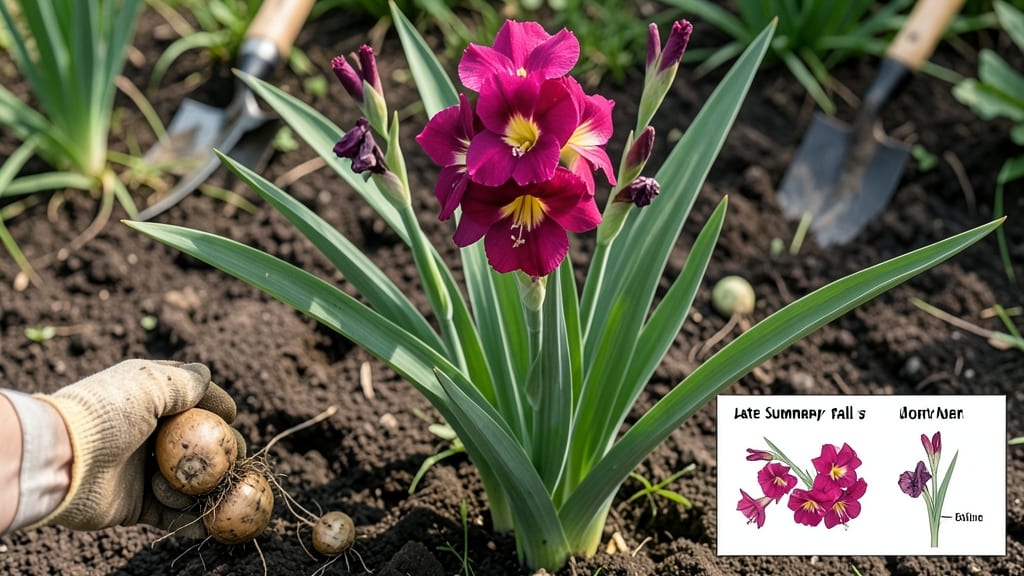
Gladiolus do not bloom every year unless grown as perennials in frost-free climates, with proper bulb care, or as tender bulbs overwintered indoors. Most die back annually and require replanting corms for seasonal reblooming.
Most gardeners treat gladiolus as annuals because their corms—those thick underground stems—enter dormancy after blooming, then die back when temperatures drop. 🌱 The key to year-round blooms lies in protecting these corms: in colder zones, dig them up before frost and store them in dry peat moss until replanting next spring.
Even in mild climates, gladiolus need consistent care—like well-draining soil and balanced fertilizer—to encourage reblooming.
What's interesting is that some varieties, like Gladiolus communis, are hardier and can survive winter in protected microclimates. I've found that mulching heavily in fall helps insulate the soil, giving corms a better chance to regenerate.
The trade-off? Without proper care, you'll likely need to replant every year—but with the right approach, you can enjoy those dramatic spikes of color season after season.
💡 In This Article
- Why Gladiolus Typically Bloom Once and Die Back
- 3 Ways to Make Gladiolus Rebloom Yearly
Why gladiolus typically bloom once and die back
The gladiolus lifecycle is tightly linked to temperature and daylight cues. These plants grow from corms—thick, fleshy underground stems—that store energy for rapid spring growth. Once they bloom, typically in late summer, the corms begin depleting their reserves.
In temperate zones, frost or dropping temperatures below 40°F signal the corms to enter dormancy, halting growth until spring.
What's happening biologically is that gladiolus corms undergo a natural senescence process. The plant prioritizes energy toward seed production and bulb formation during its first growing season. After blooming, the foliage yellows and dies back as the corm redirects nutrients inward.
Without protection, these corms either shrivel from frost or rot in soggy soil, explaining why most gardeners replant annually.
The critical factor is the corm's sensitivity to cold. Even a light frost can damage the outer layers, while prolonged exposure below 28°F kills the corm entirely. This is why gladiolus thrive as perennials only in frost-free zones like USDA Hardiness Zones 8-11, where temperatures rarely dip below 10°F.
In colder regions, the corms simply can't survive winter exposure.
Another key detail is the plant's photoperiod response. Gladiolus require long daylight hours (14+ hours) to trigger blooming, which explains their late-summer peak. After flowering, shorter autumn days accelerate the dormancy cycle. This biological clock makes it nearly impossible for gladiolus to rebloom in the same season without human intervention.
Consider this comparison: In Florida's frost-free climate, gladiolus can regrow from the same corm year after year, producing multiple spikes over several seasons. But in Minnesota, where winters drop to -10°F, the corms would perish without careful storage. The difference comes down to consistent warmth and moisture conditions.
One surprising fact is that gladiolus corms actually produce smaller "child corms" during their first growing season. These offspring can be separated and replanted to create new plants, but they won't bloom until their second year.
This natural propagation explains why gardeners often need to replant corms annually—even when conditions are ideal, the parent corm may not survive to bloom again.