
Blooming
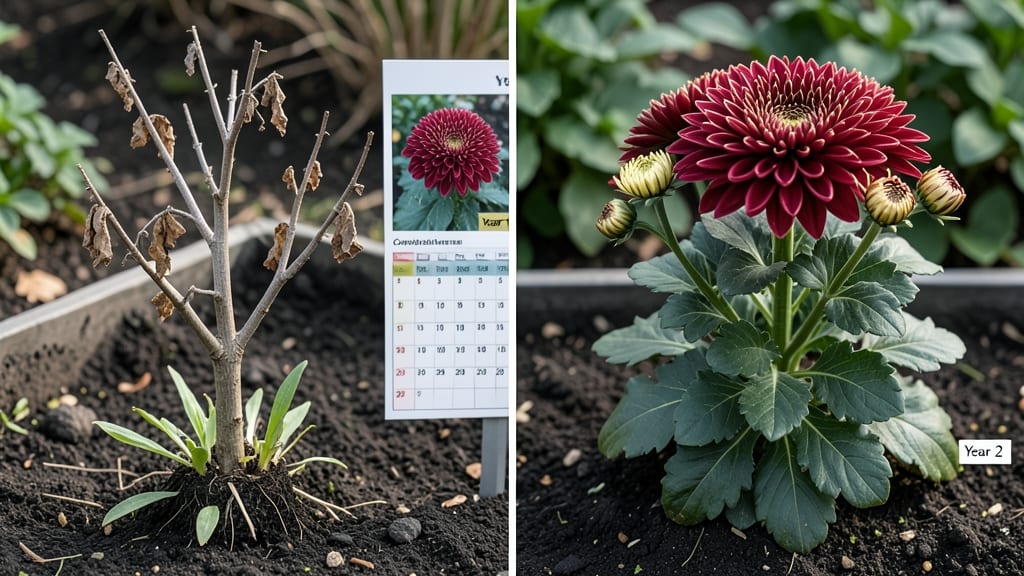
Chrysanthemums bloom every year only if grown as perennials in mild climates, while most garden varieties act as annuals, reblooming once per season with proper care. Cold-hardy types return annually, but tropical varieties may not survive winter.
Whether your chrysanthemums return year after year depends on their type and climate. 🌸 Hardy perennials like Chrysanthemum morifolium thrive in USDA zones 5-9, sending up fresh blooms annually with minimal winter protection. Most garden mums, however, behave as annuals because they're bred for single-season showiness rather than cold endurance.
The key difference lies in their roots—perennials store energy underground to regrow, while annuals focus all their energy on one spectacular bloom cycle.
Even annual varieties can rebloom if you prune spent flowers and provide consistent care. I've found that cutting back stems by one-third after the first flush encourages a second round of blooms, especially when paired with balanced fertilizer.
Light also matters—6+ hours of sunlight daily keeps plants vigorous enough to push new buds.
💡 In This Article
- Perennial vs Annual Chrysanthemum Blooming Cycles
- How to Encourage Annual Chrysanthemum Reblooming
Perennial vs annual Chrysanthemum blooming cycles
The fundamental difference between perennial and annual chrysanthemums lies in their root systems and energy storage mechanisms. Perennial varieties like Chrysanthemum morifolium develop thick, fibrous roots that store carbohydrates and nutrients throughout winter, allowing them to regrow from the same root base each spring.
This underground energy reserve lets them produce 2-3 bloom cycles per season in ideal conditions, with the first flush typically appearing in late summer.
Annual garden mums, however, prioritize above-ground growth and flowering during their single season. Their roots don't store sufficient energy for overwintering, which is why they die back completely in cold climates.
The trade-off is dramatic: while perennials may produce 50-100 flowers per plant over multiple cycles, annuals concentrate their energy into 150-200 showy blooms in one spectacular display. This explains why most commercial chrysanthemums behave as annuals despite their perennial origins.
Climate zones play a decisive role in determining whether your chrysanthemums return annually. Hardy varieties thrive in USDA zones 5-9, where winter temperatures rarely drop below -20°F. In colder regions (zones 3-4), even perennials need 3-4 inches of mulch or winter protection to survive.
Tropical varieties (Chrysanthemum indicum), which prefer zones 10-11, can't tolerate frost at all and must be grown as annuals or brought indoors during winter.
What most gardeners don't realize is that even annual varieties contain perennial genetics—they're simply bred for single-season performance.
The key difference is in their photoperiod sensitivity: perennials naturally respond to shortening daylight in autumn, triggering blooming cycles, while annuals have been selectively bred to flower 8-10 weeks after planting regardless of daylight changes.
This genetic modification explains why annual mums often stop blooming after their first flush unless carefully managed.
Consider the visual contrast: a healthy perennial chrysanthemum in zone 7 might produce three distinct bloom periods—late summer, early autumn, and a smaller winter flush in mild climates—while an identical annual variety would focus all its energy on one 8-week peak of 100+ blooms.
The trade-off reveals nature's efficiency: perennials spread their energy over time for survival, while annuals go all-in on immediate spectacle. 🌿
For those in transitional zones (like zone 8), the solution often lies in microclimate selection. Planting perennials near south-facing walls or in protected microclimates can extend their growing season by 2-4 weeks, sometimes enough to push a second bloom cycle.
The same principle applies to annuals—providing consistent moisture and afternoon shade during heatwaves can encourage delayed but prolonged flowering.