
Blooming
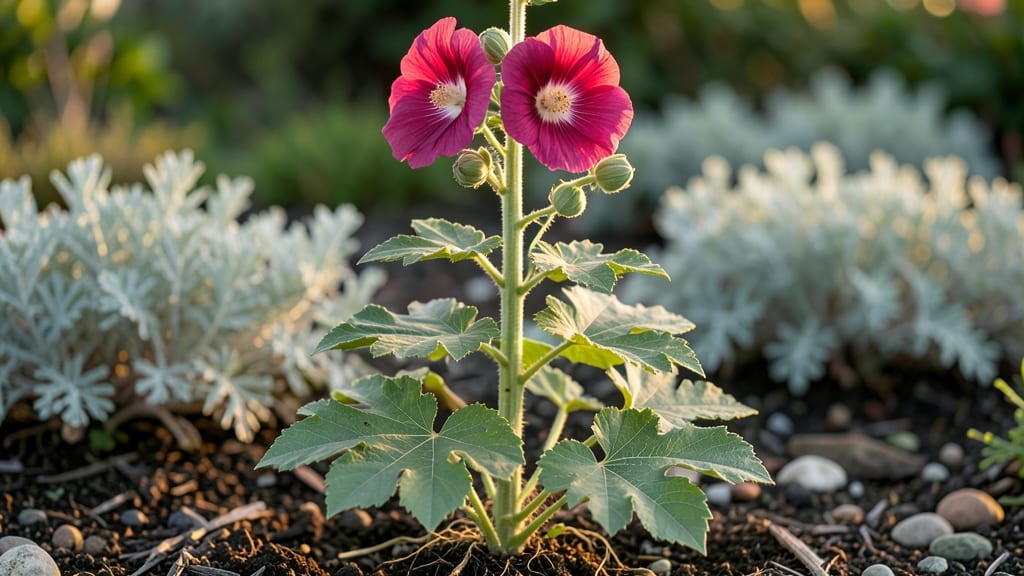
Hollyhocks do not bloom the first year when planted from seed, as they prioritize developing a strong root system and leafy growth for a more vigorous flowering display in their second year. Most varieties need 12-18 months to mature and produce blooms.
This delayed blooming isn't a flaw—it's a smart survival strategy. 🌱 Hollyhocks, as biennials, allocate their energy to building deep roots and sturdy stems during their first year, which sets the stage for dramatic second-year blooms that can reach heights of 4-6 feet.
Many gardeners get frustrated when their seed packets promise "blooms in 60 days," but that timeline only applies to transplants, not seeds. The key to patience is understanding that this first-year foliage phase actually makes for hardier plants that rebound better from pests and weather.
What's interesting is how this growth pattern varies by variety. Some perennial hollyhocks may produce scattered blooms in their first year if conditions are perfect, but even then, the display will be modest compared to what you'll see the following season.
The trade-off? That second-year show is worth the wait, with some varieties producing blooms for months on end.
💡 In This Article
- Why Hollyhocks Skip Blooming in Their First Season
- Tips to Encourage Hollyhocks’ First Blooms Faster
Why hollyhocks skip blooming in their first season
Hollyhocks follow a biennial growth cycle, meaning they prioritize vegetative growth in their first year to build resources for flowering in the second.
This strategy is rooted in survival—strong root systems help plants access water and nutrients more efficiently, especially in their native habitats where drought or poor soil conditions are common.
During this phase, hollyhocks can develop roots that extend 2-3 feet deep, while their stems grow thick and woody to support future blooms that can weigh down the plant.
The energy allocation is dramatic: up to 70% of the plant's resources go toward root and stem development, leaving little for flower production. This is why you'll see lush, 3-5 foot tall foliage by fall, but no blooms.
The leaves themselves are a key indicator—broad, 5-7 lobed foliage stores energy through photosynthesis, which gets converted into starches in the roots over winter. 🌱 This stored energy is what fuels the spectacular second-year flower display.
Seed packets often create unrealistic expectations by listing bloom times based on transplants, not seeds. A 60-day bloom time assumes the plant already has established roots, whereas starting from seed means the plant spends its first 6-8 months focused solely on root development.
The miscommunication stems from how seed companies test growth rates—using young plants rather than seeds, which gives gardeners a false timeline for what's actually possible.
Climate plays a surprising role in this pattern. In cooler regions, hollyhocks may enter a partial dormancy during winter, further delaying flowering until the second spring. Meanwhile, in warmer climates, they might attempt sparse first-year blooms if conditions are ideal, but these are typically weak and short-lived.
The trade-off? Plants that skip first-year blooming often produce 2-3 times more flowers in their second year compared to those that bloom early.
What's fascinating is how this growth pattern compares to annuals like zinnias, which bloom within 60-90 days of planting. Hollyhocks' delayed strategy is a calculated risk—annuals produce many seeds quickly but often have shorter lifespans, while biennials like hollyhocks invest in longevity.
This is why your second-year plants often outperform first-year bloomers in both size and flower count, with some varieties producing 50-100 blooms per stem.
For gardeners impatient for color, understanding this cycle helps reframe expectations. The first-year foliage isn't wasted—it's the foundation for what will become your garden's centerpiece.
Think of it like building a skyscraper: you can't have strong upper floors without a solid base. 💫 The hollyhock's first year is all about creating that unshakable foundation.