
Blooming
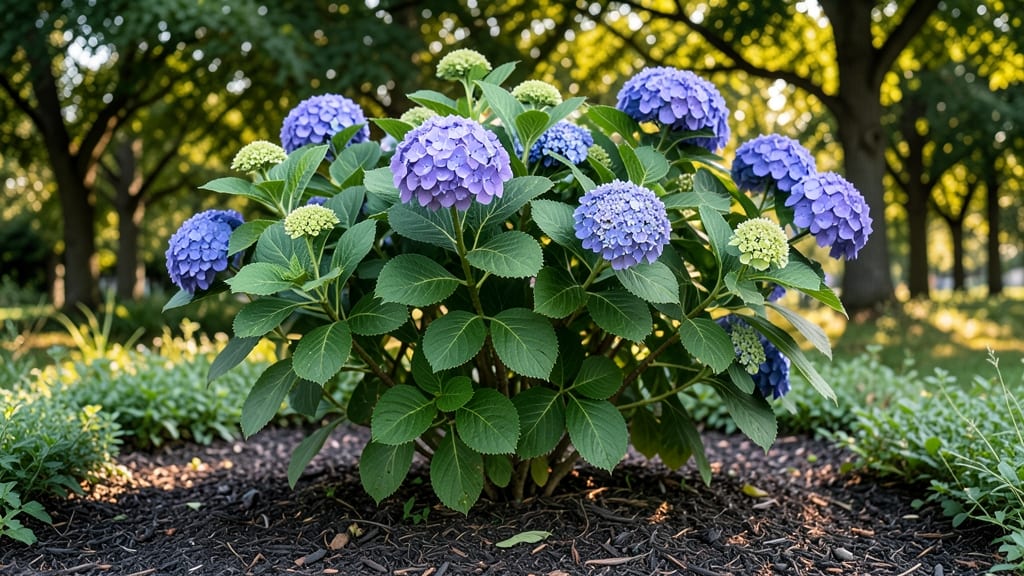
Hydrangeas bloom more than once only if they're reblooming varieties, which produce two distinct flowering periods—early summer and late summer/fall—when pruned correctly and given proper seasonal care.
Not all hydrangeas produce multiple blooms—only specific reblooming varieties like 'Endless Summer' or 'Limelight' have this ability. 🌸 The key lies in their growth patterns: these plants develop flowers on new wood (current season's growth) rather than old wood (previous year's stems).
This means if you prune them properly after their first flush, they'll reward you with a second round of blooms later in the season. The catch? They need consistent moisture, balanced fertilizer, and protection from harsh winter winds to maintain their vigor.
What sets rebloomers apart is their adaptability to seasonal changes. While traditional hydrangeas focus all their energy on one big bloom in spring, rebloomers spread their effort across two cycles. This makes them perfect for gardeners who want long-lasting color and continuous interest.
Just remember: deadheading spent blooms and pruning in late summer (after the second flush) keeps them blooming year after year.
💡 In This Article
- How Reblooming Hydrangea Varieties Work
- Best Reblooming Hydrangea Types for Multiple Blooms
How reblooming hydrangea varieties work
The secret to hydrangeas blooming twice lies in their growth habits. Most hydrangeas are "old wood bloomers," meaning they set flower buds on the previous year's stems during late summer or fall. These buds then open in spring.
However, reblooming varieties like 'Endless Summer' are "new wood bloomers," producing flowers on current season's growth. This dual system allows them to create two distinct bloom cycles when properly cared for.
The first flush appears in early summer (June-July) from buds formed on old wood, while the second flush emerges in late summer (August-September) from new wood growth. The transition between these cycles is triggered by temperature shifts—typically when daytime highs drop below 85°F after a hot spell.
This cooling period signals the plant to shift energy from leaf production to flower development on fresh stems. Without this temperature cue, the second flush may never materialize, even in reblooming varieties.
What makes this mechanism fascinating is the plant's energy allocation strategy. During spring and early summer, rebloomers focus on growing new stems and leaves. Only after establishing a strong root system and canopy do they begin forming flower buds on these new stems.
This delayed flowering explains why proper pruning is critical—cutting back too aggressively removes potential bloom sites for the second cycle. The ideal approach is light pruning after the first bloom to encourage bushier growth without sacrificing future flowers.
Light levels also play a crucial role in this process. Reblooming hydrangeas need 6-8 hours of direct sunlight daily to develop enough energy for two bloom cycles. In shaded conditions (common in many gardens), they may produce only one flush or smaller blooms.
The plant's photosynthesis machinery must work overtime to support both the existing foliage and the developing flower buds. This is why gardeners often see more consistent reblooming in sunnier locations, even with the same variety.
Another key factor is the plant's dormancy period. Unlike old wood bloomers that store energy in their roots over winter, rebloomers must maintain active growth to support their second flush. This means they require consistent moisture (about 1-1.5 inches per week) and protection from winter desiccation.
When roots dry out or stems freeze back severely, the plant's ability to produce new wood growth—and thus second blooms—is compromised. Mulching with 2-3 inches of organic matter helps insulate roots and maintain soil moisture.
Here's what actually happens at the cellular level: Flower buds on new wood form from specialized stem cells called meristems. These cells remain undifferentiated until environmental conditions (like temperature drops) trigger their development into floral structures.
The plant's hormonal balance—particularly auxin and cytokinin levels—regulates this process. Too much auxin (produced in rapidly growing tips) can suppress flowering, which is why pinching back new growth in early summer can sometimes enhance reblooming potential.
The result of these complex interactions is what gardeners see: lush, continuous blooms from early summer through fall. For example, a well-cared-for 'Endless Summer' might produce 3-4 inches wide blooms in June, followed by equally vibrant flowers in September—all from the same plant.
This dual performance makes rebloomers like 'Limelight' (with its striking cone-shaped blooms) and 'Nikko Blue' (with deep blue flowers) stand out in seasonal gardens where other plants have finished their display.