
Blooming
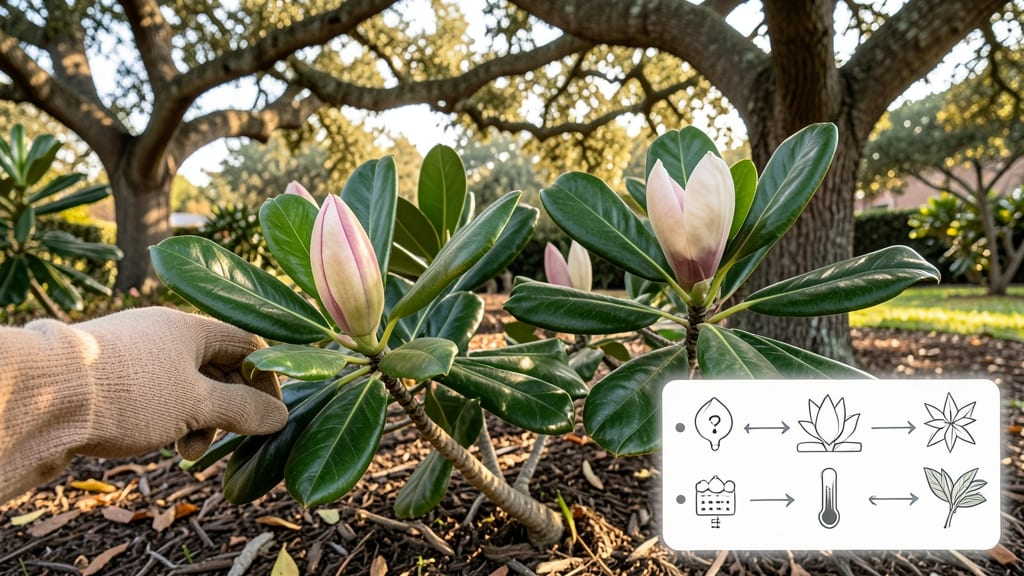
Do magnolia trees bloom twice a year? They typically bloom only once annually, but certain hybrid varieties—such as Magnolia 'Elizabeth', Magnolia 'Ann', or Magnolia 'Jane'—can produce secondary blooms when given the right growing conditions: mild winters, regular hydration, and strategic pruning. Most species flower just once annually, usually in spring or early summer.
Magnolia blooming cycles are controlled by a mix of genetics and environmental cues. 🌸 The hybrid varieties that rebloom often trace their lineage to tropical ancestors, which have less pronounced seasonal dormancy. For example, Magnolia 'Elizabeth' may produce a second flush of flowers if temperatures stay above 40°F during winter.
Deciduous magnolias (like Magnolia grandiflora) tend to bloom once in late spring, while evergreen varieties might show a brief second bloom if summer conditions remain favorable.
To encourage extra blooms, focus on three key factors: watering, pruning, and soil health. I've found that deep watering twice weekly during dry spells helps maintain consistent moisture in the root zone, while light pruning immediately after the first bloom removes spent flowers without stressing the tree.
Adding compost to the soil improves nutrient retention, which supports the energy demands of reblooming. 💫
💡 In This Article
- Why Most Magnolias Bloom Once—and How Varieties Defy the Rule
- How to Encourage Extra Blooms in Your Magnolia Tree
Why most magnolias bloom once—and how varieties defy the rule
Magnolia blooming cycles are governed by a complex interplay of hormones and environmental triggers. Most species enter a period of dormancy in winter, which resets their biological clocks to produce just one flush of flowers in spring.
This single bloom is nature's way of conserving energy—flowering is metabolically expensive, and producing a second set would deplete the tree's reserves. The key hormone here is florigen, which signals blooming when day length and temperature conditions are optimal, typically around 50-60°F for 2-3 weeks.
The genetic exceptions—like Magnolia 'Elizabeth' or Magnolia 'Ann'—trace their ability to rebloom to hybrid vigor and tropical ancestry. These varieties often have less pronounced dormancy periods because their parentage includes species from warmer climates (like Magnolia liliiflora from Japan).
For example, Magnolia 'Elizabeth' can produce a second bloom if winter temperatures never drop below 40°F for extended periods. This creates a "second chance" for florigen production when summer heat triggers a secondary growth spurt.
Deciduous magnolias (like Magnolia grandiflora) typically bloom just once in late spring because their leaves drop in winter, forcing a complete metabolic reset. Evergreen varieties, however, have a slight advantage—they retain foliage year-round, which allows some species to produce a brief second bloom if summer conditions remain favorable.
The trade-off? Evergreens often have smaller secondary flowers because the tree is already diverting energy to maintain leaves.
What most gardeners don't realize is that even reblooming varieties rely on a precise balance of chilling hours (typically 400-800 hours below 45°F) followed by warm periods. Without this chilling, the tree may produce fewer or no blooms at all.
For instance, a Magnolia 'Jane' in a mild coastal climate might rebloom in late summer, while the same tree in a colder inland region could fail entirely due to insufficient winter chilling.
Here's a visual comparison of blooming behavior:
- Deciduous magnolias: One spring bloom (e.g., Magnolia soulangeana)
- Evergreen magnolias: One spring bloom + possible weak summer rebloom (e.g., Magnolia grandiflora)
- Reblooming hybrids: Two distinct blooming periods (e.g., Magnolia 'Elizabeth')
The secret to encouraging extra blooms lies in mimicking these natural conditions. For example, mulching with 3-4 inches of organic matter helps regulate soil temperature, while strategic pruning removes competing growth that might divert energy from flower production. 🌿