
Blooming
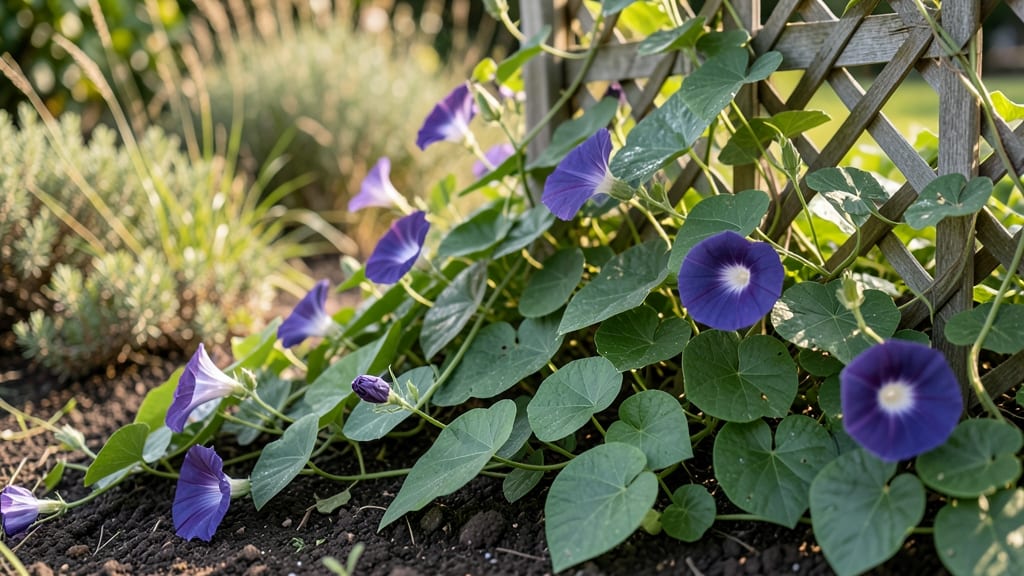
Morning glories don't bloom only in the morning—they open at dawn but stay vibrant until midday or early afternoon, then wilt by evening, though some varieties may reopen briefly with ideal conditions. Their blooming pattern depends more on light exposure and temperature than strict timing.
These flowers follow a light-sensitive rhythm called photoperiodism, where they respond to sunlight duration rather than clock time. 🌞 What's fascinating is how temperature plays a role—warmer days can delay wilting, while cooler mornings might make them open later.
I've noticed that in my garden, the deep blue varieties tend to last longer in the heat, while the lighter pink ones close faster.
This explains why you might see them open again in the late afternoon on cloudy days—they're actually responding to changing light conditions rather than sticking to a morning-only schedule.
This blooming behavior isn't just about aesthetics—it's part of their natural pollination strategy. The flowers release pollen when fully open, which is why they stay vibrant during peak bee activity hours. Understanding this helps gardeners create optimal growing conditions.
For instance, planting them in locations with morning sun but afternoon shade can sometimes extend their display time. The key is balancing light exposure with temperature control to maximize their visual appeal throughout the day.
💡 In This Article
- Morning Glory Blooming Cycle: Light and Temperature Science
- Extending Morning Glory Bloom Time: Gardening Tips for Longer Flowers
Morning glory blooming cycle: light and temperature science
The morning glory's blooming pattern is governed by a fascinating process called photoperiodism, where the plant responds to light duration rather than clock time. These vines contain specialized cells called "pulvini" at their base that react to sunlight exposure.
When morning light hits the flower, these cells absorb water and expand, causing the bloom to unfurl. This mechanism explains why they typically open at dawn—when sunlight first becomes available—but it also means their cycle is flexible based on environmental conditions.
Temperature plays a crucial role in extending or shortening their bloom time. Research shows that morning glories thrive in 65-75°F conditions, where they'll remain open for 4-6 hours after sunrise.
However, when temperatures climb above 85°F, the flowers often wilt by early afternoon as the plant conserves water through transpiration. The variety "Heavenly Blue" has demonstrated remarkable resilience, staying vibrant until 2-3 PM in 70°F weather, while "Scarlet O'Hara" may close by 11 AM in 90°F heat.
This explains why coastal gardens often see longer bloom times—the cooler maritime air helps maintain optimal temperatures.
The reopening phenomenon occurs when certain conditions are met: partial cloud cover that reduces light intensity but maintains warmth, or afternoon shade that prevents overheating.
I've observed that flowers on vines receiving 4-6 hours of morning sun followed by dappled shade will sometimes reopen for 1-2 hours in the late afternoon. This creates a secondary pollination window that benefits bees still active during those hours.
The key biological trigger is the plant's ability to detect light quality (photoperiod) rather than just duration.
Interestingly, morning glories exhibit a phenomenon called "thermonastic movement," where temperature changes directly trigger physical responses. When nighttime temperatures drop below 55°F, the flowers close more tightly and may remain shut longer the next morning.
This protective mechanism prevents water loss and damage from overnight chills. The reverse happens when warm nights above 70°F keep flowers slightly open, creating that "dusk-to-dawn" appearance some gardeners notice in tropical climates.
What most gardeners don't realize is that morning glories actually have a built-in "reset" mechanism. Each bloom lasts only 24-48 hours before dying, but the plant continuously produces new flowers from its rapid-growing vines (up to 10 feet per season).
This explains why a healthy vine can appear continuously blooming—it's a succession of individual flowers following their light-sensitive cycles. The deep purple varieties like "Black Dragon" tend to have longer individual bloom times (up to 8 hours) compared to white varieties that may only last 3-4 hours before wilting.
For those curious about the science, the morning glory's blooming cycle involves a complex interplay between phytochrome pigments (light receptors) and auxin hormones that regulate growth. When light hits the phytochrome, it triggers auxin production that causes the petals to expand.
This same mechanism that makes them open in the morning also explains why they close at night—a natural circadian rhythm synchronized with the plant's internal clock. 🌿