
Blooming
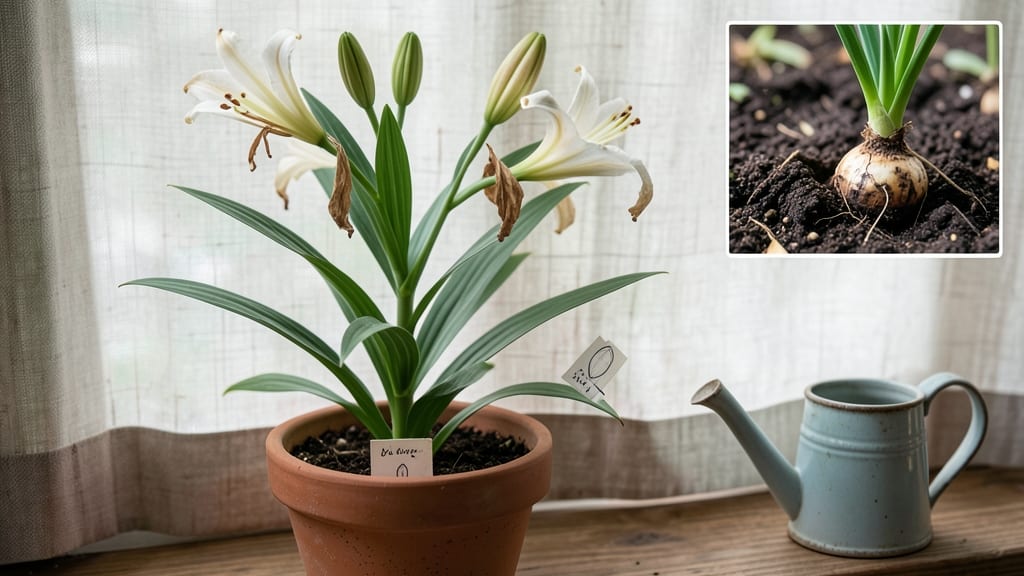
Easter lilies will bloom again only if you treat them as perennials by dividing their bulbs or replanting offsets after their first flowering cycle. Most people discard them after blooming because they naturally enter dormancy, but with proper care, they can return to flower in future seasons.
Most Easter lilies bloom just once because they're perennial bulbs that exhaust their energy producing flowers in their first spring. 🌱 After blooming, they focus on storing nutrients in their bulbs for dormancy rather than preparing for another flower cycle.
The key to getting them to bloom again lies in treating them like the perennials they are—digging up the bulbs after the foliage yellows, separating offsets, and replanting them in well-draining soil with full sun exposure.
This process mimics their natural growth cycle and gives them the energy reserves needed for future blooms.
What many gardeners miss is that Easter lilies need 6-8 weeks of warm weather after blooming to fully recharge their bulbs. Skipping this step means the bulbs won't have enough stored energy to produce flowers the next year.
I've found that replanting bulbs in late summer or early fall gives them the best chance to establish roots before winter dormancy, setting the stage for spring blooms the following year.
💡 In This Article
- Why Easter Lilies Stop Blooming After First Flower
- How to Revive and Replant Easter Lily Bulbs for Next Season
Why Easter lilies stop blooming after first flower
The first bloom of an Easter lily is a dramatic display of energy expenditure.
These plants are perennial bulbs that devote nearly all their stored nutrients to producing those iconic trumpet-shaped flowers in spring. 🌸 What most people don't realize is that the bulb's energy reserves—built up over months of photosynthesis—get completely drained during this single flowering cycle.
Unlike annuals that complete their lifecycle in one season, Easter lilies enter a dormancy phase where they focus on rebuilding their bulbs rather than preparing for another flower cycle.
Botanically, this happens because the plant's priority shifts from reproduction to survival. After flowering, the foliage continues growing for 6-8 weeks to replenish the bulb through photosynthesis. This is critical: if you cut back the leaves too early, the bulb won't store enough nutrients to bloom again.
The bulb's energy system works like a battery—it needs full charging cycles to power future blooms. Without this recovery period, the bulb simply won't have the reserves needed for another round of flowering.
The misconception that Easter lilies are annuals stems from how they're typically sold and cared for. Most garden centers treat them as one-time bloomers because they're often planted as potted specimens that aren't given proper post-bloom care.
In reality, these bulbs can live for decades if given the right conditions—similar to how daylilies or daffodils return year after year. The key difference is that Easter lilies require more precise timing and care to break their dormancy cycle successfully.
Seasonal triggers also play a crucial role. Easter lilies are native to wooded areas in Asia where they experience distinct seasonal changes. In their natural habitat, they bloom in spring when temperatures rise, then enter dormancy during cooler months.
When grown in temperate climates, they need this seasonal contrast to trigger their dormancy and subsequent regrowth. Without proper seasonal cues—like cooler fall temperatures—the bulbs may not properly reset their biological clocks for next year's blooming.
Here's what's actually happening underground: The bulb's basal plate (where roots emerge) becomes the command center for energy distribution. During the first bloom, this plate prioritizes flower production over bulb maintenance.
Only after the foliage yellows and dies back does the plant shift its focus to storing carbohydrates in the bulb's scales. This process requires full sunlight exposure—at least 6 hours daily—to maximize photosynthesis and energy storage.
What most gardeners overlook is the bulb's sensitivity to temperature changes. After flowering, Easter lilies need consistent warmth (70-80°F) for the foliage to continue photosynthesizing, followed by a gradual cooling period to signal dormancy.
In regions with mild winters, this natural cooling doesn't occur, which can confuse the plant's growth cycle. This is why Easter lilies often fail to rebloom in warmer climates unless given artificial dormancy conditions.