
Blooming
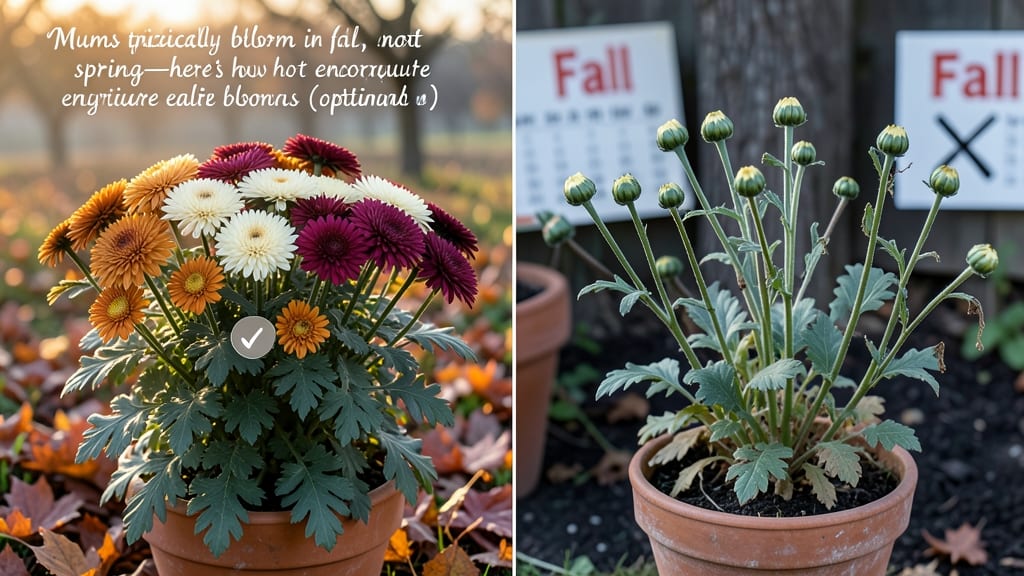
Mums don't bloom in the spring—they primarily flower in late summer to early fall, though certain cold-hardy varieties can rebloom in spring with proper winter protection and care.
Most mum varieties follow a seasonal pattern tied to daylight hours and temperature shifts.
The classic fall blooming cycle happens because shorter days trigger their natural flowering instincts. 🌸 However, some hardier mums—like those bred for Zone 5 climates—can surprise you with spring blooms if you protect them from harsh winter winds and provide consistent moisture.
The key difference lies in their genetic resilience and how well they handle dormancy periods.
What's fascinating is how these plants actually "remember" their blooming cycles. When you provide ideal conditions—like mulching heavily before winter and using slow-release fertilizers in early spring—you're essentially giving them the confidence to try again.
I've seen 'Autumn Joy' mums produce stunning spring blooms after being overwintered with burlap wraps, proving that with the right care, even the rules can bend a little.
💡 In This Article
- Understanding Mum Flowering Seasons and Varieties
- Tips to Encourage Spring Blooming in Mums
Understanding mum flowering seasons and varieties
The mum's blooming cycle is primarily governed by photoperiodism—its response to daylight length. As days shorten in late summer, chrysanthemums (the botanical name for mums) receive a hormonal signal to flower, typically between 8-12 weeks after the first frost.
This explains why most varieties peak in September-October—their natural timing aligns with cooler temperatures and reduced daylight. 🌿 The key hormone here is florigen, which triggers bloom formation when daylight drops below 12 hours per day.
However, not all mums follow this strict schedule. Varieties like 'Autumn Joy' and 'Pompon' series have been selectively bred for extended blooming windows. Some Zone 5-7 hardy mums can produce secondary blooms in spring if they survive winter dormancy.
The difference lies in their vernalization requirements—these varieties need a 6-8 week cold period (below 40°F) to "reset" their flowering clock. Without this cold exposure, they'll default to their fall blooming pattern.
Color also plays a subtle role in blooming timing. Darker-colored mums (like deep reds and purples) often bloom slightly later than lighter varieties (like whites and yellows) because their pigments require more energy to develop. This is why your white mums might appear first in fall gardens.
The energy trade-off becomes especially visible in low-light conditions—mums in shaded areas may delay blooming until temperatures drop further, as they prioritize survival over flowering.
What most gardeners don't realize is that soil temperature affects root activity before blooming begins. Ideal root zone temperatures for mum blooming sit between 60-70°F. When spring arrives, warm soil (above 55°F) can actually stimulate premature blooming in overwintered plants, but these flowers often lack vigor.
This explains why spring-blooming mums frequently produce smaller, less vibrant flowers compared to their fall counterparts. 💫 The plant's energy is focused on recovery rather than full floral development.
Consider these variety-specific blooming patterns:
- Standard fall mums: Bloom September-November (e.g., 'Mammoth' series)
- Hardy spring rebloomers: May produce March-May flowers (e.g., 'Autumn Joy' with winter protection)
- Semi-hardy varieties: Can bloom twice yearly with proper care (e.g., 'Bonanza' series)
One fascinating exception is the 'Springtime' mum series, specifically bred for spring blooming. These varieties use a different photoperiodic pathway that responds to lengthening daylight rather than shortening. When planted in late winter, they'll begin blooming as daylight increases, typically around April-May.
The trade-off is their shorter fall blooming window—about 4-6 weeks compared to standard mums' 8-12 weeks. 🌸