
Blooming
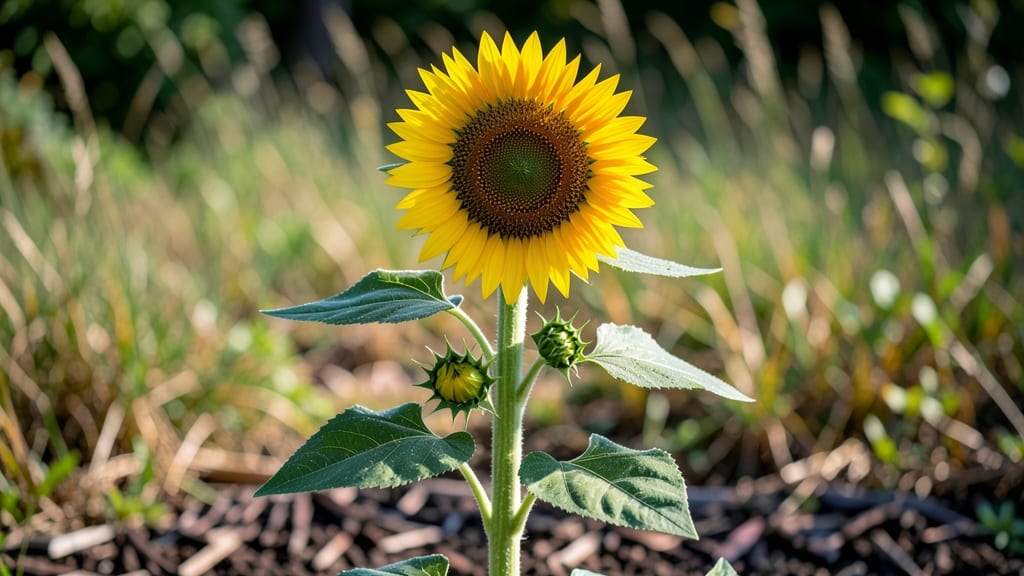
Most sunflowers bloom in late summer or early fall, but some dwarf varieties can flower in spring if planted early in warm climates. These early bloomers need consistent sunlight and frost-free conditions to thrive.
Spring blooming in sunflowers depends heavily on variety and climate. 🌱 Dwarf sunflowers like 'Teddy Bear' or 'Moulin Rouge' are more likely to produce flowers in spring because they mature faster, often in just 50-60 days.
However, even these varieties need at least 6-8 hours of direct sunlight daily to trigger blooming. In colder regions, starting seeds indoors or using row covers can help protect young plants from late frosts, giving them the best chance to flower earlier in the season.
What many gardeners don't realize is that sunflowers are actually photoperiod-sensitive, meaning their blooming is triggered by the length of daylight rather than temperature alone. This is why most varieties wait for summer's long days to bloom—it's their natural cue.
But with the right variety and growing conditions, you can coax spring blooms from sunflowers, adding vibrant color to your garden months earlier than usual.
💡 In This Article
- How Sunflower Varieties Affect Spring Blooming Timelines
- Spring Planting Tips for Early Sunflower Blooms
How sunflower varieties affect spring blooming timelines
Sunflower blooming seasons are primarily dictated by their genetic makeup and photoperiodism—the plant's response to daylight length. Annual sunflowers, which make up most varieties, are short-day plants, meaning they require 12-14 hours of daylight to trigger flowering.
This explains why they typically bloom in late summer when days start shortening. However, dwarf varieties like 'Teddy Bear' and 'Moulin Rouge' are exceptions—they mature faster (in 50-60 days) and can bloom in spring if planted early in warm climates where frost isn't a threat.
The key difference lies in their growth habits: giant varieties like 'Russian Giant' need 120-140 days to mature, while dwarf types complete their life cycle in half that time. This faster maturation allows spring planting to work in frost-free zones (USDA zones 8-11).
For example, in Southern California, 'Teddy Bear' sunflowers planted in February can bloom by April, while the same variety in Minnesota would only flower in August. The critical factor is consistent sunlight—even dwarf varieties won't bloom without 6-8 hours of direct light daily.
Photoperiodism works through a hormone called florigen, which sunflowers produce in response to specific daylight patterns. In spring, when days are lengthening, most sunflowers stay in vegetative growth because they're waiting for the longer summer days that trigger florigen production.
However, dwarf varieties have a shorter juvenile phase, so they can produce florigen sooner. This is why they're the only sunflowers that reliably bloom in spring under ideal conditions.
Climate zones play a massive role in spring blooming success. In USDA zones 1-7, spring-planted sunflowers rarely bloom because late frosts and cool soils delay growth. But in zones 8-11, where winter temperatures rarely drop below 30°F, spring planting can yield blooms as early as March.
The soil temperature must reach 55-60°F for seeds to germinate properly—below that, growth stalls entirely. This is why gardeners in cooler regions must start seeds indoors or use heat mats to jumpstart spring growth.
What most gardeners overlook is that even dwarf varieties have minimum daylight requirements. If planted in areas with less than 10 hours of daylight (common in northern latitudes), spring sunflowers may produce only foliage or stunted blooms.
For example, in Seattle (zone 8), 'Moulin Rouge' planted in March might only reach 2-3 feet tall with small blooms by June, while the same plant in Phoenix would reach 4-5 feet with full-sized flowers. The difference comes down to daylight intensity and thermal energy accumulation.
For those eager to see spring sunflowers, the best strategy is to choose early-maturing dwarf varieties and plant them in the warmest part of your garden, near a south-facing wall. Mulching with black plastic or straw can raise soil temperatures by 5-10°F, creating the ideal conditions for spring blooms.
Just remember: no matter how hard you try, most sunflowers are genetically programmed to wait for summer's long days to reach their full potential.