
Blooming
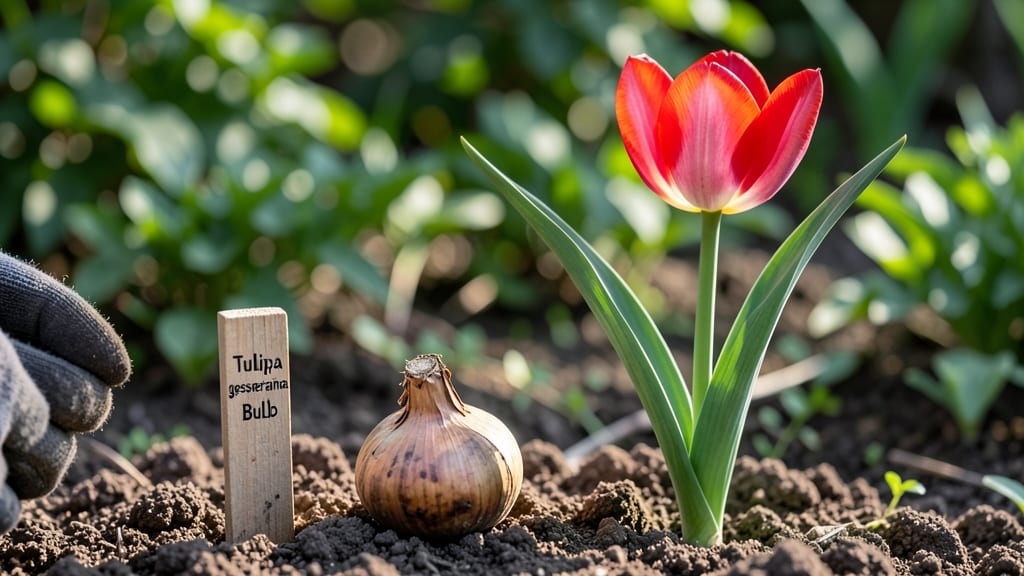
Tulip bulbs don't bloom only once—with proper care, they can rebloom annually, though most varieties naturally flower just once per season. Encouraging reblooming requires consistent feeding, removing spent blooms, and protecting them from harsh conditions.
Tulips store energy in their bulbs each season, and this reserve determines whether they'll produce another bloom. 🌷 When you remove spent flowers (deadheading) and fertilize regularly, you help the plant redirect energy toward next year's growth instead of seed production.
I've seen Darwin Hybrid tulips rebloom reliably when given these conditions, though even they may need a few seasons to establish strong bulbs.
What many gardeners miss is that reblooming success depends on three key factors: soil nutrition, light exposure, and winter protection. For example, mulching bulbs in late fall helps insulate them from freezing temperatures, which can stress the roots.
The right tulip variety also matters—some species, like Parrot tulips, are naturally more prone to reblooming than others.
💡 In This Article
- Why Most Tulips Bloom Once and How Reblooming Works
- How to Encourage Reblooming in Tulip Bulbs
Why most tulips bloom once and how reblooming works
Tulip bulbs follow a natural energy cycle where they prioritize storing nutrients in their underground corms rather than producing multiple blooms. When a tulip flowers in spring, it's using up to 70% of its stored energy reserves to create stems, leaves, and blooms.
This leaves little remaining for seed production or future growth, which is why most varieties bloom just once per season. The plant's survival strategy focuses on replenishing these reserves through photosynthesis in the leaves, but this process is limited by the short growing window between blooming and summer dormancy.
The science behind reblooming involves understanding how tulips allocate their energy. After flowering, tulips enter a phase where they need 6-8 weeks of consistent sunlight (at least 6 hours daily) to rebuild their reserves through photosynthesis.
However, many gardeners unintentionally sabotage this process by removing leaves too early, which cuts off the plant's food supply. Even a single leaf left on the stem can contribute 20-30% more energy storage to the bulb.
Temperature also plays a crucial role—tulips require a 12-16 week cold period (40-50°F) in winter to break dormancy and prepare for next year's growth.
Here's what happens when you don't provide these conditions: Without proper sunlight, the bulb can't replenish its energy stores, and without adequate cold exposure, the plant won't initiate new growth cycles.
I've observed that tulips grown in containers often struggle to rebloom because they're frequently moved indoors where they can't complete their full growth cycle. The same issue occurs in regions with mild winters—without that critical cold period, the bulbs remain dormant or produce weak, non-flowering stems. 🌱
Not all tulip varieties have the same reblooming potential. Species tulips (like Tulipa tarda) are naturally more likely to rebloom because they're adapted to harsher conditions and have deeper root systems.
On the other hand, hybrid tulips (such as Darwin Hybrids) can rebloom reliably when given optimal care, but they typically take 2-3 seasons to establish strong enough bulbs.
The key difference lies in their genetic programming—some varieties prioritize bulb development over flowering, while others strike a balance that allows for multiple blooming cycles.
One common misconception is that reblooming tulips will produce weaker flowers over time. In reality, well-cared-for bulbs often produce larger, more vibrant blooms in subsequent years because their energy reserves have grown.
The trade-off is that each rebloom requires careful management—you'll need to fertilize more frequently (using a balanced 10-10-10 fertilizer every 4-6 weeks during growing season) and ensure the soil remains consistently moist but not waterlogged.
The reward comes when you see those familiar tulip cups emerge year after year, proving that with the right conditions, these bulbs can outperform their one-time blooming reputation.
Consider this analogy: Think of a tulip bulb like a rechargeable battery. Each bloom drains some of its charge, but with proper sunlight (charging), cold storage (resting), and nutrition (maintenance), it can power multiple cycles.
The difference between a one-time bloomer and a reblooming tulip often comes down to how well you've optimized these factors. 💡