
Blooming
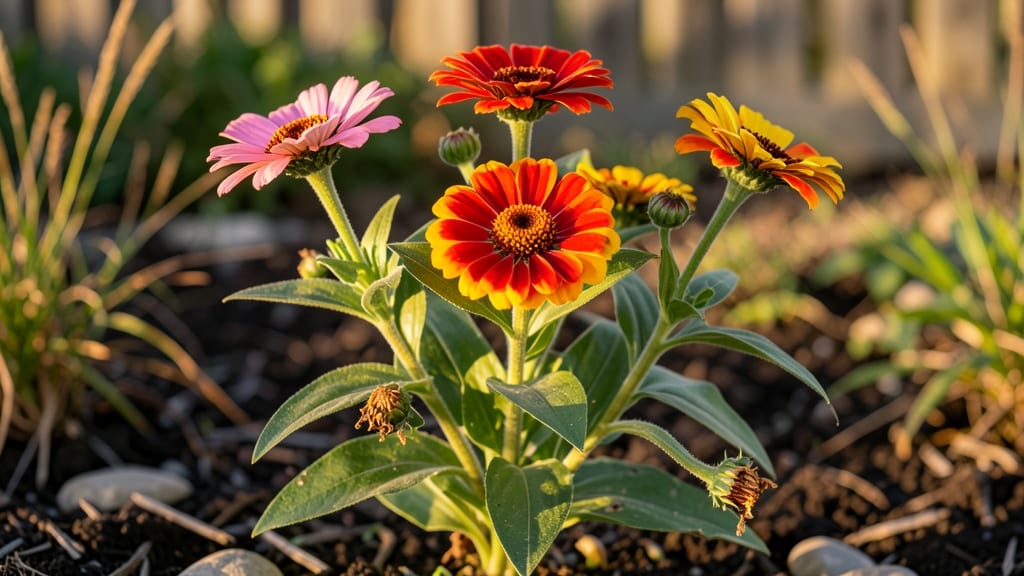
Zinnias do bloom all summer when you choose the right varieties and maintain consistent care, particularly heat-loving types like 'Benary’s Giant' or 'Profusion,' which flourish in full sun and steady moisture. Regularly trimming faded blooms keeps them flowering until frost, while strategic late-season pruning can even spur new growth as temperatures cool.
Zinnias are summer's rockstars because they're bred to handle the heat—literally. 🌞 The secret lies in their thick, waxy leaves and deep roots, which help them conserve water and withstand temperatures up to 95°F without wilting.
Varieties like 'Zahara' or 'Crystal' are particularly resilient, often continuing to bloom until hard frost hits in zones 3-10. I've seen my own zinnias push through 100°F days with just weekly watering and morning deadheading, proving they're far tougher than most gardeners realize.
What's fascinating is how their blooming patterns shift with the seasons. Early-season varieties like 'Thumbelina' burst into color in June, while late bloomers such as 'Magellan' peak in August and September.
This staggered timing means you can enjoy continuous color from late spring through fall—if you plant a mix of types. The key is to remove spent blooms daily (yes, daily!) to prevent seed formation, which redirects the plant's energy into producing more flowers instead of seeds.
💡 In This Article
- Why Zinnia Varieties Differ in Summer Blooming Duration
- Late-Season Zinnia Care Tips to Prolong Summer Flowers
Why zinnia varieties differ in summer blooming duration
Zinnias exhibit dramatic blooming differences because their genetics determine how they respond to heat and daylight changes. Heat-tolerant varieties like 'Benary’s Giant' (which can reach 3-4 feet tall) have thicker stems and broader leaves that reduce water loss through transpiration.
These traits allow them to continue flowering even when daytime temperatures hit 90°F, while more delicate varieties like 'Crystal' (a 12-18 inch dwarf) may slow production in extreme heat.
The science lies in their photoperiod sensitivity—most zinnias are day-neutral, meaning they bloom continuously as long as they receive at least 6-8 hours of sunlight daily, but some varieties have subtle genetic triggers that make them more responsive to longer daylight in summer.
The waxy coating on zinnia leaves acts like a natural sunscreen, reflecting up to 30% of sunlight while allowing just enough to reach the chlorophyll for photosynthesis.
This adaptation explains why zinnias thrive in full sun gardens where other annuals might bolt or wilt. 🌡️ Dwarf varieties like 'Thumbelina' often bloom earlier in the season because their compact growth habit allows them to establish roots quickly in cooler spring soil, while taller varieties like 'Profusion' (which can produce 100+ blooms per plant) store more energy in their stems for prolonged summer flowering.
The trade-off? Taller varieties need staking to prevent flopping in heavy rains or wind.
What most gardeners overlook is how zinnia varieties respond to temperature shifts at night. Varieties bred for late summer blooming, such as 'Magellan,' have slightly longer nighttime recovery periods, allowing them to push through 80°F nights without stress.
This is why you'll often see them still blooming in September when earlier varieties have faded.
The secret weapon here is their deep taproots—some varieties can reach 12-18 inches deep, accessing moisture that shallow-rooted plants can't tap into during droughts, which is why they rarely need supplemental watering beyond weekly deep soakings.
Color also plays a subtle role in blooming duration.
Darker blooms like deep reds and purples absorb more sunlight, which can accelerate wilting in extreme heat, while lighter colors reflect more light and heat. 🌸 This is why white zinnias often outlast their darker counterparts by 1-2 weeks in the hottest months.
The pigment differences affect how quickly flowers dehydrate—darker petals lose moisture faster, causing them to close during midday heat. This natural mechanism conserves energy but can make them appear less vibrant during peak summer hours.
For gardeners in cooler climates (zones 3-5), the real game-changer is selecting varieties with short-day sensitivity, which triggers blooming as daylight shortens in late summer.
Varieties like 'Crystal' or 'Zahara' respond to these cues by producing more buds in August and September, extending their season by 4-6 weeks compared to heat-only varieties.
The key is to plant a mix—early bloomers for June, mid-season for July, and late bloomers for August—creating a continuous display that foolproofs your summer garden.
One final scientific twist: zinnias produce more flowers when they experience moderate stress, like slight drought or root pruning. This phenomenon, called "compensatory growth," explains why zinnias often bloom more profusely after a heatwave if you provide consistent water afterward.
The plants redirect their energy from leaf production to flower development, which is why deadheading isn't just about looks—it's about maintaining that delicate balance between stress and recovery. 🌿