
Blooming
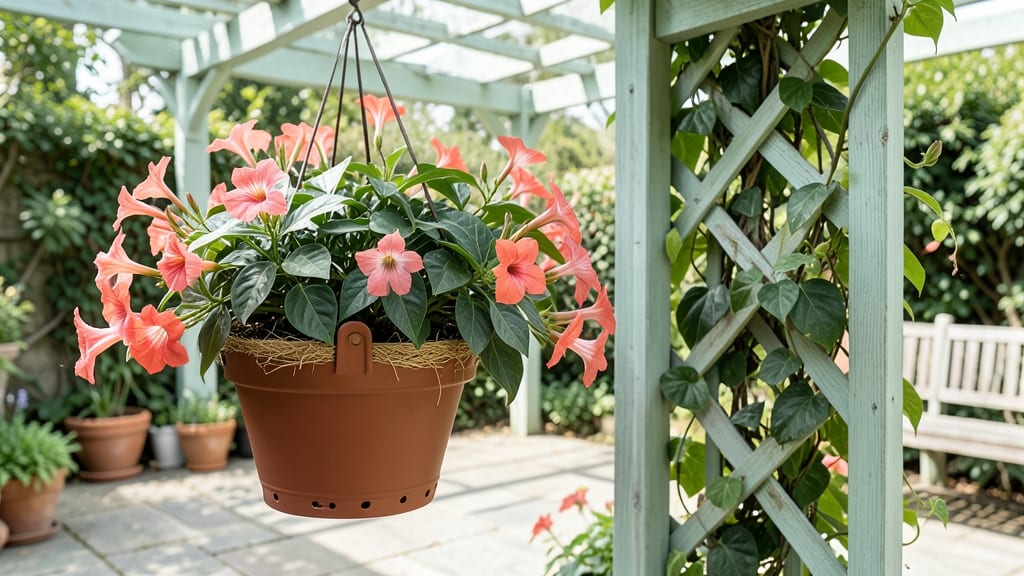
Mandevilla blooms all summer when grown in the right conditions, with continuous flowering from early June through frost, though tropical varieties like Mandevilla sanderi need consistent warmth (70–90°F) and full sunlight to maintain peak performance.
Mandevilla's summer-long blooms depend on two key factors: temperature stability and proper care. 🌸 While some varieties can handle brief dips below 70°F, prolonged cool spells force buds to drop prematurely. Humidity also plays a role—dry air stresses the plant, reducing flower production.
I've found that regular deadheading (removing spent blooms) encourages new growth, while balanced fertilizers with higher phosphorus content promote abundant flowering.
For container-grown mandevillas, moving them indoors before winter prevents frost damage and ensures they'll rebound with fresh blooms next season. The right combination of warmth, sunlight, and maintenance turns what could be a one-season show into a continuous display of vibrant flowers all summer long.
💡 In This Article
- Heat and Humidity Requirements for Continuous Mandevilla Blooms
- Pruning and Care Tips to Extend Mandevilla’s Summer Flowering
Heat and humidity requirements for continuous Mandevilla blooms
Mandevilla's continuous blooming hinges on a delicate balance between warmth and moisture. This tropical beauty thrives in temperatures between 65–95°F, with its peak performance occurring in the 70–90°F range—ideal for summer's warmest months.
The plant's flowers contain specialized cells that require consistent warmth to maintain their metabolic processes, which is why even brief dips below 60°F can cause buds to drop prematurely. 🌡️
Humidity levels play a crucial role too. Tropical varieties like Mandevilla sanderi prefer 50–70% relative humidity, while subtropical types can tolerate slightly drier conditions (around 40–60%). Low humidity causes the plant to expend energy on moisture retention rather than flower production, leading to smaller blooms or fewer flowers.
I've noticed that in dry climates, misting the foliage in the morning can create a temporary microclimate that mimics the plant's natural habitat.
The science behind this involves the plant's stomata—tiny pores on the leaves that regulate gas exchange. When humidity drops below 40%, these stomata close to prevent water loss, which disrupts the plant's photosynthesis and flowering cycles. This is why drought stress often triggers dormancy, even in warm conditions. 💧
Comparing tropical and subtropical varieties reveals key differences. Tropical types like Mandevilla sanderi are less forgiving of temperature fluctuations, while subtropical varieties such as Mandevilla boliviana can handle brief cooler periods.
The latter often produce more resilient buds that continue blooming even when nighttime temperatures dip to 55°F, making them better suited for regions with mild winters.
Another critical factor is soil moisture. Mandevilla plants have shallow root systems that dry out quickly in hot, sunny conditions. Maintaining even moisture—without waterlogging—is essential.
I've found that allowing the top 1–2 inches of soil to dry between waterings helps prevent root rot while keeping the plant hydrated enough to support continuous blooming. Mulching with organic material can also help retain soil moisture and regulate temperature fluctuations at the root level.
For gardeners in cooler climates, understanding these requirements means planning ahead. Container-grown mandevillas can be moved to sheltered locations or brought indoors before temperatures drop below 50°F to protect them from frost damage. This simple adjustment can make the difference between a one-season display and year-round blooming potential. 🌿