
Blooming
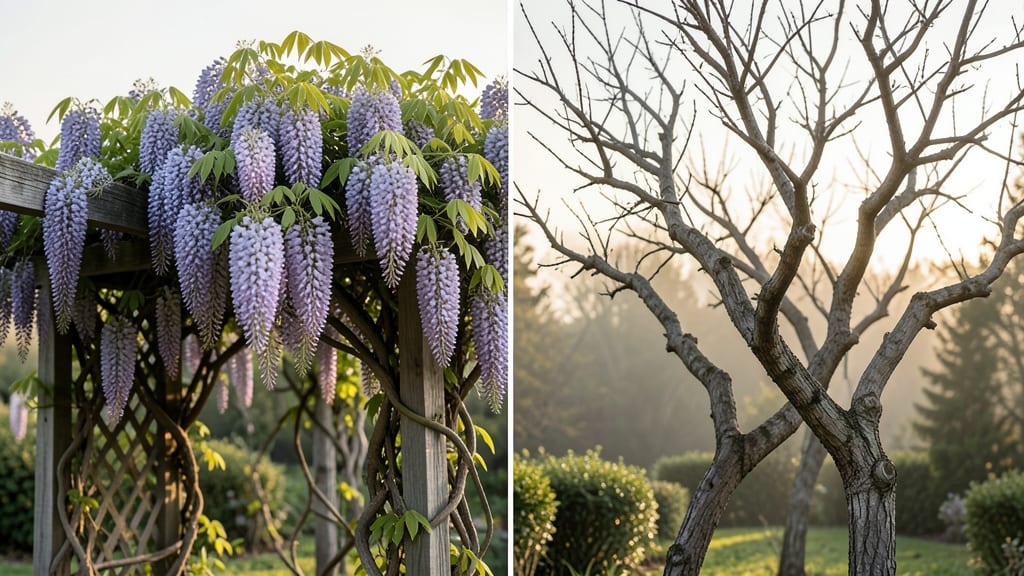
Wisteria does not bloom every year until it develops a strong root system, usually taking 3–5 years after planting. Some varieties like Wisteria sinensis may flower annually once mature, while others like Wisteria floribunda often bloom less frequently due to climate conditions or environmental stress.
Wisteria's blooming patterns are deeply tied to its growth stage and environmental conditions. 🌸 Younger plants focus energy on root development rather than flowering, which is why the first 3–5 years often yield no blooms.
Once established, mature wisteria can produce stunning clusters—but only if they receive consistent care, including proper pruning and winter protection.
The key difference between varieties lies in their resilience: Wisteria sinensis thrives in milder climates and blooms more reliably, while Wisteria floribunda may skip years in colder zones due to dormancy requirements.
For gardeners eager to encourage annual blooms, timing is everything. Pruning right after flowering (late spring) promotes next year's buds, while over-fertilizing with nitrogen can delay blooms. 🌿 Soil rich in phosphorus and potassium supports flower production, and mulching helps regulate root temperature.
The bottom line? Patience and proper care are your best tools for coaxing those iconic wisteria cascades year after year.
💡 In This Article
- Wisteria Flowering Cycles: Age, Variety, and Climate Factors
- How to Encourage Annual Wisteria Blooms
Wisteria flowering cycles: age, variety, and climate factors
Wisteria's blooming habits are governed by a delicate balance between root development and environmental cues. During the first 3–5 years after planting, these vines prioritize establishing an extensive root network—often extending 10–15 feet underground—before allocating energy to flower production.
This biological priority explains why young wisteria trees appear dormant above ground while their roots expand aggressively. The process mirrors how fruit trees delay fruiting until they reach a certain size, ensuring structural stability before reproduction.
The variety you choose dramatically impacts blooming frequency. Wisteria sinensis, native to China, typically blooms annually once mature, producing fragrant lavender flowers in late spring (May–June). Its hardiness in USDA zones 5–9 means it can withstand colder winters, triggering reliable flowering cycles.
In contrast, Wisteria floribunda, from Japan, often blooms biennially—sometimes skipping years in zones 6–8—due to stricter dormancy requirements. These differences stem from evolutionary adaptations to their native climates, where unpredictable seasons favored flexible reproductive strategies.
Climate plays a critical role in breaking dormancy and initiating blooms. Wisteria requires 600–900 chill hours (temperatures between 32–45°F) during winter to set flower buds for the following season.
In warmer zones (like USDA 9–10), insufficient chill hours can prevent blooming entirely, while sudden temperature swings in spring may cause buds to drop. This explains why wisteria in Southern California often blooms less reliably than in the Pacific Northwest, where cooler winters provide adequate dormancy signals.
Light exposure also influences flowering patterns. Wisteria needs full sun (6+ hours daily) to produce abundant blooms, but excessive heat can stress the plant. In hot climates, afternoon shade helps maintain consistent flowering, while poor light conditions (like partial shade) may lead to sparse or no blooms.
The plant's leaves contain chlorophyll that converts sunlight into energy, but the flowers themselves are energy-intensive—requiring 20–30% more photosynthesis than foliage production during peak bloom.
Soil quality acts as another critical factor. Wisteria thrives in well-draining soil with a pH of 6.0–7.5, rich in organic matter. Nutrient deficiencies—particularly low phosphorus (P) or potassium (K)—can delay or prevent blooming.
For example, a soil test showing P levels below 20 ppm may explain why a mature wisteria isn't flowering. The plant's deep roots access nutrients from lower soil layers, but surface applications of bone meal (3-4-0 NPK) can boost phosphorus levels quickly.
Finally, stress from improper pruning or watering can disrupt blooming cycles. Over-pruning in late summer removes next year's flower buds, while underwatering during bud formation (late winter) can cause buds to abort.
The plant's natural response to stress is to prioritize survival over reproduction, which is why consistent care is essential for annual blooms. 🌿