
Blooming
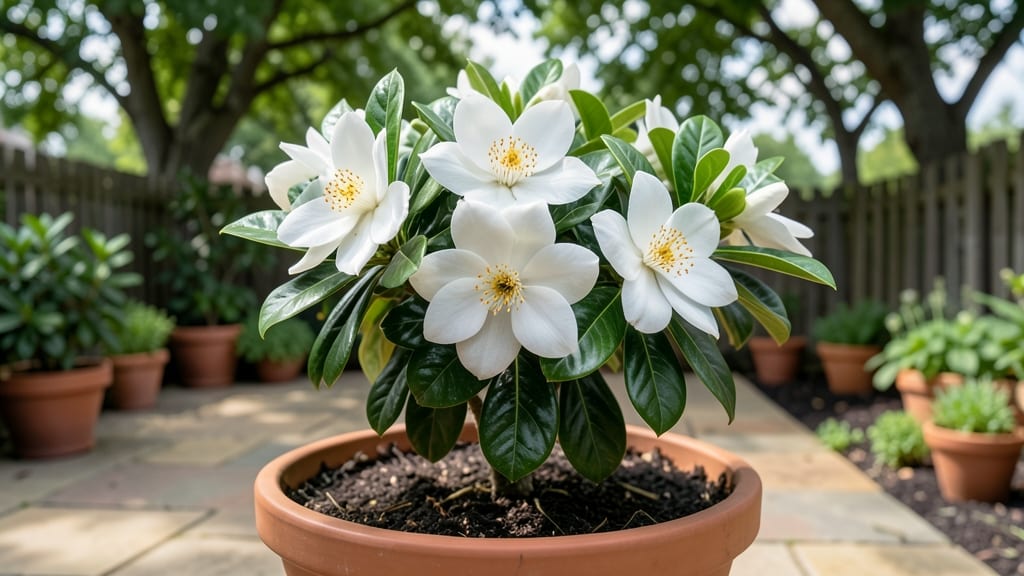
Your gardenias will burst into fragrant white blooms at the right bloom time—that’s their heat-triggered secret. 🌸 I’ve learned the hard way that these tropical divas need warmth to bloom, and without it, they’ll just sit there looking pretty but stubbornly bare.
The timing varies wildly depending on your zone, but most gardenias in the South start in late spring, while Northern gardeners might wait until summer’s peak.
The real trick isn’t just waiting for warm weather—it’s giving them the right care before the heat arrives. Prune after blooming to encourage next year’s flowers, keep soil moist but not soggy, and feed them every 4-6 weeks with acid-loving fertilizer.
I’ve seen gardenias in full sun bloom nonstop from June to October, while shaded plants might only put on a few sporadic shows.
What you’ll end up with is a cloud of intoxicating perfume that fills your yard at dusk, and blooms that last 7-10 days each. The key is patience—these plants take 2-3 years to mature fully, but once they do, they’ll reward you with year-round potential in warm climates.
Even in cooler areas, a little greenhouse love can extend their season.
Here’s the game-changer: light pruning in early spring (just enough to shape) and regular deadheading keeps them focused on producing new blooms instead of seeds. And if your gardenias ever stop blooming? Check your fertilizer—too much nitrogen means leaves over flowers. Now go coax those blossoms!
📚 In This Guide
- What you need
- Instructions
- Tips and common mistakes
- Wrapping up and next steps
What you need
- ● Gardenia plants: Choose hardy varieties like Gardenia jasminoides (best for blooms) or Gardenia augusta (heat-tolerant). Pro tip: 💡 Start with 1-2 mature plants (3–5 years old) for guaranteed blooms.
- ● High-quality potting mix: Acidic, well-draining soil (pH 5.0–6.5). Use a blend of: 50% peat moss or coco coir
- ● 30% pine bark fines
- ● 20% perlite or sand (for aeration)
- ● Slow-release fertilizer: 14-14-14 NPK ratio (acid-loving plant formula). Dosage: 1 tsp per 6 inches of pot diameter, applied every 3 months.
- ● Organic mulch: Pine needles or oak leaves (1–2 inches thick) to retain moisture and acidify soil.
- ● Containers: Terracotta or plastic pots with drainage holes (size: 12–18 inches for mature plants).
- ● Watering can: With a rose nozzle for gentle, deep watering.
- ● pH test kit: Digital or liquid strips to monitor soil acidity.
- ● Pruning shears: Sharp, sterilized (for shaping and deadheading).
- ○ Heat mat (optional): For winter blooms in cooler climates (set to 70–75°F).
- ○ Grow lights (optional): Full-spectrum LED (12–14 hours/day) for indoor gardenias.
- ● Climate control: Gardenias thrive in 70–85°F and 60–70% humidity. Use a humidifier or pebble tray if indoors.
- ● Sunlight: 6+ hours of bright, indirect light daily (south-facing window or grow lights).
- ● Consistency: No skipping! Water when the top 1 inch of soil is dry and fertilize year-round (reduce in winter if dormant).
How to time gardenia blooms for peak fragrance and color
Gardenia flowers burst into bloom when heat and light align—here’s how to predict and extend their season.
🌡️ Step 1: Understand the Heat-Triggered Bloom Cycle
Gardenias bloom in response to consistent warmth, typically when daytime temperatures hit 75-85°F for at least two weeks. This usually aligns with late spring to early summer in most climates, but timing varies by region. In cooler zones, blooms may appear later or require winter protection to restart the cycle.
Watch for the first bud swell—these plump, green buds signal the plant is preparing to bloom. If your gardenia hasn’t budded by early summer, check for low light or inconsistent watering, both of which delay flowering. A mature plant may produce three bloom cycles per year if conditions stay ideal.
☀️ Step 2: Optimize Light for Extended Blooming
Gardenias need full sun (6+ hours daily) to trigger blooming, but afternoon shade in hot climates prevents bud drop. If your plant is in partial shade, move it to a south- or west-facing spot where it gets morning sun and filtered afternoon light. You’ll notice buds form more quickly when leaves stay deep green and glossy—pale or yellowing foliage means the plant is struggling to support flowers.
For container gardenias, rotate the pot quarter-turn weekly so all sides get even light exposure. This prevents lopsided growth and ensures buds develop uniformly. If you’re in a high-rise with limited outdoor space, supplement with a grow light 12 inches away for 14 hours daily during short winter days.
💧 Step 3: Adjust Watering to Encourage Bud Formation
Gardenias hate soggy roots but also wilting stress, both of which halt blooming. Water deeply once a week (or when the top 2 inches of soil feel dry), ensuring water drains freely from the pot. Overhead watering can cause buds to rot, so use a soaker hose or drip irrigation at soil level instead. You’ll see buds form more reliably when the plant stays consistently moist but never waterlogged.
In late summer, reduce watering slightly to every 10 days—this mimics the plant’s natural dry season and signals it to rest before the next bloom cycle. If leaves curl or drop, you’ve either underwatered or overwatered. Adjust until you find the sweet spot where the plant stays lush but not soggy.
✂️ Step 4: Prune Strategically After Each Bloom Cycle
Prune dead or yellowing blooms immediately after they fade to redirect the plant’s energy into new buds. Use clean, sharp shears to cut stems back to the nearest leaf node, avoiding any brown or damaged wood. This isn’t just about looks—proper pruning encourages more compact growth and denser flowering in the next cycle.
For container gardenias, trim back overly leggy growth in early spring to maintain shape. You’ll notice new shoots emerge within 2-3 weeks if the plant is healthy. Avoid heavy pruning in fall, as this can delay spring blooming. Instead, focus on light shaping to keep the plant open to sunlight.
🌱 Step 5: Feed for Continuous Blooming
Gardenias are heavy feeders, especially during bloom cycles. Use a balanced 10-10-10 fertilizer every 4-6 weeks in spring and summer, but reduce to half-strength in fall to avoid late-season growth that won’t harden off before winter. You’ll see buds form more abundantly when the plant has steady nutrients—pale leaves or slow growth mean it’s time to fertilize.
For organic gardeners, mix composted manure or worm castings into the soil in early spring. Avoid high-nitrogen fertilizers, which promote leafy growth at the expense of flowers. Instead, focus on phosphorus-rich feeds to support bud development. Stop fertilizing 6 weeks before your first frost to let the plant prepare for dormancy.
Tips & tricks for perfect gardenia bloom timing
Here's what nobody tells you about coaxing those fragrant blooms—these tricks will help you extend your gardenia's season and troubleshoot common setbacks.
Heat Consistency is Everything: The two-week window at 75-85°F isn't just about warmth—it's about stability. I've seen gardenias bloom early when temperatures fluctuate between 70°F nights and 90°F days, but the buds often drop before opening. Use a digital thermometer to track daily highs and lows. If your mornings dip below 65°F, consider moving potted plants near a sunny wall or using a small space heater (set to low) during cooler evenings. This mimics the tropical conditions gardenias thrive in, and you'll notice buds staying firm longer before opening.
Light Rotation Hack: That quarter-turn weekly rotation isn't just about aesthetics—it's a growth strategy. I rotate my container gardenias clockwise each Sunday morning. This ensures all sides receive equal light exposure, preventing the plant from leaning toward the sun. The result? More uniform bud development and fewer "one-sided" blooms. For indoor gardenias, I place them on a lazy Susan near a south-facing window and rotate them daily during winter months when sunlight is weakest. This simple habit can double your bud count in just a few months.
Watering by the Clock (Not the Calendar): The "top 2 inches dry" rule works, but here's the secret: gardenias actually prefer a slightly drier environment than most tropical plants. I water mine when the top inch feels dry to the touch—this prevents root rot while keeping the soil consistently moist. For container plants, I weigh them before watering: when a 5-gallon pot loses about 10% of its weight, it's time to water. This method is foolproof because it accounts for evaporation rates and pot size variations. In late summer, I reduce watering to every 10 days only after confirming the top 2 inches are bone dry—this dry period is what triggers the plant's rest cycle for next year's blooms.
Fertilizer Timing That Actually Works: That 4-6 week schedule is perfect, but here's the pro move: I split my fertilizer applications into two parts. First, I apply half the recommended dose right after pruning in early spring to kickstart growth. Then, I apply the remaining half when I see the first bud swells forming. This two-step approach prevents over-fertilization during the critical budding phase while ensuring the plant has nutrients when it needs them most. For organic gardeners, I mix in worm castings every 8 weeks instead of composted manure—they provide a slower, more consistent release of nutrients that gardenias love.
Pro Tips for Gardenia Bloom Time
- Here's what nobody tells you about coaxing those fragrant blooms—these tricks will help you extend your gardenia's se...
- Heat Consistency is Everything: The two-week window at 75-85°F isn't just about warmth—it's about stability. I've see...
- Light Rotation Hack: That quarter-turn weekly rotation isn't just about aesthetics—it's a growth strategy. I rotate m...
Frequently asked questions
Got questions about timing those dreamy gardenia blooms? You’re not alone! Here are answers to the most common queries—so you can enjoy that intoxicating fragrance all year long.
When is the best time to plant gardenias for summer blooms?
Plant gardenias in early spring (after the last frost) to give them time to establish roots before summer heat triggers blooming. If you’re in a warm climate (Zones 9–11), plant in late winter—just avoid extreme cold or heat stress. Patience pays off: mature plants (3+ years old) bloom most reliably!
Why won’t my gardenia bloom, even though it’s summer?
Gardenia blooms need consistent warmth (75–85°F) + humidity—if temps dip or air is dry, buds may drop. Check these fixes:
- Light: Ensure 6+ hours of bright, indirect sunlight (no harsh afternoon sun).
- Water: Keep soil evenly moist (not soggy). Tap water’s chlorine can stress plants—try rainwater or filtered H₂O.
- Food: Feed with acidic fertilizer (like 8-3-9 or coffee grounds) every 4–6 weeks.
- Prune: Trim leggy growth in early spring to encourage bushier, bloom-heavy growth.
Can I force gardenias to bloom out of season?
While gardenias are heat-dependent, you can nudge them with these tricks:
- Heat mats: Place under pots in cooler months to simulate summer temps.
- Greenhouse/grow lights: Extend daylight to 12+ hours with LED grow bulbs.
- Stress pruning: Lightly trim in winter to encourage spring blooms.
What’s the fastest way to grow a gardenia from a cutting?
Rooting gardenia cuttings takes 4–8 weeks—here’s the quickest method:
- Take a 4–6 inch semi-hardwood cutting (from new growth) in late spring/early summer.
- Strip lower leaves, dip in rooting hormone, and plant in perlite + peat moss.
- Cover with a plastic bag (like a greenhouse) and keep in warm, bright indirect light.
- Mist daily and keep soil moist. Transplant when roots form (gentle tug = resistance!).
Are there gardenia varieties that bloom year-round?
No variety blooms truly year-round, but some come close in ideal conditions:
- ‘Kleim’s Hardy’: Blooms spring–fall in Zones 7–10 (more cold-tolerant).
- ‘Radicans’: Compact, heavy bloomer in summer–early autumn.
- ‘Fortuniana’ (Cape Jasmine): Related but more cold-hardy; blooms spring–summer.
Wrapping up and next steps
Gardenia blooms are a fragrant reward for patient gardeners, thriving when you match their love for warmth and humidity! 🌸 Whether you’re nurturing a potted plant or cultivating a garden bed, understanding their heat-triggered bloom time—typically spring to summer—lets you create the perfect conditions.
With the right care, your gardenias can even reward you with year-round beauty.
Now that you’re armed with tips and timing, take the next step! Start by adjusting your garden’s microclimate or tweaking your care routine. Watch those buds unfold into perfumed perfection—your garden (and nose) will thank you! 🌿