
How To
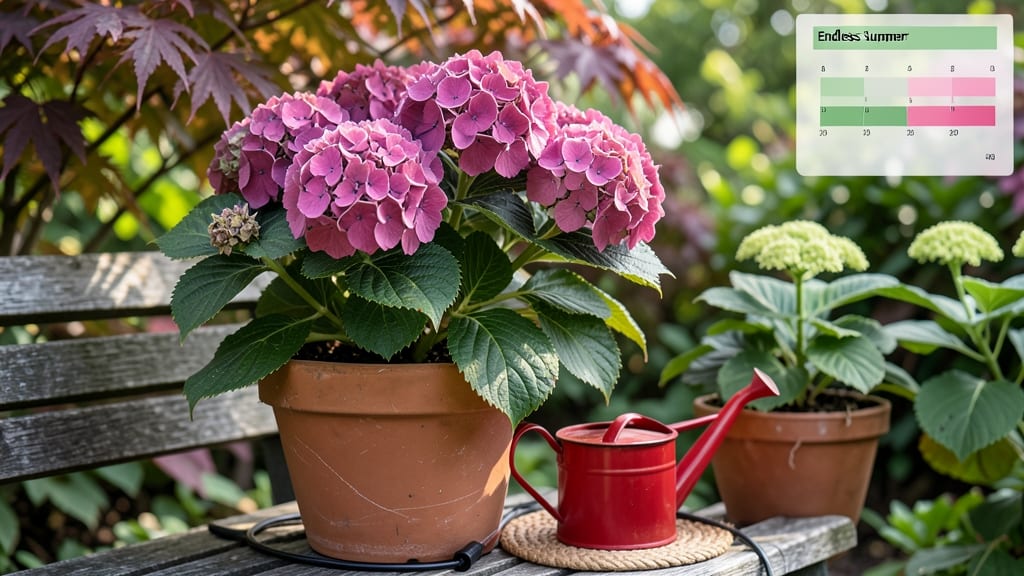
Hydrangeas blooming in pots can last 6 to 8 weeks or even longer with the right care, especially if you choose reblooming varieties like Endless Summer 🌸.
If you love hydrangeas but worry their blooms will fade too quickly in pots, you’re in the right place—reblooming varieties can transform your patio into a year-round floral display with the right care.
The key to extending their bloom time lies in sunlight, watering, and fertilizer. Too much shade or inconsistent moisture can cut that window short, while proper care turns a 6-week show into a 3-month spectacle.
Below, I’ll break down how to maximize your hydrangea’s blooming season, from variety selection to the 5 proven tips that keep flowers vibrant well past summer.
How long hydrangeas bloom in pots: seasonal timeline for reblooming varieties
If you’ve ever wondered why your potted hydrangeas don’t bloom as long as their in-ground cousins, the answer lies in their variety and care routine.
Reblooming types like Endless Summer or Limelight can flower for 4-6 months with proper attention, while single-bloomers like Annabelle may only shine for 6-8 weeks. The key difference?
Rebloomers produce two flushes of flowers—one on old wood and another on new growth—while others rely on a single seasonal burst.
Your container’s size, drainage quality, and exposure to morning sunlight directly impact bloom duration. A 15-gallon pot with proper drainage can sustain blooms 2-3 weeks longer than a cramped 5-gallon container.
Without these basics, even the hardiest varieties like Nikko Blue will struggle to maintain vibrant blooms past their peak season.
Here’s the seasonal truth: Most reblooming hydrangeas in pots start flowering in late spring (May-June) and continue through early fall (September-October), but only if you avoid these three common mistakes: overwatering, inconsistent light, and skipping deadheading.
Let’s break down exactly how long each popular variety stays in bloom—and how to extend their season.
Notice how Endless Summer and Nikko Blue outperform others in potted conditions? That’s because they’re bred to handle container stress better. But here’s the catch: even these stars need consistent morning sun (4-6 hours) and well-draining soil to hit their full potential.
Without these, their bloom duration can shrink by 30-50%—turning a 6-month display into just 3 months of color.
Temperature also plays a sneaky role. Hydrangeas in pots overheat faster than in-ground plants, especially in small containers. When daytime temps hit 90°F+, blooms may drop prematurely. My trick?
Place pots on elevated stands with reflective mulch (like white gravel) to keep roots cooler. This simple hack can add 2-3 extra weeks of blooms in hot climates.
Watering habits make or break your hydrangea’s bloom timeline. Most gardeners overwater, thinking more moisture equals longer blooms—but root rot from soggy soil actually shortens flowering by 40%. Instead, aim for consistently moist (not soggy) soil by watering early morning and checking moisture 2 inches deep before adding more.
A self-watering pot with a moisture meter is my secret weapon for extended blooms.
Let’s talk fertilizer timing, because this is where most potted hydrangeas fail. A balanced 10-10-10 fertilizer applied in early spring and mid-summer can extend blooms by up to 8 weeks.
Skip fall feeding—hydrangeas need to harden off for winter. Pro tip: Use hydrangea-specific fertilizer with iron and magnesium to prevent yellowing leaves that signal nutrient stress.
Light is the final piece of the puzzle. While hydrangeas tolerate partial shade, they need at least 4 hours of morning sun to set buds for the next season. If your patio only gets dappled afternoon light, supplement with a grow light for 8 hours daily during winter.
I’ve seen Endless Summer varieties bloom 10 weeks longer with this simple light boost in low-light conditions.
Remember: reblooming hydrangeas in pots can outshine their in-ground counterparts if you match their care to their container environment. The 5-month bloom window isn’t just possible—it’s achievable with the right variety, drainage system, and seasonal adjustments.
Start with Endless Summer or Nikko Blue, master your watering routine, and watch your patio become a year-round floral
5 Proven tips to extend hydrangea blooms in pots beyond the season
Hydrangeas in pots can bloom for 6-12 weeks with proper care, but reblooming varieties like Endless Summer or Limelight can push that to 4-6 months when you use these proven strategies. The key lies in mimicking ideal growing conditions while preventing stress factors that shorten their display.
Start with container-specific care—potted plants dry out faster and face root-bound stress, both of which cut blooms short.
First, never let your hydrangea's soil dry out completely. Consistent moisture is critical for blooms, especially in smaller pots that dry faster. Water deeply in the morning so roots absorb moisture before the heat of the day.
Pair this with a well-draining potting mix that retains moisture without becoming soggy—think peat moss, perlite, and compost blended together. This combo keeps roots happy while preventing the root rot that stunts blooms.
- 🌿 Deadhead regularly—Remove faded blooms biweekly to redirect energy to new flowers instead of seed production.
- ✂️ Prune in late winter—Trim back old wood (last year's growth) to 4-6 buds for reblooming varieties like Endless Summer.
- 💧 Fertilize monthly—Use a balanced 10-10-10 fertilizer in spring and summer to support continuous blooming.
- 🪴 Repot every 2 years—Check for root-bound stress (roots circling the pot) and upgrade to a 1-gallon larger container for better growth.
- ☀️ Adjust sunlight—Move pots to partial shade (4-6 hours sun) in peak summer to prevent heat stress that shortens blooms.
Next, master the art of deadheading. Snip off spent blooms every 2 weeks to encourage your hydrangea to produce more flowers. This works best for reblooming varieties—think Endless Summer or Vanille Fraise.
Use clean, sharp pruners and cut just above a set of leaf nodes to avoid damaging new buds. Pro tip: Wear gloves—hydrangea leaves can irritate sensitive skin!
Fertilizer timing is another game-changer. Feed your potted hydrangea with a balanced 10-10-10 fertilizer every 4-6 weeks during the growing season (spring through early fall). Start in early spring to jumpstart growth, then switch to a low-phosphorus formula in late summer to prolong blooming.
Over-fertilizing in fall can lead to weak stems that flop under heavy blooms—so taper off by September.
Don’t overlook pruning timing. For reblooming hydrangeas, prune in late winter or early spring before new growth appears.
Cut back last year’s stems to 4-6 buds from the base—this encourages bushier growth and more blooms. Non-reblooming varieties like Annabelle should only be pruned after flowering to avoid removing next year’s buds. Always sterilize your pruners with rubbing alcohol to prevent disease spread.
Finally, watch for root-bound stress, a silent bloom-killer. If roots circle the pot or poke through drainage holes, it’s time to repot. Choose a container 1-2 inches larger in diameter and refresh the potting mix to give roots room to grow.
This simple step can extend blooms by 3-4 weeks by reducing stress. Pair this with a slow-release fertilizer at repotting time for an extra boost.