
How To
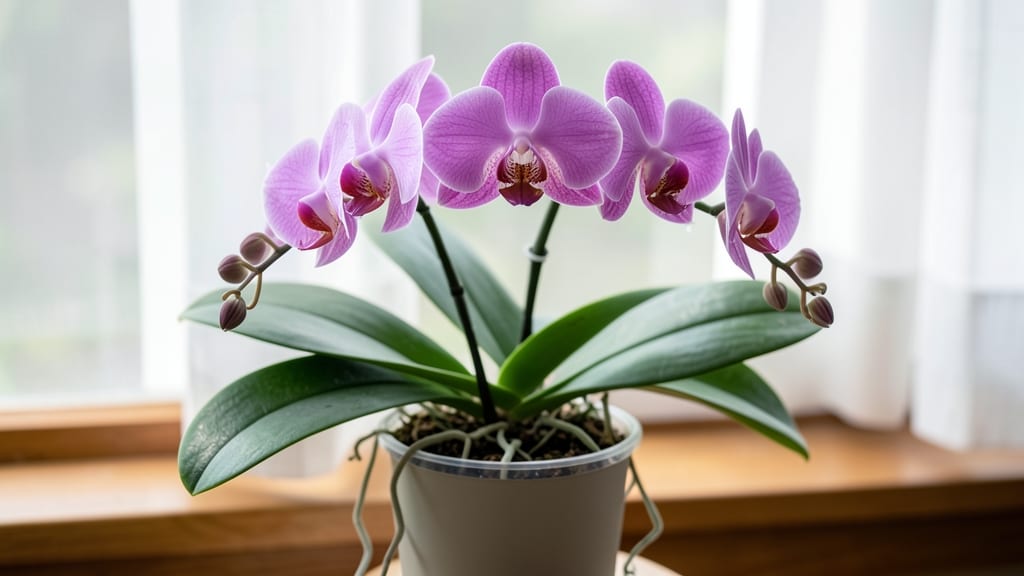
Orchids bloom for anywhere from 2 to 8 weeks, depending on the variety and care you provide—though some species like Cattleyas can stretch that to 3 months with the right conditions.
Ever watched your orchid’s stunning 🌸 blooms fade too soon, leaving you wondering what went wrong? The truth is, most orchids—especially the popular Phalaenopsis—are bred to bloom for just 6 to 8 weeks, but with a few tweaks, you can double that time.
Light is the key factor here. Too little, and your orchid’s blooms will wilt in 3 weeks or less. Too much direct sun, and they’ll crisp up faster.
Temperature swings and inconsistent watering can also cut bloom time short, but the good news is that these are all fixable with simple adjustments.
In this guide, I’ll break down exactly how long each orchid variety stays in bloom, the science-backed tweaks to extend those flowers, and the one mistake that kills bloom length faster than anything else.
Orchid bloom duration by variety: exact days and seasonal patterns
Orchids are famous for their breathtaking blooms, but did you know some varieties can flower for months while others only last weeks? The Phalaenopsis (moth orchid) might grace your home for 2-3 months, while a Cattleya could shine for 6-8 weeks.
Understanding these differences helps you set realistic expectations and adjust care for longer displays. Seasonal patterns also play a role—cooler months often trigger blooming in many species, while heat can shorten their lifespan.
To maximize bloom time, pay attention to light exposure, temperature shifts, and humidity levels. For example, Dendrobium orchids often bloom in winter, while Oncidium varieties prefer spring.
Each stage—bud formation, full bloom, and fade—requires slightly different care. Let’s break down the exact bloom durations by variety so you can plan your orchid care routine like a pro.
🌸 PRO TIP: Most orchids follow a 3-stage bloom cycle: bud development (1-4 weeks), peak bloom (varies by type), and gradual fade (1-2 weeks). Recognizing these stages helps you time care adjustments for reblooming.
The Phalaenopsis (moth orchid) is the most popular type and often blooms for 6-12 weeks, making it perfect for beginners. Its long-lasting flowers appear in spring or fall, with some varieties reblooming every 6-12 months if given proper care.
To encourage reblooming, provide cool nights (60°F) and reduce fertilizer after blooms fade. This variety thrives on indirect light and moderate humidity, making it adaptable to indoor environments.
In contrast, Cattleya orchids deliver bold, fragrant blooms for 4-8 weeks during winter or spring. These orchids need a dormant period in winter to rebloom, so reduce watering and avoid fertilizing during this time.
Their large, showy flowers make them a favorite for special occasions, but they require more expertise than Phalaenopsis. Place them near an east-facing window to avoid leaf scorch from direct sun.
Dendrobium orchids are seasonal bloomers, often gracing homes with 3-6 weeks of flowers in winter. Their blooms appear on canes that grow during summer, so proper summer care sets the stage for winter displays. To extend their bloom time, use grow lights if natural light is insufficient. These orchids love bright, indirect light and benefit from high humidity during their active growth phase.
If you love clusters of tiny flowers, Oncidium orchids (also called "dancing lady" orchids) are a great choice. They bloom for 4-6 weeks in spring or summer and produce hundreds of flowers per spike.
To encourage reblooming, maintain 60-70% humidity during bud formation and avoid overwatering. These orchids prefer warmth and bright light, making them ideal for greenhouses or sunrooms.
For a longer-lasting display, consider Paphiopedilum (lady slipper orchids), which bloom for 8-12 weeks in fall or winter. Their unique, slipper-shaped flowers are prized for their elegance and durability.
These orchids prefer shady conditions and consistent moisture, so avoid letting their potting mix dry out completely. With proper care, they rebloom every <
How light exposure affects orchid bloom length: science-backed tips
Light isn't just about keeping your orchid alive—it's the secret to extending bloom cycles by weeks or even months. Too little light causes weak stems and early wilting, while too much triggers sunburned petals.
The blue and red spectrums (400-500nm and 600-700nm) are especially critical for photosynthesis and flower longevity.
Most orchids thrive under 1000-2000 foot-candles of bright indirect light, similar to a shady patio or east-facing window. Phalaenopsis orchids, for example, can tolerate slightly lower light (800-1500 foot-candles), while Cattleyas crave 1500-2500 foot-candles to maintain vibrant blooms.
Light Exposure: Pros & Cons for Orchid Blooms
- Pros: Maximizes photosynthesis, extends bloom by 3-6 weeks, vibrant petal colors
- Cons: Requires careful placement to avoid sunburn risks (yellow/brown patches)
- Pros: Consistent spectrum (LED bulbs with 6500K color temp), ideal for winter dormancy
- Cons: Overhead placement can cause uneven growth; requires 6-12" distance
- Cons: Petal bleaching in 2-3 days, shorter bloom life (up to 50% reduction), leaf scorch
- Pros: None for orchid health or longevity
- Pros: Even growth, prevents lopsided blooms, mimics natural light shifts
- Cons: Requires weekly adjustments (1/4 turn per week)
For Phalaenopsis orchids, I’ve found that supplementing with 12 hours of grow light during winter (when natural light drops) adds 2-3 extra weeks to their bloom cycle. Use LED grow bulbs with a 6500K color temperature to replicate natural sunlight without the heat.
Watch for color changes in leaves: deep green means ideal light, while silver or purple undertones signal insufficient light. If your orchid’s blooms wilt within 10 days, it’s likely getting too much direct sun—move it 6-12 inches farther from the window immediately.
Pro tip: Place your orchid 3-6 feet from an east-facing window in spring/summer, then switch to south-facing with sheer curtains in winter. This balances light exposure year-round for consistent reblooming.
Remember, orchids are light-sensitive during their 3-4 month dormancy period after blooming. Reduce light to 500-1000 foot-candles during this time to conserve energy for next season’s flowers.