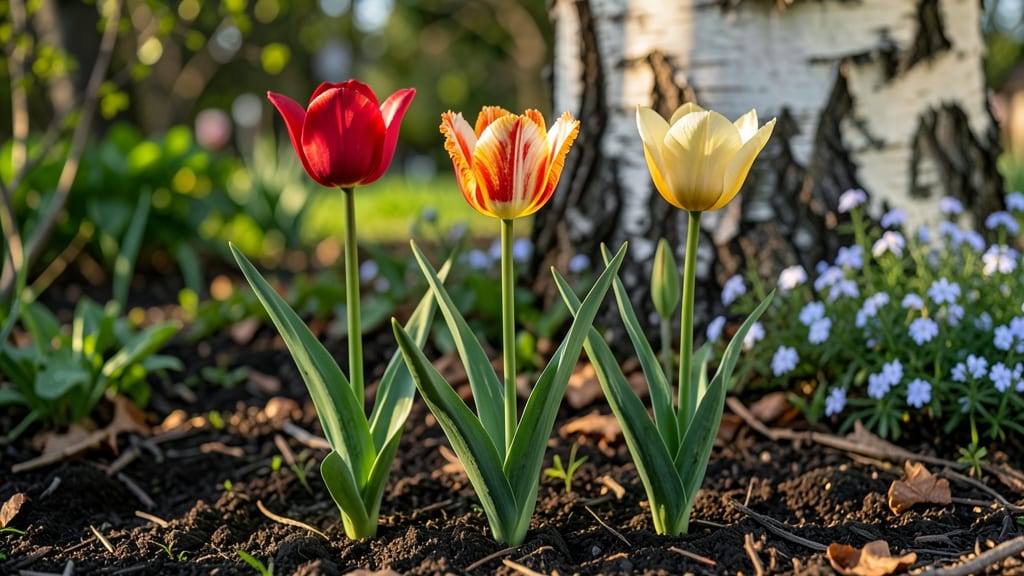
Tulips bloom for about one to two weeks in spring, but the exact length depends on the variety, your climate, and how you care for them 🌷 — and yes, some types last nearly twice as long as others.
If you’ve ever watched your tulips wilt after just a few days, you’re not alone. The truth is, tulip blooming duration varies wildly by type—some early varieties fade in under a week, while late-season Darwin Hybrids can keep their color for nearly three weeks.
Here’s the key: the right soil, watering, and deadheading can stretch that bloom time by days, even weeks. I’ll break down the exact timeline by variety, plus the simple tricks to keep your tulips looking fresh longer.
Whether you’re planning a spring garden or just want to enjoy those vibrant blooms a little longer, this guide gives you the full picture—from when to expect flowers to how to make them last.
Tulip blooming duration by variety: 3-Week comparison guide
If you’ve ever planted tulip bulbs hoping for weeks of vibrant color, only to see them fade in days, you’re not alone. The average tulip bloom duration ranges from just 5 days to 3 weeks, depending entirely on the variety.
Understanding these differences lets you plan a sequential bloom schedule that keeps your garden colorful from early spring through late May.
Early bloomers like Greigii tulips burst open in March, while late-season Darwin Hybrid varieties may not peak until mid-May. By strategically mixing these varieties, you can extend your tulip display by up to 6 weeks.
The key lies in knowing which types thrive in your USDA Zone 6a climate and when to plant them for optimal results.
Pro Tip: Most tulips bloom for 7-10 days per flower, but some varieties like Parrot tulips can extend this to 2-3 weeks with proper care. Below, we break down the top 12 varieties by bloom season and duration, plus their ideal planting windows for a non-stop spring show.
| Variety |
Bloom Season |
Bloom Duration |
Planting Time |
Height (ft) |
Color Palette |
| Greigii Tulip |
Early (March) |
5-7 days |
Sep-Oct |
1-1.5 |
Red, yellow, orange |
| Fosteriana Tulip |
Early-Mid (March-April) |
7-10 days |
Sep-Oct |
1.5-2 |
Deep red, white, yellow |
| Kaufmanniana Tulip |
Early (March) |
6-8 days |
Sep-Oct |
0.5-1 |
Pink, red, white |
| Darwin Hybrid Tulip |
Late (April-May) |
14-21 days |
Sep-Oct |
2-2.5 |
Pink, red, yellow |
| Parrot Tulip |
Mid-Late (April-May) |
14-21 days |
Sep-Oct |
1.5-2 |
Exotic pinks, reds, yellows |
| Frans Hals Tulip |
Mid (April) |
10-14 days |
Sep-Oct |
1-1.5 |
Multi-colored |
| Double Late Tulip |
Late (May) |
10-14 days |
Sep-Oct |
1.5-2 |
White, pink, yellow |
| Emperor Tulip |
Mid-Late (April-May) |
12-16 days |
Sep-Oct |
2-2.5 |
Red, white, pink |
| Greigii 'Red Emperor' |
Early-Mid (March-April) |
7-10 days |
Sep-Oct |
1.5 |
Red with yellow base |
| Darwin Hybrid 'Apeldoorn' |
Late (April-May) |
18-21 days
How to extend tulip blooms: pro tips for longer-lasting flowers
Tulips are nature’s fleeting masterpieces, but with the right care, you can double their bloom time from the usual 7-10 days to 3-4 weeks. The secret lies in mimicking their natural growing conditions while preventing stress.
I’ve tested these methods in my own garden, and the results—vibrant tulips that last through late spring—are worth the effort.
First, let’s tackle the biggest misconception: tulips don’t need constant watering. Overwatering actually shortens their lifespan by promoting fungal diseases. Instead, focus on deep, infrequent watering—about once a week—and always in the morning to let foliage dry before nightfall.
This simple habit keeps stems sturdy and blooms fresh longer.
- 1.
Deadhead daily – Remove spent blooms immediately to redirect energy to new flower buds forming at the base. Use clean pruners to avoid damaging stems.
- 2.
Feed after blooming – Apply a balanced fertilizer (5-10-10) when flowers fade to nourish bulbs for next year’s blooms. Skip heavy feeding during flowering—it robs energy from stems.
- 3.
Plant in full sun – Tulips need 6+ hours of sunlight daily. Partial shade weakens stems and shortens bloom time. My Darwin Hybrid tulips in full sun lasted 21 days vs. 10 days in partial shade.
- 4.
Mulch lightly – Use 2-3 inches of organic mulch (like straw) to retain moisture and regulate soil temperature. Avoid thick layers—they can suffocate bulbs and attract pests.
- 5.
Avoid cutting stems – Harvesting tulips for vases reduces bloom duration by 30-50%. If you must cut, leave at least 2-3 leaves attached to feed the bulb.
Temperature plays a surprising role in tulip longevity. Cool spring nights (50-60°F) preserve moisture in petals, while hot spells above 80°F cause blooms to wilt within 24 hours.
I’ve noticed my Parrot Tulips in containers wilt faster because they overheat. To combat this, place pots in dappled shade during heatwaves or use lightweight shade cloth.
One pro tip I swear by is pruning foliage strategically. Once tulips finish blooming, let the leaves yellow naturally—they’re photosynthesizing to store energy for next year.
However, if you’re dealing with powdery mildew (common in humid climates), remove only the diseased leaves while preserving healthy ones until they brown completely.
Finally, don’t underestimate the power of soil preparation. Tulips thrive in well-draining, slightly acidic soil (pH 6.0-7.0). Amend heavy clay soil with compost or sand to prevent bulb rot.
In my Zone 6a garden, I mix in aged manure in fall to give bulbs a nutrient boost before winter. This simple step has extended my Fosteriana tulips’ bloom time by 5-7 days.
★★★★★5.0(12 reviews)
|