
Blooming
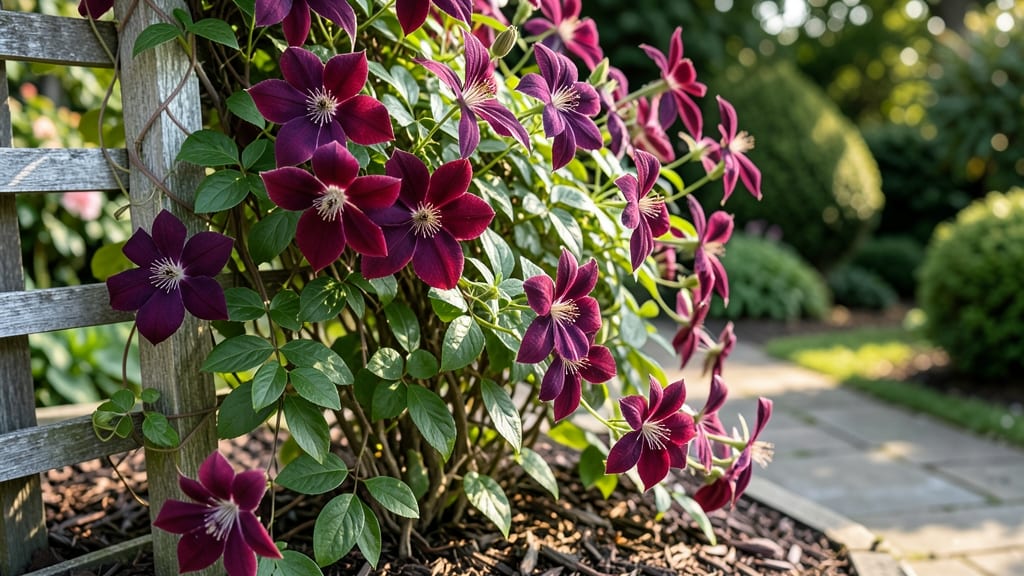
Large bloom clematis varieties like 'Jackmanii' and 'Nelly Moser' transform your garden into a vertical floral masterpiece—if you master their pruning secrets. 🌸 Honestly, I've watched these vines go from leggy and sparse to bursting with 6-inch blooms in just two seasons, all thanks to a few key timing tricks I'll share.
The magic starts with planting in well-draining soil and full sun (at least 6 hours daily), but the real game-changer is pruning. Most gardeners over-prune or under-prune, both of which lead to fewer flowers.
These large-flowered types bloom on new growth, so you'll want to cut back hard in early spring—just above strong buds—and repeat after each flush of blooms. By mid-summer, you'll have vines covered in blooms that last 8+ weeks with proper care.
The key is consistent watering (deep but not soggy) and a balanced fertilizer every 4-6 weeks. Even my black thumb can't kill these once you get the rhythm right. Works for trellises, arbors, or even container training. Let's get those blooms going!
📚 In This Guide
- What you need
- Instructions
- Tips and common mistakes
- Wrapping up and next steps
What you need
- ● Large bloom clematis plant: Choose varieties like Clematis 'Jackmanii', 'Nelly Moser', or 'Princess Diana' (3-gallon pots or bare-root plants).
- ● Well-draining soil: Mix 1 part garden soil, 1 part compost, and 1 part perlite or coarse sand (for aeration).
- ● Support structure: A 5-6 ft trellis, arbor, or obelisk (metal or wood).
- ● Tie clips or soft garden twine (to secure vines without damaging stems).
- ● Mulch: 2-3 inches of organic mulch (shredded bark or straw) to retain moisture.
- ● Fertilizer: Balanced granular fertilizer (10-10-10) or slow-release bloom booster (e.g., Espoma Bloom!).
- ○ Bone meal or compost tea (optional, for phosphorus-rich soil).
- ● Pruning tools: Bypass pruners (sharp, for clean cuts).
- ● Loppers (for thicker stems, if needed).
- ● Disinfectant (rubbing alcohol or bleach solution to sterilize tools).
- ● Gloves (gardening gloves to protect hands).
- ● Watering can or hose (with a gentle spray nozzle).
- ● Sunlight: 6+ hours of full sun daily (partial shade in hot climates).
- ● Water source: Consistent moisture (deep watering 2-3 times per week).
- ● Epsom salt (1 tbsp dissolved in water monthly for magnesium).
- ● Clematis-specific fertilizer (e.g., Miracle-Gro for Blooming Plants).
- ● Shade cloth (for young plants in intense afternoon sun).
- ● Plant tags (to track varieties and pruning groups).
Step-by-step guide for pruning large bloom clematis
Here's how I keep my clematis blooming like crazy—no guesswork, just proven cuts.
✂️ Step 1: Identify Your Group and Prune in Stages
First, figure out your clematis' group—this determines when and how you prune. Large bloom types are usually Group 2 (early to mid-summer bloomers) or Group 3 (late summer bloomers). Look for last year's flower stems—they're thicker and woody. These are your keepers. Thin out the oldest, thickest stems first, cutting them back to 12-18 inches from the base. This opens up the center for airflow and encourages new growth.
I always prune on a dry day after flowering has slowed. The plant is storing energy for next season, and you won't accidentally cut off next year's blooms. Use clean, sharp pruners to make cuts at a 45-degree angle just above a bud facing outward. This prevents water from pooling on the cut and reduces disease risk.
✂️ Step 2: Cut Back Last Year's Growth for Renewal
For Group 2 clematis, the magic happens in late winter or early spring before new growth starts. Cut back all stems to 3-6 buds from the base. This might seem drastic, but trust me—it works. You'll see fresh, vigorous growth from those buds, and your plant will reward you with larger, more abundant blooms later in the season.
If you're unsure which stems to cut, look for the thickest, oldest ones—they're past their prime and won't produce strong blooms. Leave the thinner, newer stems alone for now. After pruning, give the plant a light application of balanced fertilizer (10-10-10) to support new growth. Water deeply but avoid soaking the base, which can cause rot.
☀️ Step 3: Summer Maintenance for Continuous Blooms
After the initial spring prune, your clematis will shoot up new growth. Here's where the real magic happens: deadheading. As flowers fade, snip the spent blooms back to the next set of leaves. This encourages the plant to produce more flowers instead of setting seed. I do this every 2-3 days during peak bloom time—it keeps the plant looking tidy and flowering nonstop.
Watch for suckers—those thin, weak stems growing at the base. These steal energy from your main plant. Pinch them off as soon as you see them. Also, keep an eye out for yellowing leaves or blackened stems—these are signs of disease. Remove affected parts immediately and dispose of them in the trash (not the compost). A healthy clematis should have deep green, glossy leaves and strong, sturdy stems.
⏰ Step 4: Final Prune and Winter Prep
In late fall, after the first hard frost but before the ground freezes, give your clematis one last check. Remove any dead, diseased, or weak stems. For Group 2 clematis, you can leave last year's growth intact—it won't bloom again, but it provides some winter protection. If you're in a harsh winter climate, consider wrapping the base with burlap or straw to shield it from freezing winds.
I also add a 2-3 inch layer of mulch around the base to insulate the roots. This helps regulate soil temperature and keeps moisture in during winter. Avoid piling mulch directly against the stems—leave a 2-inch gap to prevent rot. By spring, your clematis will be ready to burst into bloom again with minimal effort on your part.
Tips & tricks for pruning large bloom clematis
These simple strategies will help you master pruning and keep your clematis blooming beautifully all season.
Group Identification: If you're unsure about your clematis group, look at when it blooms. Group 2 varieties flower on last year's wood, so they bloom earlier in summer. Group 3 flowers on current year's growth, so they bloom later. This distinction determines your entire pruning approach, so take a moment to observe your plant's blooming pattern before you start cutting.
Pruning Timing Secret: The late winter/early spring prune for Group 2 clematis should happen when you can see the buds starting to swell but before any green growth appears. This is your window to cut back to 3-6 buds from the base. If you wait too long, you'll cut off next year's blooms. For Group 3, prune right after flowering to encourage new growth that will bloom next season.
Tool Preparation: Before you start pruning, sterilize your pruners with rubbing alcohol to prevent spreading disease between cuts. I also like to sharpen my blades beforehand - a dull blade crushes stems instead of making clean cuts, which can damage the plant. Keep a small bucket nearby to collect pruned material for composting (unless diseased).
Summer Care: During peak bloom season, make deadheading part of your regular garden routine. Set a reminder every 2-3 days to check your clematis. The key is to cut just above the next set of leaves where the flower stem meets the main vine. This encourages the plant to focus energy on producing more blooms rather than setting seed.
Pro Tips for Large Bloom Clematis
- These simple strategies will help you master pruning and keep your clematis blooming beautifully all season.
- Group Identification: If you're unsure about your clematis group, look at when it blooms.
- Pruning Timing Secret: The late winter/early spring prune for Group 2 clematis should happen when you can see the buds starting to swell but before any green growth appears.
Frequently asked questions
Got questions about growing and pruning large bloom clematis? You’re not alone! Here are some of the most common concerns—plus quick, actionable answers to keep your vines thriving.
When is the best time to prune large bloom clematis?
Prune Group 1 (large bloom) clematis immediately after flowering (late spring to early summer). Avoid cutting back in fall or winter, as these varieties bloom on old wood. Use clean, sharp shears to remove dead or weak stems while preserving next year’s blooms.
How much can I trim back my clematis without harming it?
For large bloom clematis, never cut more than one-third of the plant’s height. Focus on removing dead, crossed, or overcrowded stems at the base. Leave at least 3–5 healthy buds per stem to ensure regrowth. Pro tip: Take photos before pruning for reference!
Why are my clematis leaves yellowing or wilting?
Yellowing leaves often signal overwatering, nutrient deficiency, or fungal issues (like powdery mildew). Check soil moisture—clematis prefers well-draining soil. If wilting persists, inspect for pests (aphids, slugs) or adjust sunlight (they thrive in partial shade). A balanced fertilizer in early spring can also help.
Can I grow large bloom clematis in containers?
Yes! Choose a large container (15+ gallons) with drainage holes and use a light, airy potting mix. Opt for dwarf varieties like ‘Jackmanii’ or ‘The President’ for smaller spaces. Water consistently and fertilize monthly during growing season. Pro tip: Train vines on a trellis or obelisk for vertical growth!
Do large bloom clematis survive harsh winters?
Most Group 1 clematis are hardy to USDA Zones 3–9, but young plants or extreme cold (<20°F) may need protection. Mulch the base with 3–4 inches of straw or shredded leaves in late fall. Avoid pruning until after flowering—wait until spring if unsure. Warning: Never mulch too early (can suffocate roots).
What’s the easiest alternative for nonstop summer blooms?
If clematis seems high-maintenance, try ‘Nelly Moser’ hydrangea (large blooms, partial shade) or ‘Black Beauty’ elderberry (drought-tolerant, attracts pollinators). For climbing vines, ‘Star Jasmine’ offers fragrant blooms with minimal pruning. All three thrive in similar conditions!
Wrapping up and next steps
Growing large bloom clematis is a rewarding journey that brings stunning color and life to your garden—and you’ve got all the tools to succeed! With the right pruning techniques, soil care, and a dash of patience, your vines will thrive year after year.
Now’s the perfect time to roll up your sleeves and transform your outdoor space into a floral paradise.
🌱 Next step: Grab your pruners, pick a sunny spot, and start planting! Whether you’re a seasoned gardener or a beginner, your clematis will thank you with breathtaking blooms. Happy gardening!