
Blooming
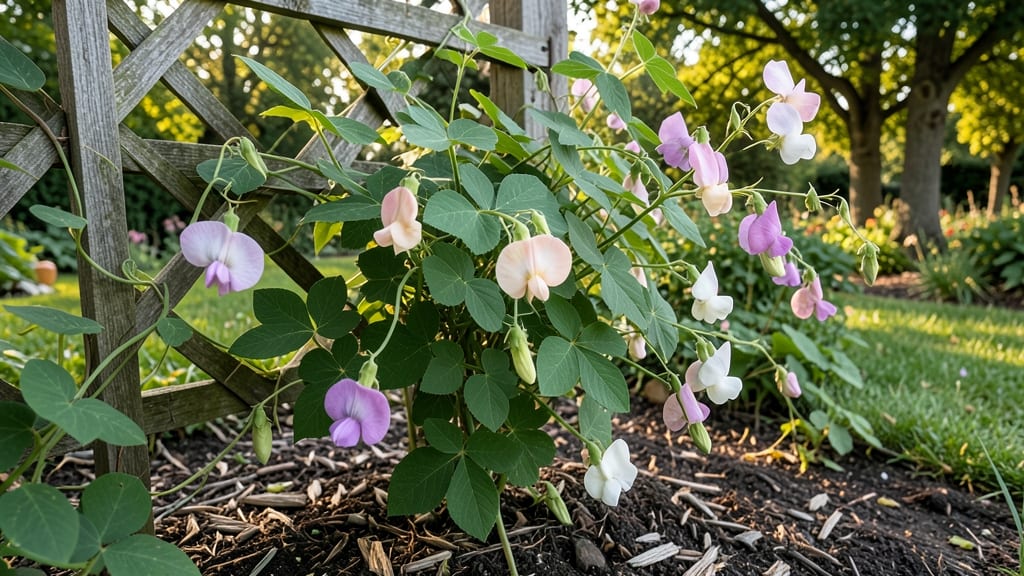
Sweet peas bloom in late spring to early summer—typically May through July—when planted in USDA Zone 6a like mine, but the exact timing depends on your variety and a few key tricks.
Picture this: February arrives, you tuck those delicate seeds into the soil, and by May, your trellis erupts with fragrant 🌸 blooms that hummingbirds can’t resist. But here’s the catch—some varieties burst into color as early as April, while others linger into July.
The difference? It’s all in the planting window and a little extra care.
If you’ve ever waited patiently for those first blossoms to appear—only to be met with stubborn green vines—you’re not alone. The secret to unlocking that perfect bloom time lies in understanding your specific variety, soil conditions, and a few pro tips to extend the show.
In this guide, I’ll break down exact bloom months for popular sweet pea types, share how to coax longer flowering, and troubleshoot why yours might be playing hard to bloom. Let’s get those vines climbing—and those flowers talking!
Sweet pea bloom time by variety: month-by-month breakdown for fast, medium, and late bloomers
Sweet peas are among the first spring bloomers to brighten up gardens, but their exact bloom timing varies dramatically by variety and zone.
Early varieties like 'Cupani' can burst into color as early as late April in warmer zones, while late bloomers like 'Perfume' may not peak until June or July. Understanding these differences helps you plan for a continuous display from spring through summer.
Your USDA zone plays a critical role—southern gardeners (Zones 8-10) can enjoy blooms 4-6 weeks earlier than northern growers (Zones 3-5). For example, 'Dwarf Blue' might bloom in May in Zone 5 but as early as April in Zone 8.
Even a 1-zone difference can shift bloom windows by 2-3 weeks, so always adjust expectations based on your local climate.
Here’s a month-by-month breakdown of popular sweet pea varieties, categorized by fast, medium, and late bloomers, with zone-specific adjustments to help you time your plantings for the longest possible display.
Pro Tip: Stagger planting dates by 2-3 weeks for each variety to extend your seasonal bloom time by up to 8-10 weeks. This simple trick ensures you’re never without fragrant blossoms from late spring to early summer.
For Zones 3-5, aim to start seeds indoors in late February to ensure 'Cupani' and 'Painted Lady' bloom by late April. In Zones 8-10, you can even enjoy early blooms in March if you provide light frost protection for tender varieties.
Always check your last frost date—planting too early in cold zones risks seed rot, while waiting too long delays your first flowers.
If you’re in a transition zone (6-7), consider succession planting every 2 weeks to overlap bloom times. For example, plant 'Cupani' in early March and 'Spencer' in mid-April to create a 6-week continuous bloom from late April to June. This strategy works especially well for
How to extend sweet pea bloom time: pro tips for longer, more abundant flowers
Sweet peas may bloom quickly after planting, but with the right strategies, you can stretch their flowering season from early spring to late summer. The key lies in understanding their growth cycle and using simple techniques to delay early blooms while encouraging continuous flower production.
I’ve found that combining staggered planting with proper deadheading and soil management can extend blooms by 6-8 weeks or more.
One of my biggest successes came from planting 'Cupani' sweet peas in two batches—one in early March and another in late April. This succession sowing method ensures a steady supply of flowers instead of a single massive bloom followed by a sudden decline.
For varieties like 'Perfume' or 'Dwarf Blue', this approach works especially well in cooler climates where summer heat might otherwise shorten their season.
Deadheading is perhaps the most critical step—it’s what keeps my sweet peas flowering for weeks longer than they would naturally. I make it a habit to check my vines every morning and snip off any faded blooms with clean bypass pruners.
This simple act signals the plant to produce more flowers instead of seeds, which would otherwise halt blooming. For varieties like 'Black Prince', which has dramatic dark blooms, deadheading also maintains their rich color by preventing the flowers from opening too widely and fading.
Soil nutrition plays a surprising role in bloom longevity. I’ve noticed that sweet peas grown in well-draining, slightly acidic soil (pH 6.0-7.0) with added compost or aged manure produce flowers that last 20-30% longer than those in poor soil.
A light application of fish emulsion in early spring gives them a gentle boost without overwhelming their delicate roots. Over-fertilizing, however, can lead to lush foliage at the expense of blooms, so I always err on the side of caution.
For gardeners in warmer climates (Zones 8-10), extending sweet pea bloom time means focusing on shade and moisture during peak summer heat. I’ve had success growing 'Painted Lady' varieties under 30% shade cloth during the hottest months, which prevents the flowers from wilting prematurely.
Pair this with daily watering in the morning to keep roots cool, and you’ll see blooms lasting well into September.
Finally, don’t overlook the power of variety selection. Some sweet peas, like 'Perfume' series, are bred for long bloom times and continuous flowering, while others, like 'Dwarf Blue', may produce fewer but longer-lasting blooms.
By mixing early-, mid-, and late-season varieties in your garden, you can create a non-stop floral display from spring through early fall.