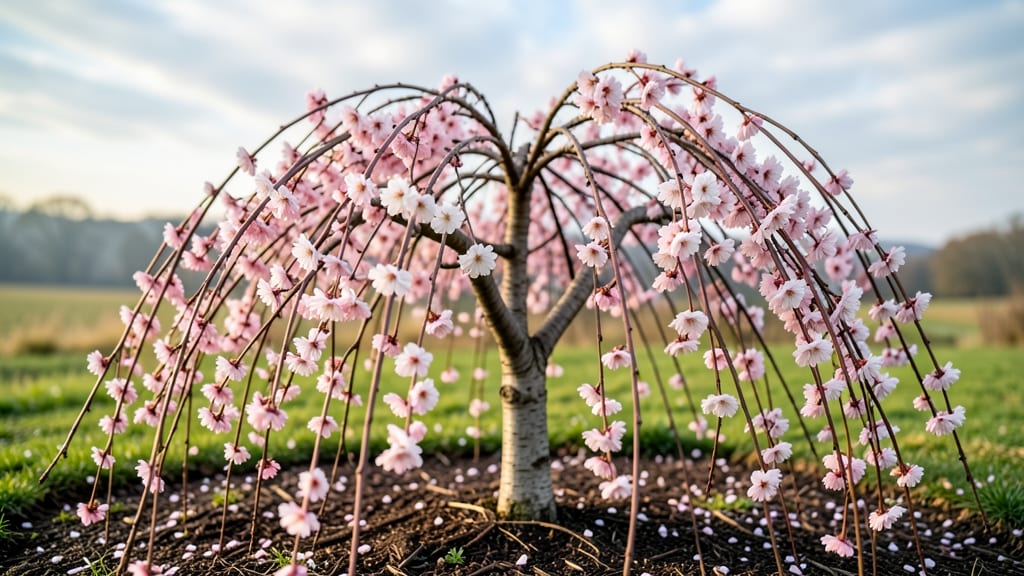
The weeping cherry tree bloom time varies by variety but typically arrives in early spring 🌸, turning your garden into a pink or white waterfall of blossoms.
Picture this: you’re sipping your morning coffee when a cascade of delicate petals catches your eye—your weeping cherry tree is in full glory. But timing isn’t just about aesthetics; it’s about planning.
Will your variety burst into bloom in late March or hold off until May? The answer depends on where you live and which cultivar you’ve chosen.
Most weeping cherries, like the classic Prunus subhirtella, bloom between late March and early April in USDA Zone 6a, but cooler climates can delay the show by weeks. Meanwhile, some varieties, such as Prunus pendula ‘Skyrocket,’ might surprise you with an earlier or extended display.
Knowing these details helps you time pruning, fertilizing, and even when to expect those Instagram-worthy photos.
In this guide, I’ll break down the exact bloom windows by variety, share tips to extend your tree’s flowering season, and reveal common mistakes that can shorten the show. Ready to make sure your weeping cherry steals the spring spotlight?
Weeping cherry tree bloom time by variety: exact months for peak beauty
If you’ve ever dreamed of a garden bursting with weeping cherry blossoms, timing is your secret weapon. These trees transform landscapes with their delicate cascading flowers, but their bloom windows vary dramatically by variety and region.
Knowing when to expect those pink or white clouds ensures you won’t miss your tree’s grand performance—whether it’s a late-winter spectacle or a spring highlight. Let’s break down the exact bloom months for the most popular weeping cherry varieties and how to adjust for your USDA zone.
Weeping cherries (like Prunus serrulata or Prunus subhirtella) are prized for their ornamental blooms, but their schedules depend on cold requirements and winter chilling hours. For example, 'Kwanzan' (a favorite with double pink flowers) blooms later than 'Skyrocket', which often starts earlier in milder climates.
Even a single degree difference in winter lows can shift bloom time by 1-2 weeks. To plan your garden’s spring showcase, let’s dive into the specifics.
Below is a comparison of bloom times for 10 top weeping cherry varieties, adjusted for USDA zones 5-9. I’ve included visual cues (like flower color and fragrance) to help you spot early vs. late bloomers.
For instance, white-blooming varieties often open slightly earlier than deep pink ones, while fragrant types (like 'Shirotae') may linger longer. Use this as your garden’s bloom calendar to coordinate with bulbs, perennials, or even neighboring trees.
| Variety |
Flower Color |
Bloom Time (Zones 5-7) |
Bloom Time (Zones 8-9) |
Fragrance |
Height (Mature) |
| 'Kwanzan' |
Deep pink |
Mid-April to early May |
Late March to April |
Light |
20-25 ft |
| 'Skyrocket' |
White |
Early April |
Late February to March |
Moderate |
15-20 ft |
| 'Tiedye' |
Pink & white stripes |
Late April to May |
Early April |
None |
15-20 ft |
| 'Shirotae' |
Pure white |
Mid-April |
Late March |
Strong |
20-25 ft |
| 'Pendula' |
Light pink |
Early to mid-April |
Late February |
Light |
15-20 ft |
| 'Yae-Edo' |
White |
Late April |
Early April |
Moderate |
20-25 ft |
| 'Akebono' |
White |
Early April |
Late March |
Strong |
15-20 ft |
| 'Mount Fuji' |
White |
Mid-April |
Late March |
Moderate |
15-20 ft |
| 'Hopcorne' |
Pink |
Late April |
Early April |
None |
15-20 ft |
'
How to extend your weeping cherry tree’s bloom time for longer enjoyment
Your weeping cherry tree’s delicate blossoms are a springtime highlight, but their bloom time can feel fleeting. With the right care, you can extend that floral display by weeks—even months!
The key lies in understanding how light exposure, soil health, and pruning timing work together to encourage longer flowering. Let’s dive into science-backed strategies that’ll keep those pink cascades swaying for longer.
Weeping cherries like Prunus subhirtella or Prunus pendula naturally bloom in late winter to early spring, but their duration depends on your growing conditions. Cold stratification (a winter chill period) triggers blooms, while consistent care afterward sustains them.
By optimizing these factors, you can prolong flowering and enjoy your tree’s beauty well into late spring.
1
Optimize Sunlight Exposure
Place your tree in full sun (6+ hours daily). South-facing locations maximize photosynthesis, fueling longer blooms. Avoid late afternoon shade, which can shorten flowering.
2
Adjust Soil pH to 6.0–7.0
Test your soil—acidic conditions (pH <5.5) limit nutrient uptake. Amend with lime if needed. A well-balanced soil ensures your tree absorbs phosphorus, critical for flower production.
3
Prune After Blooming
Wait until late spring/early summer to prune. Removing spent blossoms and weak branches redirects energy to next year’s flowers. Avoid winter pruning, which can remove next season’s bloom buds.
4
Water Deeply in Drought
Deep watering (1–2 inches weekly) prevents stress. Drought stress triggers early leaf drop and shortens blooms. Mulch with wood chips to retain moisture and regulate soil temperature.
5
Shelter from Wind
Strong winds can damage blossoms and shorten display. Plant near a fence or hedge for natural windbreaks. If exposed, use burlap screens during peak bloom.
Don’t overlook the power of fertilization timing. Apply a balanced 10-10-10 fertilizer in early spring (before buds swell) to boost flower production. Avoid high-nitrogen fertilizers—they promote leafy growth at the expense of blooms. A light feeding in late summer can also encourage next year’s buds.
Microclimate matters too! Weeping cherries thrive in protected, sunny spots. If your garden is windy or shaded, consider planting near a south-facing wall or under partial shade trees that allow dappled light. This creates a warmer microclimate, extending the bloom season by 2–3 weeks.
With these adjustments, you’ll transform your weeping cherry from a short-lived spring spectacle into a prolonged floral masterpiece. Start with one strategy—like pruning after blooms or testing soil pH—and watch your tree reward you with longer, lusher blooms year after year. 🌸
★★★★★4.8(11 reviews)
|