
Blooming
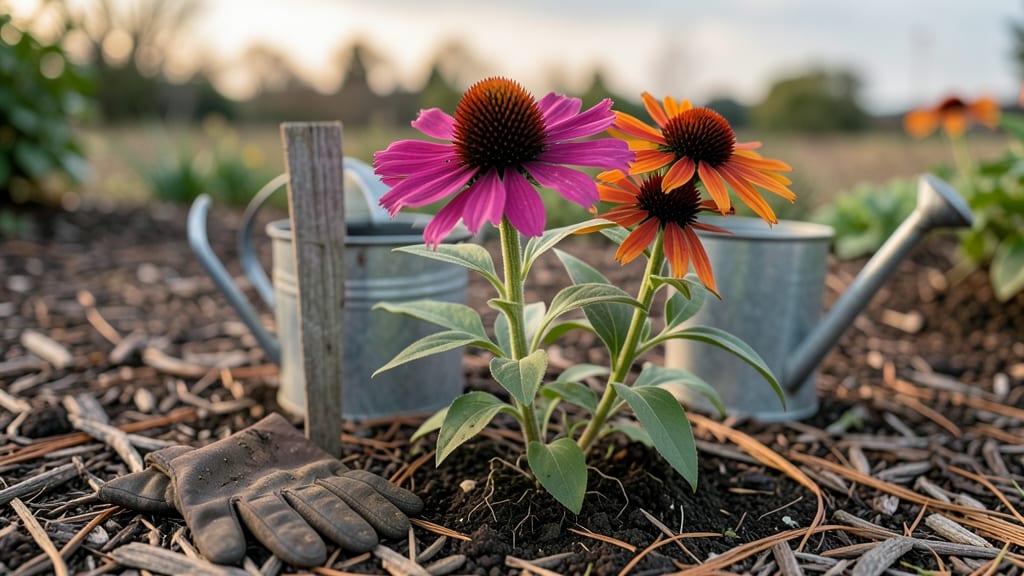
Zone 8 perennials that bloom all summer feature hardy varieties like black-eyed Susan, coneflower, and salvia, designed to handle intense heat while providing vibrant blooms from June until frost. Prioritize deep-rooted, drought-tolerant plants for reliable summer color.
These sun-loving plants have evolved to store moisture deep in their roots while their waxy leaves minimize water loss. 🌿 The key to their success lies in selecting varieties bred for heat resistance—look for plants labeled as "reblooming" or "continuous bloom" to ensure nonstop color.
I've found that pairing these with mulch helps retain soil moisture, while regular deadheading encourages even more prolific flowering throughout the season.
For maximum impact, combine these perennials with other heat-tolerant companions like lantana or veronica. The secret to their longevity isn't just heat tolerance—it's their ability to thrive with minimal care once established.
Just be sure to plant them in well-draining soil and provide afternoon shade during the hottest months if you're in an extreme microclimate.
💡 In This Article
- Why These Perennials Thrive in Zone 8 Heat
- Top 12 Heat-Resilient Perennials for Nonstop Summer Color
Why these perennials thrive in Zone 8 heat
Zone 8's summer temperatures often climb above 90°F, creating conditions where many perennials wilt or stop blooming. These heat-resistant varieties have evolved deep taproots that can access moisture 3-5 feet below ground—far deeper than shallow-rooted annuals.
For comparison, a typical lawn grass root system only reaches about 6 inches deep, making it far less drought-tolerant.
Their waxy leaf surfaces reflect sunlight and reduce water loss through transpiration, a process where plants lose moisture through leaf pores.
This adaptation is why you'll often see these perennials thriving in full sun while others nearby struggle. Coneflower (Echinacea), for example, has leaves covered in tiny waxy hairs that create a protective barrier against evaporation, allowing it to maintain turgor pressure even during 100°F heat waves.
Another key advantage is their heat-resistant pigments. Many of these perennials produce anthocyanins—those deep purple and red compounds—not only for color but also as natural sunscreens.
These pigments absorb excess UV radiation that would otherwise damage plant cells. Salvia, with its vibrant spikes, contains high levels of these protective compounds, which is why it maintains its rich color even under intense summer sun.
What most gardeners don't realize is how these plants regulate their blooming cycles.
Unlike cool-season perennials that shut down in heat, these varieties trigger continuous flowering through a process called "thermogenesis"—where warm temperatures stimulate new flower buds to form. Black-eyed Susan, for instance, can produce 50-100 flowers per stem when grown in optimal heat conditions, compared to just 10-20 in cooler climates.
Soil temperature also plays a crucial role. These perennials thrive when soil stays above 65°F—a threshold that triggers their root systems to become more active. This is why mulching with 2-3 inches of organic material becomes essential.
The mulch acts like a thermal blanket, keeping roots cool while preventing moisture loss through evaporation.
Consider this comparison: Russian sage maintains its silvery foliage and lavender blooms throughout summer because its roots extend 4-6 feet deep, while coreopsis (a related perennial) has shallower roots and may require more frequent watering to achieve the same heat resistance.
The difference comes down to root architecture and water storage capacity.