
Blooming
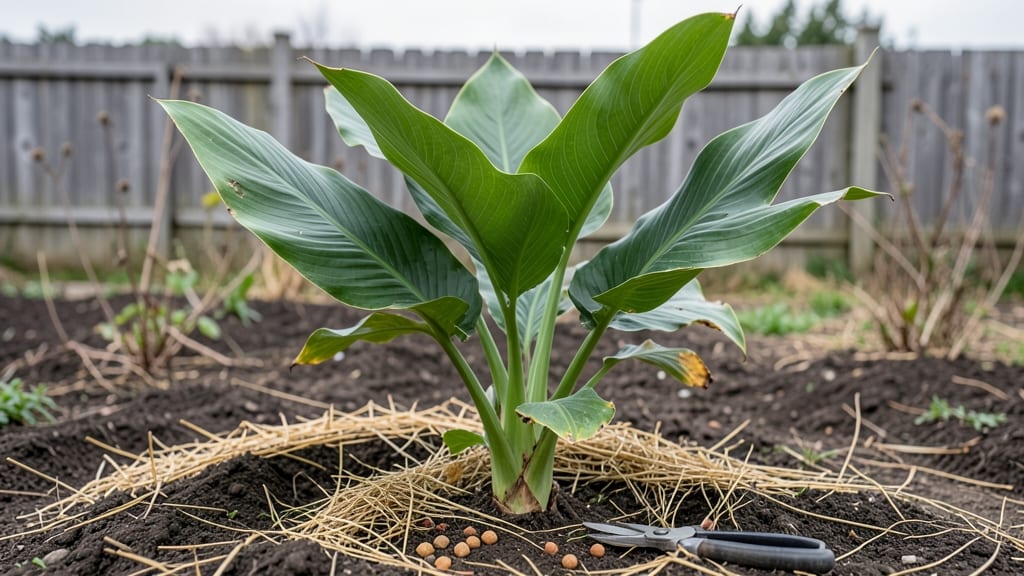
Canna plants not blooming can feel like a betrayal after all that lush foliage. 🌿 I’ve had my share of towering green stems with zero flowers, and the good news is, it’s almost always fixable with a few targeted tweaks.
The problem usually boils down to sunlight, feeding, or timing—none of which require a degree in horticulture to solve.
Here’s the thing—cannas need 6+ hours of direct sun daily to trigger blooms, but too much afternoon sun in hot climates can scorch them. Over-fertilizing with nitrogen (the first number on bags) also sends all their energy into leaves, not flowers.
And if you prune too aggressively in late summer, you’re cutting off potential blooms before they even form. Think of it like a plant version of dieting: sometimes they just need less of the wrong thing.
Once you adjust their care, you’ll see buds within 4-6 weeks—if not sooner. Start by moving them to a sunnier spot (morning sun is gentler than harsh afternoon rays), switch to a low-nitrogen, high-phosphorus fertilizer (like 5-10-10), and hold off on heavy pruning until after blooming season.
The payoff? Stems packed with bright, velvety blooms that’ll have your neighbors asking for cuttings.
This works for both in-ground and container cannas, though potted plants may need extra attention to drainage and winter protection. The key is consistency—once you nail the balance, your cannas will bloom like they’re in a tropical greenhouse. Let’s get those flowers popping!
Root Causes Behind Stalled Blooms
When your canna lilies (often called cannas) refuse to produce their signature bold, tropical blooms, it’s usually a sign that one or more of their basic needs aren’t being met. Understanding the why behind the problem is the first step to reviving your plants.
Below, we break down the most common culprits—backed by science—and what they mean for your cannas’ flowering potential.
🌱 Insufficient Light Exposure
Cannas are sun worshippers, requiring 6 to 8 hours of direct sunlight daily to trigger blooming. When deprived of adequate light, they prioritize leafy growth over flower production—a survival tactic to maximize photosynthesis.
- Why it happens: Light deprivation reduces chlorophyll production, limiting energy reserves needed for bud formation. In low-light conditions, cannas may produce fewer or no flowers entirely.
- Scientific angle: Flowering in cannas is regulated by photoperiodism (day length) and light intensity. Short days or weak light signal the plant to delay blooming until conditions improve.
- Actionable fix:
- Move plants to a south- or west-facing location (or use reflective surfaces like mirrors to amplify light).
- Supplement with a grow light (12–14 hours/day) if natural light is scarce.
- Avoid partial shade (e.g., dappled sunlight under trees), which often means too little light for cannas.
💧 Improper Watering Habits
Watering isn’t just about keeping roots hydrated—it’s about balancing moisture and stress to encourage flowering. Too much or too little water can derail bloom production.
- Why it happens:
- Overwatering: Soggy soil leads to root rot and nutrient deficiencies, weakening the plant’s ability to produce flowers. Cannas also struggle in waterlogged conditions, which mimic their natural drought-tolerant origins.
- Underwatering: Stress from dry soil triggers abscisic acid (a plant hormone that delays flowering) while diverting energy to root survival.
- Scientific angle: Flowering requires carbohydrate reserves, which are depleted when plants are stressed. Proper hydration ensures photosynthate transport to developing buds.
- Actionable fix:
- Water deeply 2–3 times per week (adjust for clay vs. sandy soil). Let the top 2–3 inches of soil dry out between waterings.
- Use well-draining soil (amend with perlite or compost) to prevent waterlogging.
- Avoid wet foliage (water at the base) to reduce fungal risks.
🌿 Lack of Nutrient Balance
Cannas are heavy feeders, and a skewed nutrient profile—especially low phosphorus or potassium—can stall blooms. Think of it like a chef missing key ingredients: the dish (or flowers) won’t turn out right.
- Why it happens:
- Low phosphorus (P): Phosphorus is critical for energy transfer and root development, both of which support flower bud initiation. Deficiency often shows as purple-tinged stems or stunted growth.
- Low potassium (K): Potassium regulates enzyme activity and water balance, directly impacting bloom quality and quantity. A deficiency may lead to weak stems or small, sparse flowers.
- Excess nitrogen (N): Too much nitrogen promotes leafy growth at the expense of flowers, a phenomenon called luxuriant growth.
- Scientific angle: The NPK ratio (nitrogen-phosphorus-potassium) should lean toward 5-10-10 or 10-20-20 during the blooming season. Phosphorus and potassium act as flowering triggers, while nitrogen fuels foliage.
- Actionable fix:
- Fertilize with a balanced bloom booster (e.g., 5-10-10 or 10-20-20) every 4–6 weeks during the growing season.
- Use compost or bone meal (high in phosphorus) to kickstart flowering.
- Avoid high-nitrogen fertilizers (like lawn fertilizers) once buds form.
⏳ Premature or Delayed Planting
Cannas are warm-season plants with a specific blooming window. Planting them too early or late can disrupt their natural cycle, leaving you with lush foliage but no flowers.
- Why it happens:
- Planting too early: Cold soil (below 60°F/15°C) slows root growth and delays energy storage, pushing back bloom time.
- Planting too late: If cannas don’t establish roots before late summer, they may not have enough time to mature and flower before frost.
- Scientific angle: Cannas enter a dormancy-like state in cool weather, halting growth until temperatures rise. Early planting can lead to chilling injury, while late planting starves the plant of growing-degree days (a measure of heat accumulation needed for flowering).
- Actionable fix:
- Plant after the last frost when soil temps reach 60°F+ (15°C+).
- In cooler climates, start cannas in containers indoors 6–8 weeks before the last frost, then transplant after warming.
- Use black plastic mulch to warm soil faster in spring.
🌡️ Temperature or Climate Mismatch
Cannas thrive in heat and humidity, but extreme conditions—whether too hot, too cold, or inconsistent—can throw off their blooming schedule.
- Why it happens:
- Cold snaps: Temperatures below 50°F (10°C) can shock cannas, causing buds to abort or preventing new ones from forming.
- Heatwaves: While cannas love warmth, consistent temps above 90°F (32°C) can stress plants, leading to flower drop or stunted growth.
- Drafty or windy spots: Excessive wind desiccates foliage, reducing the plant’s energy for blooming.
Revive Your Cannas Blooming Magic
Now that you know why your cannas are playing hard to bloom, let’s roll up our sleeves and get them back on track! 🌸 The good news? Most issues have simple fixes—no green thumb required.
Below, we’ve matched the most common causes to practical, step-by-step solutions, plus pro tips to keep those flowers coming year after year.
🌱 Too Little Sunlight? Move Them to the Light
Fix: Cannas crave sunlight—6 to 8 hours of direct sun daily is ideal. If your plants are in shade, they’ll focus on leaf growth instead of blooms.
- 🔥 Step 1: Scout their current spot. Use a sunlight tracker app (or just observe) for a full day. If they’re getting <4 hours of sun, relocate them.
- 🍳 Step 2: Gradually move them to a sunnier spot over 1–2 weeks to avoid shocking the plant. Sudden full sun can scorch leaves!
- 👨🍳 Step 3: If shade is unavoidable (e.g., under trees), prune nearby branches to open up the canopy. A reflective surface (like white gravel or a mirror) can also bounce extra light their way.
- ⏰ Pro Tip: Morning sun + afternoon shade works for hot climates—just avoid scorching midday rays.
Prevention:
- Plant cannas in full sun from the start (south or west-facing spots are best).
- Use light-colored mulch to reflect heat and sunlight toward the base.
💧 Overwatering or Poor Drainage? Drainage First!
Fix: soggy roots = no blooms. Cannas hate "wet feet" but need consistent moisture.
- 🔥 Step 1: Check the soil. Stick your finger 2–3 inches deep—if it’s damp, hold off on watering. If dry, water deeply until it drains from the bottom.
- 🍳 Step 2: Improve drainage if needed:
- Amend heavy clay soil with compost or perlite (1 part compost to 3 parts soil).
- Elevate containers with feet or saucers to prevent water pooling.
- 👨🍳 Step 3: Water at the base, not overhead, to avoid fungal issues. Early morning is best—wet leaves in evening sun = recipe for mildew.
- ⏰ Pro Tip: Mulch heavily (3–4 inches) with straw or wood chips to retain moisture without suffocating roots.
Prevention:
- Plant in raised beds or containers with drainage holes.
- Use a moisture meter to track soil levels—cannas like soil that’s like a wrung-out sponge.
🍽️ Not Enough Nutrients? Feed Them Right
Fix: Cannas are heavy feeders, especially when blooming. A balanced diet = more flowers!
- 🔥 Step 1: Test your soil (a DIY kit from a garden center works). Aim for:
- pH 6.0–7.0 (slightly acidic to neutral).
- High phosphorus (the middle number on fertilizer bags) to encourage blooms.
- 🍳 Step 2: Fertilize in stages:
- Early spring (when shoots emerge): Use a balanced 10-10-10 fertilizer to boost growth.
- Mid-summer (when buds form): Switch to a low-nitrogen, high-phosphorus fertilizer (like 5-10-10 or 7-9-5).
- Every 4–6 weeks during the growing season.
- 👨🍳 Step 3: Top-dress with compost in early spring for slow-release nutrients.
- ⏰ Pro Tip: Fish emulsion or banana peel tea (rich in potassium) can give blooms a natural boost!
Prevention:
- Side-dress with compost or fertilizer every 6–8 weeks to avoid nutrient burnout.
- Avoid high-nitrogen fertilizers (like lawn food)—they promote leaves, not flowers!
✂️ Overcrowded or Leggy? Prune for Perfection
Fix: If your cannas are tall and bare or cramped, they’ll skip blooming to focus on survival.
- 🔥 Step 1: Thin out the clump. Dig up the rhizomes (the thick, knobby roots) and separate them if they’ve multiplied. Replant the healthiest, most vigorous ones.
- 🍳 Step 2: Prune leggy stems:
- Cut back overly tall, bare stems to 1–2 feet from the ground. This redirects energy to new growth and blooms.
- Remove dead or yellowing leaves to improve airflow.
- 👨🍳 Step 3: Pinch back new growth in early summer to encourage bushier, flower-heavy stems.
- ⏰ Pro Tip: Deadhead spent blooms regularly—this tells the plant to keep producing more flowers!
Prevention:
- Divide rhizomes every 3–4 years to prevent overcrowding.
- Stake tall stems if needed to avoid flopping (but don’t overdo it—cannas like to lean naturally).
🌡️ Wrong Climate or Timing? Adjust for Your Zone
Fix: Cannas need warmth + patience. If your zone is cool or you planted too early, they’ll hold off on blooms.
- 🔥 Step 1: Know your last frost date. Cannas cannot tolerate frost—wait until after all danger of frost (usually late spring) to plant.
- 🍳 Step 2: Extend the season in cool climates:
- Mulch deeply (4–6 inches) to insulate roots.
- Plant in containers so you can bring them indoors before the first frost (they go dormant in winter).
- Use black plastic mulch to absorb heat and warm the soil faster in spring.
- 👨🍳 Step 3: Give them time. In cooler zones, cannas may wait until July or August to bloom—don’t panic!
- ⏰ Pro Tip: Start rhizomes indoors 6–8 weeks before your last frost for a head start on the season.
Prevention:
- Choose early-blooming varieties (like ‘Wyoming’ or ‘Prazsky’) if you have a short growing season.
- Plant near a warm wall or patio to trap heat.
🐛 Pests or Disease? Treat Gently
Fix: Stress from pests or disease can halt blooming—but fix the root cause first!
- 🔥 Step 1: Identify the issue:
- Japanese beetles? Handpick them or use neem oil spray.
- Fungal spots? Prune infected leaves and apply copper fungicide.
- Root rot? Stop watering, let soil dry, and repot in fresh, sterile mix.
- 🍳 Step 2: Prevent future problems:
- Rotate crops—don’t plant cannas in the same spot yearly.
- Water at the base (not overhead) to deter fungal growth.
- 👨🍳 Step 3: Boost immunity with compost tea or liquid seaweed fertilizer (rich in micronutrients).
Prevention:
- Inspect plants weekly for early signs of pests (chewed leaves, holes, or sticky residue).
- Clean up debris in fall to reduce overwintering pests.
🎯 Final Checklist for Blooming Success
Before you call it a season, run through this quick checklist: ✅ Sunlight: 6+ hours daily? If not, relocate. ✅ Water: Soil moist but not soggy?
Adjust your watering routine. ✅ Food: Fertilized with high-phosphorus feed this summer? ✅ Space: Rhizomes divided if overcrowded? ✅ Pruned: Deadheaded and thinned for airflow? ✅ Pests: No signs of stress or damage?
💡 Bonus Hack: If your cannas still won’t bloom by late summer, try a final "bloom boost"—feed with Epsom salt (1 tbsp per gallon of water) for a
Frequently asked questions
1Why do my canna plants keep growing leaves but no flowers?
Your cannas are likely prioritizing leaf growth due to excess nitrogen in fertilizer or insufficient sunlight. Switch to a low-nitrogen, high-phosphorus fertilizer (like 5-10-10) and ensure they get 6+ hours of direct sun daily. This balance will redirect energy toward blooms instead of foliage.
2Is it too late to fix my cannas if they haven’t bloomed yet?
Not at all! Cannas can still produce blooms even late in the season. Focus on fertilizing with phosphorus (like bone meal) and pruning leggy stems to encourage new growth. You may see buds within 4-6 weeks—just give them time!
3How often should I fertilize cannas for blooming?
Fertilize every 4-6 weeks during the growing season, but switch to a bloom-specific formula (high phosphorus) once buds appear. Avoid high-nitrogen fertilizers after mid-summer—they’ll promote leaves over flowers.
4Can overcrowded rhizomes prevent blooming?
Overcrowded rhizomes compete for resources, starving stems of energy for blooms. Dig up and divide clumps every 3-4 years, replanting the healthiest rhizomes. This gives each plant enough space to thrive and flower.
5What’s the best way to encourage blooms in container-grown cannas?
Containers need extra attention: use a well-draining mix with perlite, fertilize monthly with bloom boosters, and rotate pots for even sunlight. Water deeply but let soil dry slightly between sessions to prevent root rot. Potted cannas often bloom earlier if given these care tweaks!