
Blooming
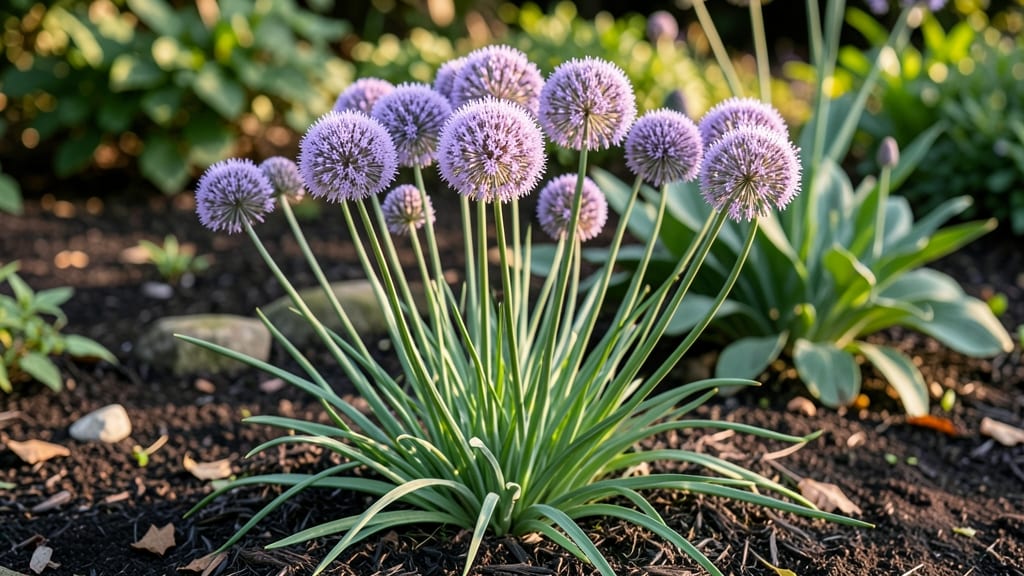
Alliums do not bloom all summer—most varieties flower in spring or early summer, with blooming periods lasting 2-6 weeks depending on the species. Heat-tolerant types like Allium sphaerocephalon may rebloom briefly, but prolonged summer heat often causes dormancy or leaf dieback.
Alliums are seasonal bloomers, with their flowering triggered by specific temperature and daylight cues. 🌸 Most types—like the dramatic Allium giganteum or the delicate Allium schubertii—rely on cooler spring conditions to produce their iconic globes of flowers.
Once summer heat intensifies, many alliums shift into a dormant state, conserving energy until cooler fall temperatures return. The few heat-tolerant varieties that might rebloom, such as Allium sphaerocephalon, often do so only in regions with mild summers or when given extra care like afternoon shade and consistent moisture.
What's interesting is how regional climates play a role—alliums in cooler zones like the Pacific Northwest might bloom later into summer, while those in hotter areas could finish flowering by early June.
If you're hoping to extend their display, focusing on heat management is key: mulching, strategic watering, and choosing late-season varieties can make a noticeable difference. Just remember, pushing alliums too hard in extreme heat might stress them beyond recovery.
💡 In This Article
- Allium Bloom Seasons by Variety and Climate
- Extending Allium Blooms: Heat Management Tips
Allium bloom seasons by variety and climate
Allium flowering is tightly regulated by photoperiodism—the plant's response to daylight length—and thermoperiodism, its sensitivity to temperature shifts. Most allium species require 10-14 hours of daylight combined with 50-65°F daytime temperatures to trigger bud formation.
For example, Allium giganteum typically blooms in late spring (April-May) when days lengthen but before summer heat peaks, while Allium christophii often flowers in early summer (June) in cooler climates like the Pacific Northwest. 🌸 The key difference lies in their native habitats: Mediterranean species (like Allium sphaerocephalon) evolved to handle warmer summers but still prefer 60-75°F for flowering.
Regional variations create dramatic differences in bloom timing.
In Zone 5 (e.g., Chicago), Allium schubertii might bloom in late May for just 3-4 weeks before heat stress sets in, while the same variety in Zone 8 (e.g., Los Angeles) could bloom in March for 6 weeks before summer drought takes hold.
The Allium 'Globemaster' series often extends blooming into early summer in coastal areas where ocean breezes moderate temperatures, but inland gardens may see flowers fade by early June due to 80°F+ heat. These climate-driven patterns explain why alliums rarely produce continuous summer blooms.
The flowering mechanism involves a complex hormonal cascade. When temperatures drop below 70°F at night (vernalization), alliums produce florigen—a protein that signals flower development. However, once daytime highs exceed 85°F for more than 5-7 days, most alliums enter dormancy to conserve water.
This is why you'll often see Allium 'Purple Sensation' produce fewer blooms in hot inland summers compared to its performance in maritime climates. The plant's survival strategy prioritizes energy conservation over prolonged flowering during heatwaves. 🌡️
There are exceptions among heat-tolerant varieties. Allium sphaerocephalon (drumstick allium) sometimes produces secondary blooms in late summer if given partial afternoon shade and consistent moisture, while Allium karataviense may rebloom in regions with hot but dry summers (like parts of the Southwest).
These varieties can extend their display by 2-3 weeks under ideal conditions, but true summer-long blooming remains rare in the allium family. The trade-off is always between flower production and plant survival during peak summer stress.
For gardeners in hot climates, understanding these patterns helps set realistic expectations. While you won't get continuous summer blooms, strategic planting of early-, mid-, and late-season varieties can create a staggered display.
For instance, pairing Allium 'Haag's Group' (spring) with Allium 'Millennium' (early summer) and Allium 'Purple Rainbow' (late summer) can give the illusion of prolonged flowering across 3-4 months rather than just 2-3 weeks. The secret lies in matching each variety's temperature preferences with your local climate window. ✨
What most gardeners overlook is how soil temperature affects blooming. Alliums planted in well-draining, slightly alkaline soil (pH 6.5-7.5) with 60-70°F root zone temperatures will flower more reliably than those in compacted or overheated soils.
In containers, using 10-15% perlite in the potting mix helps maintain optimal root temperatures, which can extend blooming by 1-2 weeks in marginal climates. This subtle but critical factor often determines whether an allium will make it through early summer heat or succumb prematurely. 🌱