
Blooming
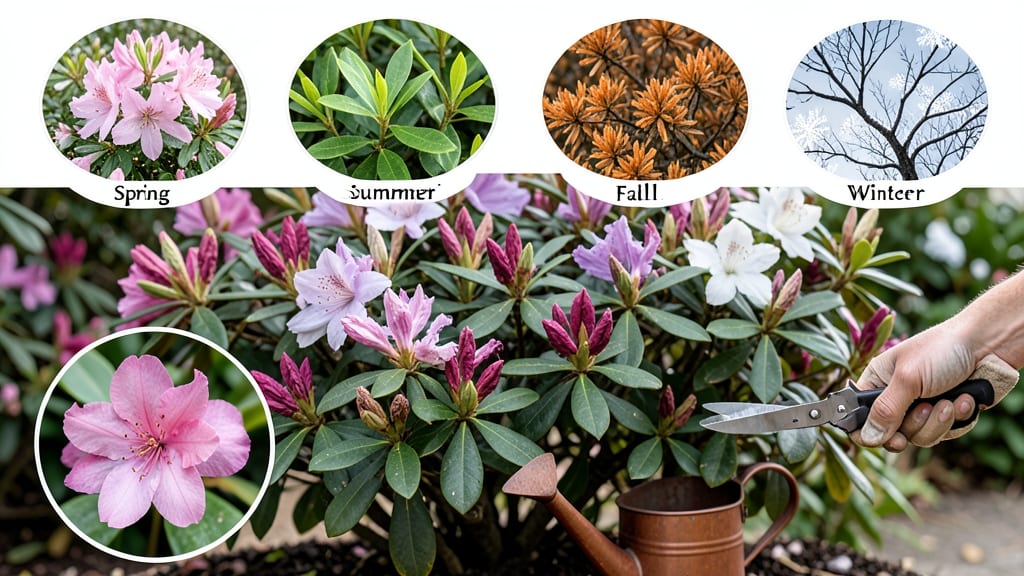
Azaleas don't bloom all year—most varieties produce vibrant flowers primarily in spring, with some reblooming types offering occasional fall blooms. Their flowering cycles depend heavily on climate, pruning practices, and the specific species, particularly in warmer regions where tropical azaleas can extend their bloom seasons.
Azaleas follow natural seasonal rhythms that align with their native growing conditions. 🌸 Most deciduous varieties burst into color in late spring, typically between March and May, when temperatures rise and daylight increases.
The few reblooming cultivars—like 'Encore' or 'Southern Indica'—might produce smaller fall displays, but these are never as abundant or reliable as their spring counterparts.
What makes this fascinating is how climate zones play a role: azaleas in USDA Zone 7 or warmer often have longer bloom windows because they experience milder winters and extended growing seasons.
If you're dreaming of year-round color, your best bet is to mix varieties that bloom at different times. For instance, pairing a spring-blooming azalea with a late-summer rebloomer can create a cascading effect.
I've seen gardens in Zone 8 where this strategy results in blooms from April through October, though never simultaneously. The key is understanding your local microclimate—some areas might get a bonus second flush in early summer if conditions are just right.
💡 In This Article
- Azalea Bloom Seasons by Variety and Climate
- Extending Azalea Bloom Life: Pruning and Care Tips
Azalea bloom seasons by variety and climate
Azalea flowering cycles are primarily dictated by their native evolutionary adaptations. Most deciduous azaleas—like the popular Rhododendron species—follow a strict spring bloom pattern triggered by winter chilling requirements. These plants need 400-1,000 hours below 45°F during dormancy to properly set flower buds for the following spring.
Without adequate cold exposure, they simply won't bloom at all, which explains why azaleas in warmer climates (like Zone 8+) may produce fewer or weaker spring flowers unless they're tropical hybrids.
The exceptions are reblooming azaleas, specifically Kurume hybrids and Satsuki azaleas, which can produce secondary blooms in late summer or fall. These varieties often have shorter chilling requirements (200-400 hours) and respond to summer heat by developing flower buds on new growth.
For example, the 'Encore' series can rebloom if given proper care, but these fall flowers are typically 25-50% smaller than their spring counterparts and may require deadheading to encourage regrowth.
Climate plays an even more dramatic role than variety selection. In USDA Zones 5-6, azaleas experience full winter dormancy, which leads to robust spring blooms but often no fall reblooming.
By contrast, Zone 7 and warmer climates provide milder winters that may not fully satisfy chilling requirements, but they also offer extended growing seasons that can trigger sporadic summer or fall blooms.
Tropical azaleas in Zones 8-10 often bloom year-round in their native habitats, though they may still show seasonal intensity variations when grown in containers.
Temperature fluctuations during the growing season also influence bloom timing. Azaleas typically need daytime temperatures above 60°F and nighttime temperatures above 50°F to open buds fully.
In cooler regions, this means spring blooms may be delayed until late April or May, while fall blooms might appear as early as September if temperatures remain mild.
The humidity level matters too—high humidity (above 70%) can prolong bloom life by reducing stress, while dry conditions may cause buds to drop prematurely.
Light exposure affects bloom quality as well. Azaleas prefer partial shade (30-50% sunlight), particularly in hot climates where full sun can scorch buds. In Zone 5 gardens, they might tolerate more sun because cooler temperatures prevent heat stress.
The ideal light balance creates the perfect conditions for bud formation: enough sunlight for photosynthesis but not so much that it stresses the plant during critical growth phases.
Consider these key factors when choosing azaleas for your climate:
- Spring bloomers: Best for Zones 5-7 (e.g., 'Hino Crimson,' 'George L. Taber')
- Rebloomers: Suited for Zones 7-9 (e.g., 'Encore Pink,' 'Southern Charm')
- Tropical varieties: Thrive in Zones 8-10 (e.g., 'Tiny Wine,' 'Mardi Gras')
What most gardeners don't realize is that even within the same variety, individual plants can show 5-10 day variations in bloom timing based on their exact microclimate. This natural variability is why azalea displays often appear patchy rather than uniform. 🌿