
Blooming
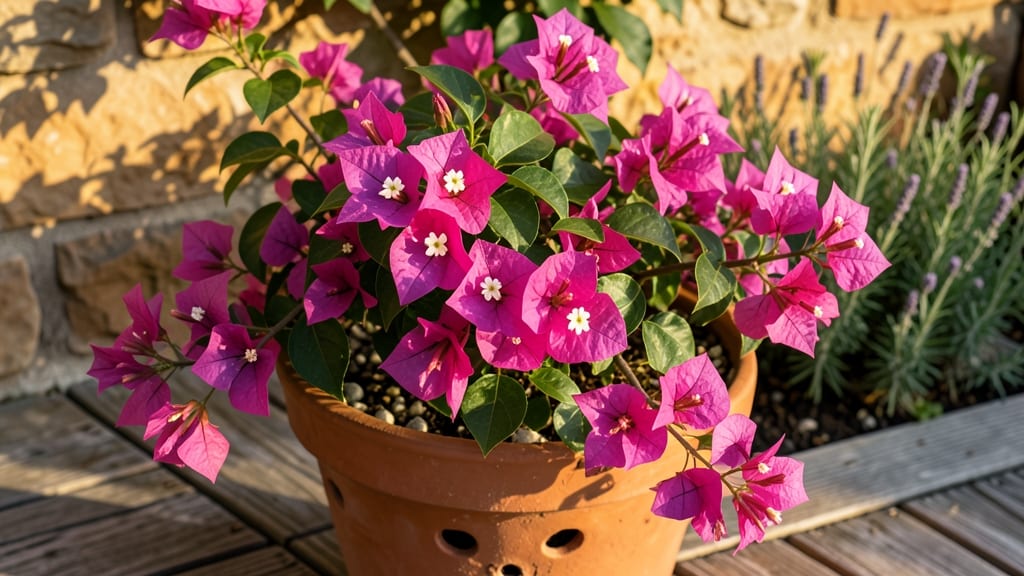
Bougainvillea blooms year-round only in tropical climates with consistent warmth and sunlight, while temperate zones see seasonal flowering. Varieties like 'Orange King' or 'Violet Queen' thrive in frost-free regions, but most need winter dormancy in cooler areas.
Year-round blooming isn't automatic—it depends entirely on your climate. In tropical regions, bougainvillea thrives with steady warmth above 60°F and abundant sunlight, which keeps them flowering continuously. 🌿 However, most varieties shut down in cooler seasons unless you provide winter protection or grow them indoors.
The key difference lies in their natural adaptation: tropical types evolved to bloom nonstop, while temperate varieties sync with seasonal growth cycles.
For gardeners in cooler climates, choosing frost-resistant varieties like 'California Gold' can extend the blooming season, though they'll still need winter pruning. The secret to prolonged blooms?
Consistent care—regular watering, balanced fertilizer, and strategic pruning to encourage new growth. Even in warm zones, overwatering or poor drainage can stress plants and trigger dormancy.
💡 In This Article
- Climate Factors That Trigger Bougainvillea Flowering
- Best Bougainvillea Varieties for Year-Round Color
Climate factors that trigger bougainvillea flowering
Bougainvillea's blooming cycle is directly tied to temperature thresholds and daylight exposure.
These plants originate from tropical and subtropical regions of South America, where they've evolved to thrive in consistent warmth above 60°F year-round. 🌞 The key trigger for continuous blooming is maintaining temperatures above 50°F—any dip below this for extended periods signals the plant to enter dormancy, even in tropical varieties.
This is why you'll see nonstop flowering in Hawaii or Florida, but only seasonal blooms in California or Arizona during winter months.
The relationship between sunlight and blooming is equally critical. Bougainvillea requires at least 6-8 hours of direct sunlight daily to produce the energy needed for flowering. In tropical climates, the consistent sunlight exposure combined with warm temperatures creates ideal conditions.
In contrast, temperate zones experience shorter winter days (often 4-6 hours of sunlight) and cooler temperatures, which naturally reduce blooming. The plant's response is an evolutionary adaptation—conserving energy during less favorable conditions.
What most gardeners don't realize is how humidity plays a subtle but important role. Tropical bougainvillea varieties prefer 40-60% humidity levels, while temperate-adapted types can tolerate slightly drier conditions (30-50%).
Low humidity combined with cool temperatures accelerates dormancy. This is why indoor bougainvillea in heated homes often continue blooming—artificial humidity from indoor environments mimics tropical conditions better than outdoor winter air.
Seasonal changes trigger specific physiological responses. In cooler climates, temperatures below 40°F cause the plant to produce ethylene gas, a natural hormone that induces dormancy. The leaves may yellow and drop, but the roots remain alive. 🌱 This winter dormancy isn't death—it's a survival mechanism.
In tropical climates, this response never activates because temperatures never drop sufficiently to trigger ethylene production. The plant continues its growth cycle uninterrupted.
Light quality matters too. Bougainvillea responds to the spectrum of sunlight, particularly blue and red wavelengths that drive photosynthesis. In winter months, shorter days mean less intense sunlight, which reduces the plant's ability to produce flowers.
This is why supplemental grow lights can extend the blooming season in temperate zones—by mimicking longer daylight hours and maintaining light intensity. The optimal light spectrum for bougainvillea flowering falls between 400-700 nanometers, which is why full-spectrum LED grow lights work so effectively.
Watering patterns also interact with these climate factors. In tropical environments, consistent moisture levels (1-1.5 inches per week) support continuous growth. However, in cooler climates, overwatering during dormancy can lead to root rot.
The plant's natural response to cold is to reduce water uptake, making it more susceptible to moisture-related stress. This delicate balance explains why some gardeners in temperate zones report better results with drip irrigation systems that provide precise water control during seasonal transitions.