
Blooming
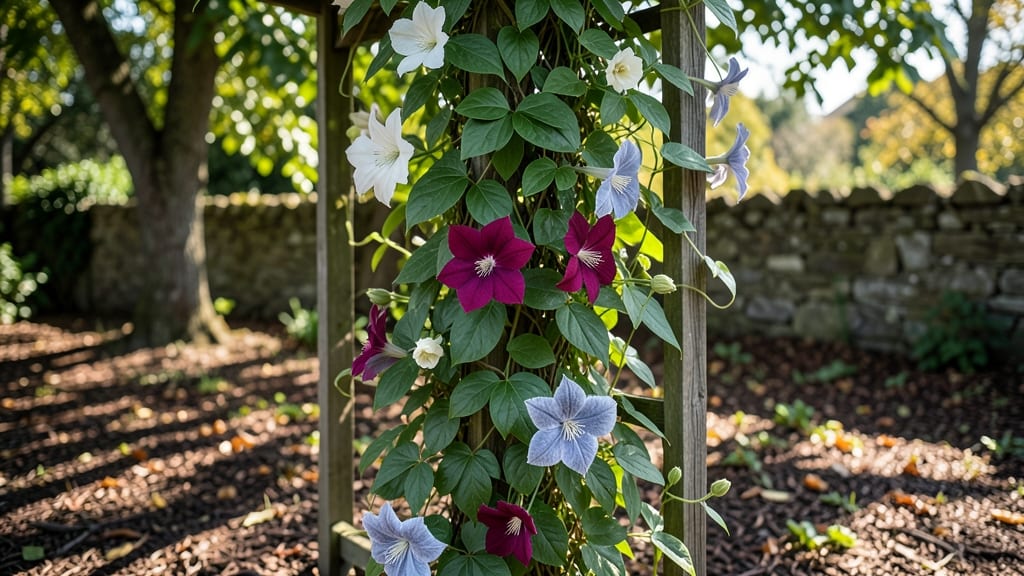
Clematis do not bloom all summer continuously; most varieties produce one main flowering season, either spring or summer, with some reblooming types flowering again in late summer or fall. Early bloomers fade after their first flush, while late varieties may extend blooms into autumn with proper care.
Clematis are famous for their dramatic blooms, but their flowering patterns depend entirely on the variety. 🌸 Early-season types like 'Jackmanii' burst into color in spring and fade by early summer, while late bloomers such as 'Comtesse de Bouchaud' shine in summer and sometimes linger into autumn.
The key to longer blooms lies in reblooming varieties—these need strategic pruning and care to encourage a second flush of flowers after their initial season. For example, 'Nelly Moser' can produce stunning blooms twice a year with proper maintenance.
What sets rebloomers apart is their ability to respond to seasonal changes. These plants typically produce their first flush of flowers on old wood (last year's growth), then rely on new growth for a second round.
Understanding your clematis type is crucial—some varieties, like 'Niobe,' bloom on new wood only, while others combine both strategies. This biological quirk means pruning at the wrong time can actually shorten your blooming window.
To maximize blooms, focus on three critical factors: sunlight, water, and pruning timing. Most clematis thrive in full sun but appreciate afternoon shade in hot climates. Consistent moisture is essential, especially during bloom periods, while proper pruning (group 1, 2, or 3) depends entirely on your specific variety.
A well-timed cutback after the first bloom can trigger that coveted second flush, turning a single-season display into a summer-long spectacle.
💡 In This Article
- Clematis Flowering Seasons by Variety Type
- How to Encourage Extended Clematis Blooms
Clematis flowering seasons by variety type
Clematis flowering behavior is governed by their growth habits and biological triggers. Early bloomers like 'Jackmanii' rely on last year's wood (old growth) to produce flowers in spring, typically between April and June in temperate climates.
These varieties are sensitive to temperature shifts—once the first flush fades (usually by mid-summer), they enter a dormant phase where new growth won't produce blooms. The reason? Their flower buds form on stems created the previous year, and once those stems mature, they can't generate new buds.
Late bloomers such as 'Comtesse de Bouchaud' operate on a different schedule, producing flowers on current season's growth (new wood) from June through August. These varieties often extend blooms into autumn because their flower buds develop continuously throughout the growing season.
The key difference lies in their response to daylight: early bloomers trigger flower formation in response to shortening daylight in late summer/fall of the previous year, while late bloomers react to increasing daylight in spring.
Reblooming varieties like 'Nelly Moser' combine both strategies, producing their first flush on old wood in spring and a second flush on new wood in summer. This dual system creates the illusion of continuous blooms, but there's usually a 4-6 week gap between flushes.
For example, 'Nelly Moser' might bloom from May to early June on old wood, then again from July to September on new growth. The transition between flushes depends on environmental conditions—consistent temperatures above 50°F and adequate moisture are essential for this second bloom cycle.
What most gardeners overlook is the role of pruning groups. Clematis are categorized into three pruning groups based on their blooming habits:
- Group 1: Early bloomers (e.g., 'Jackmanii') that bloom on old wood - prune immediately after first bloom
- Group 2: Late bloomers (e.g., 'Comtesse de Bouchaud') that bloom on new wood - prune in late winter
- Group 3: Rebloomers (e.g., 'Nelly Moser') that bloom on both - prune in stages after first bloom
The most visually stunning clematis displays often come from carefully selected combinations. For example, pairing 'Jackmanii' (early) with 'Comtesse de Bouchaud' (late) creates a 3-4 month continuous bloom period from spring to early autumn.
The secret lies in their complementary blooming windows—while one variety is finishing its display, the other is just beginning. This strategic planting approach maximizes visual impact while working with each plant's natural biological rhythms.
Understanding these patterns helps explain why some clematis appear to bloom all summer while others don't. The plants themselves aren't capable of continuous flowering—they're following precise biological schedules that respond to environmental cues.
With this knowledge, you can select varieties that create the illusion of summer-long blooms through careful variety selection and timing.