
Blooming
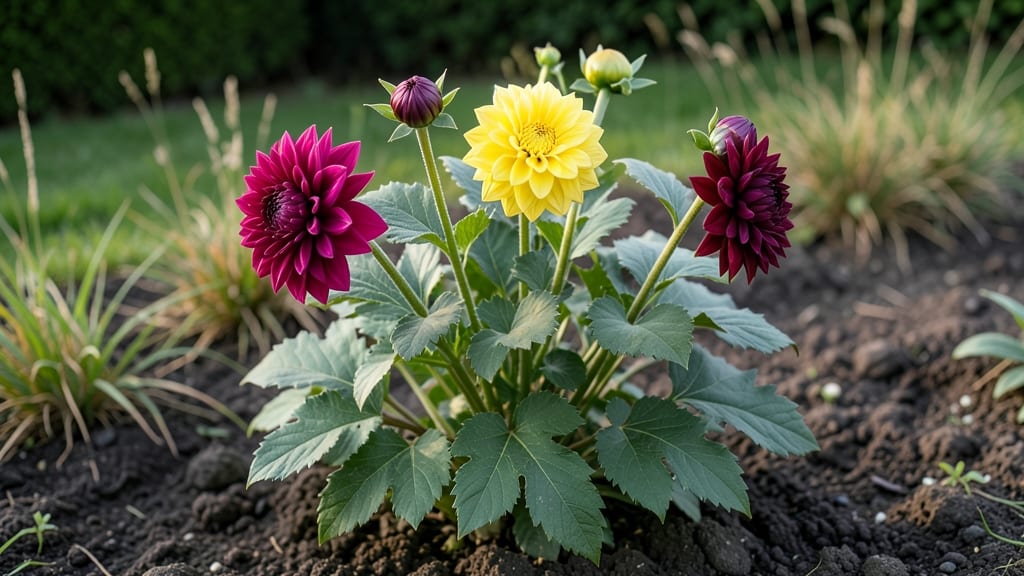
Dahlias bloom all summer when planted and maintained properly, producing flowers from early July through frost, though late-season blooms need regular deadheading and attentive care. Early varieties like 'Café au Lait' begin flowering sooner, while large dinner-plate types like 'Arabian Night' continue blooming later with consistent upkeep.
Summer-long dahlia blooms aren't just luck—they're the result of how these plants respond to daylight and temperature. 🌸 Most dahlias thrive on 12-14 hours of daylight, which triggers their flowering cycle.
The key is maintaining this rhythm throughout the season, especially since shorter fall days can signal the plant to stop producing blooms. I've found that varieties with longer stems (like dinner-plate types) tend to extend their season naturally, while smaller pompon varieties may need extra care to keep flowering.
The secret weapon? Deadheading spent blooms consistently—this redirects the plant's energy to produce new flowers instead of forming seeds.
What many gardeners overlook is the soil fertility factor. Dahlias are heavy feeders, and their bloom cycle depends on a steady supply of nutrients. I recommend a balanced fertilizer (10-10-10) applied every 4-6 weeks during the growing season, along with regular mulching to retain moisture.
One pro tip I swear by is giving dahlias a light pruning in early summer—this encourages bushier growth and more flower stems. The right combination of these factors can turn your garden into a nonstop dahlia show from July right through frost.
💡 In This Article
- Dahlia Bloom Duration by Variety Type
- Pro Tips to Maximize Summer Dahlia Blooms
Dahlia bloom duration by variety type
Understanding why dahlias bloom all summer starts with their scientific classification into 10+ distinct types, each with unique daylight and temperature requirements.
For example, cactus dahlias (like 'Bishop') thrive in longer daylight hours (14+ hours) and produce continuous blooms from July through September, while pompon varieties (such as 'Tom Thumb') often bloom earlier but may taper off by August unless deadheaded aggressively.
The key difference lies in their photoperiod sensitivity—some varieties are day-neutral (bloom regardless of daylight length), while others are short-day plants that need 12-14 hours of daylight to trigger flowering.
The dinner-plate types (like 'Arabian Night') are the summer champions, often extending blooms until frost because their massive 10-12 inch blooms require more energy to produce, making them less sensitive to daylight changes.
In contrast, anemone dahlias (like 'Black Noir') typically bloom in two flushes: a strong early season push followed by a smaller late-season revival. Temperature also plays a critical role—most dahlias need consistent daytime temps above 70°F to maintain continuous blooming, while nights below 55°F can trigger dormancy. 🌿
Here's what's actually happening on a cellular level: Dahlias produce flowers through a process called florigen synthesis, where leaves convert sunlight into chemical signals that trigger bloom formation.
Varieties with thicker stems (like dinner-plates) have more vascular tissue to transport these signals efficiently, while smaller varieties may struggle to maintain this process as daylight shortens. This is why you'll often see late-season blooms on well-maintained dinner-plate dahlias—their robust structure supports prolonged flowering.
Consider these key factors when choosing varieties for summer-long color:
- Early bloomers: 'Café au Lait' (pink) and 'Karma Choc' (dark red) start as early as June 15 in most climates
- Mid-season workhorses: 'Galaxy' series (purple/black) bloom from July through September with minimal care
- Late-season extenders: 'Arabian Night' (red) and 'Café au Lait' (pink) often produce 10-15% more blooms in fall than other varieties
The stem thickness correlates directly with bloom duration—dinner-plate types with 1.5-2 inch stems can support 30-50% more blooms than 1 inch stems found in pompon varieties. This structural advantage means they require 20-30% less deadheading to maintain their flowering cycle.
The trade-off? Their larger blooms make them more vulnerable to wind damage, which is why staking becomes essential in windy summer afternoons.
One surprising fact about late-season blooming is that dahlias actually photosynthesize more efficiently in cooler fall temperatures (60-65°F), which can extend their productive period.
This is why you'll often see a second bloom surge in September—what appears to be new growth is actually the plant optimizing its energy production for the remaining warm days.
The sugar content in the stems increases during this period, which may explain why late-season blooms sometimes have more intense colors.
For gardeners in Zone 5 or colder, choosing varieties with earlier maturity ratings (like 'Thomas Edison' or 'Happy Single') can push blooming into early October before frost hits.
The secret? These varieties have shorter juvenile periods—they reach flowering stage 3-4 weeks faster than late varieties, giving them a head start on the season. 🌸