
Blooming
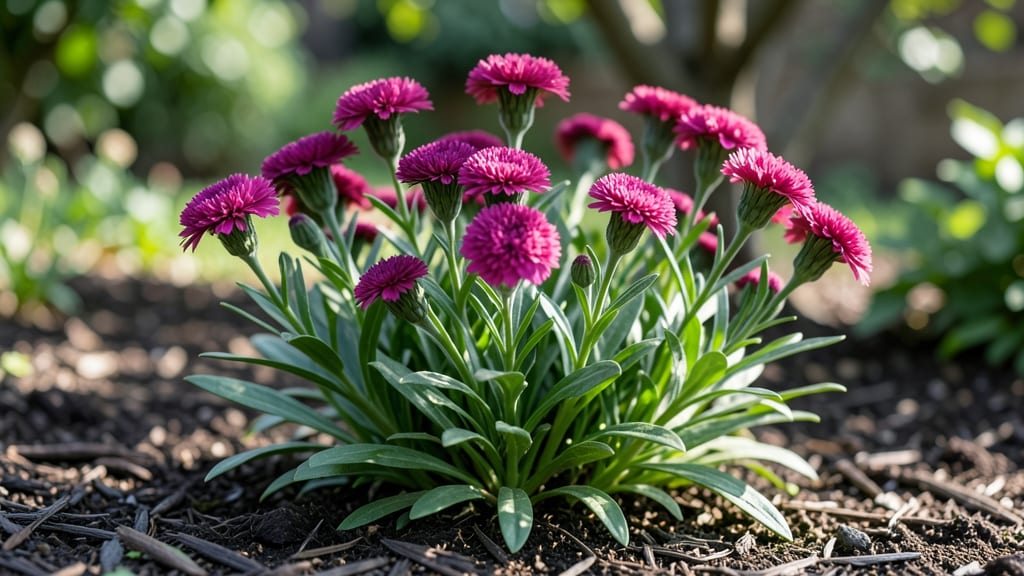
Dianthus don't bloom continuously all summer, but certain varieties like Sweet William and Chinese Pinks produce fresh flowers in spring and fall with proper care, while some types may show sporadic summer blooms. Deadheading and consistent watering help prolong their flowering seasons.
Most dianthus plants follow a natural seasonal bloom cycle, with peak flowering in spring and fall. 🌸 The key to encouraging summer blooms lies in understanding each variety's growth habits—perennials like Sweet William often need a mid-summer pruning to stimulate new growth, while annuals such as Chinese Pinks may respond better to consistent deadheading.
Climate plays a huge role too: cooler summer regions naturally extend blooming periods, while hot, dry conditions can stress plants and reduce flowering. I've found that providing afternoon shade during heatwaves and maintaining slightly alkaline soil (pH 6.0-7.0) makes a noticeable difference in summer performance.
What many gardeners overlook is that dianthus actually reset their blooming cycles after major flowering periods. This means that even if they don't produce continuous summer blooms, they'll often reward you with a second flush of flowers in late summer or early fall.
The secret weapon? Regular deadheading (removing spent blooms) and light fertilization with a balanced 10-10-10 mix every 4-6 weeks. This simple maintenance can turn sporadic summer blooms into a more consistent display.
💡 In This Article
- Dianthus Varieties with Season-Long or Extended Blooming
- Tips to Encourage Summer Dianthus Reblooming
Dianthus varieties with season-long or extended blooming
The blooming patterns of dianthus plants are governed by their natural growth cycles and genetic programming. Most varieties follow a spring-to-fall blooming window, with peak performance in cooler months when temperatures hover between 50-75°F.
This is because dianthus flowers trigger blooming in response to temperature shifts and day length changes—a process called vernalization. Perennial types like Sweet William (Dianthus barbatus) store energy in their roots during winter, then burst into bloom as days lengthen in spring. 🌸
Annual varieties such as Chinese Pinks (Dianthus chinensis) often produce more continuous blooms throughout their single growing season, but even they typically show reduced flowering intensity during the hottest summer months.
The key difference lies in their root systems: perennials can recover and rebound after summer dormancy, while annuals focus all their energy on one growing cycle.
What's fascinating is how light exposure affects this—dianthus grown in partial shade (especially in hot climates) may extend their blooming season by 3-4 weeks compared to full-sun plants.
Climate plays an unexpected role in summer blooming. In cooler maritime climates (like coastal California or England), dianthus often continue blooming through summer because temperatures rarely exceed 80°F. However, in hot inland regions, plants may enter a temporary dormancy during July-August, only to rebound with fall blooms.
This explains why gardeners in Arizona might see completely different results than those in Oregon with the same dianthus variety. 🌡️
Here's a quick comparison of common varieties and their summer blooming tendencies:
- Sweet William: Perennial with spring and fall blooms, sporadic summer flowers if deadheaded regularly
- Chinese Pinks: Annual with continuous blooms if kept well-watered, but may slow in extreme heat
- Cheddar Pinks: Perennial with late spring to early summer peak, then minimal summer blooms
- Firewitch Series: Hybrid with extended summer performance due to heat tolerance
The Firewitch series represents an exciting exception, bred specifically for summer heat tolerance. These hybrids can maintain 50-70% of their peak blooming capacity through summer months by combining traits from both perennial and annual parent plants.
Their secret lies in a modified growth hormone response that keeps flower buds developing even when daytime temperatures reach 90°F. 🔥
What most gardeners don't realize is that dianthus actually self-regulate their blooming based on available resources. When summer stress (like drought or heat) occurs, plants prioritize root and foliage growth over flower production—a survival mechanism that explains why even well-cared-for dianthus may show reduced summer blooms.
This biological response means that pushing for continuous summer blooms often requires more intensive care than many gardeners anticipate.