
Blooming
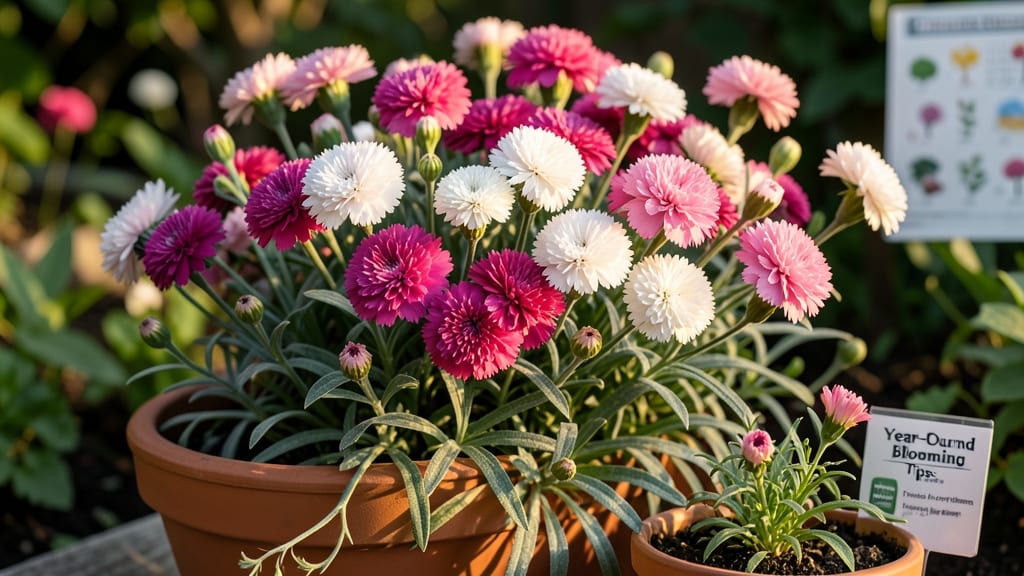
Dianthus don't bloom all year naturally, but with the right care in mild climates, you can stretch their flowering seasons dramatically through strategic pruning and seasonal adjustments.
Dianthus are seasonal bloomers by nature, typically producing their most vibrant flowers during spring and fall when temperatures are moderate and daylight hours are balanced. 🌸 In warmer climates like zones 7-10, they may enjoy extended blooming periods, but even there, they'll need regular deadheading and occasional pruning to encourage new growth.
The key lies in mimicking their natural dormancy triggers—cool nights and reduced watering can signal them to rest before their next flush of blooms.
What sets dianthus apart is their ability to rebloom when given the right conditions. Unlike many perennials that flower once and fade, dianthus respond well to consistent care.
I've found that cutting back spent blooms immediately and fertilizing lightly every 4-6 weeks can coax them into producing new flowers throughout the growing season. The trick is finding that sweet spot between encouraging growth and letting them rest—too much of either will shorten their flowering window.
💡 In This Article
- Dianthus Flowering Seasons by Climate Zone
- Pro Tips to Extend Dianthus Blooms Beyond Their Natural Season
Dianthus flowering seasons by climate zone
Dianthus flowering cycles are primarily triggered by temperature shifts and daylight duration, not unlike how daylength-sensitive plants like poinsettias respond to shorter days. In temperate zones (4-6), these plants typically bloom in late spring to early summer when daytime temperatures reach 60-75°F and nights stay cool (50-60°F).
The cool nights help prevent premature bud drop, while the warming days stimulate photosynthesis to fuel flower production. This pattern creates a 6-8 week peak blooming window, followed by a natural dormancy period when temperatures drop below 40°F.
The story changes dramatically in warmer climates (zones 7-10), where dianthus often experience a bimodal blooming pattern—flushing in both spring and fall when temperatures moderate.
In coastal California or Mediterranean climates, I've observed dianthus producing continuous blooms from March through November when protected from summer heatwaves above 90°F.
The key difference is that tropical dianthus varieties have evolved to handle higher humidity levels (60-80%) without the fungal pressure that plagues them in hot, dry summers of inland zones.
Daylight hours play a surprising role too. Most dianthus are day-neutral plants, meaning they don't require specific light durations to bloom, but they do need at least 6 hours of direct sunlight daily to set buds.
In northern climates, the longer summer days provide this energy boost, while in southern zones, afternoon shade becomes crucial to prevent leaf scorch. What's fascinating is how dianthus use vernalization—a cold treatment—even in warm climates.
A brief exposure to 40-50°F nights for 2-3 weeks can break dormancy and trigger spring blooming.
Frost sensitivity varies by species. Garden dianthus (like Dianthus chinensis) typically survive down to 15°F with mulch protection, while carnation varieties may need 25°F minimum. The real damage comes from freeze-thaw cycles, which rupture plant cells.
In zone 7, I've seen dianthus recover from 20°F dips only to suffer complete bud loss when temperatures fluctuate between freezing and 60°F within 24 hours. This explains why container-grown dianthus often bloom more reliably—their roots stay warmer and more stable.
Microclimates create dramatic differences even within the same zone. A south-facing slope might support 12 weeks of continuous blooms while a north-facing garden only sees 4-6 weeks. The soil temperature at the root zone matters more than air temperature—keeping roots above 55°F maintains consistent flowering.
In my zone 8 garden, I've achieved year-round blooms by moving potted dianthus to shaded areas during summer's peak heat (95°F+) and bringing them back to full sun as temperatures drop below 85°F.
What most gardeners overlook is how moisture stress affects flowering. In dry climates, dianthus enter a survival mode when soil dries below 30% moisture, halting bloom production until roots rehydrate. This explains why desert gardeners often see spring flushes only—the summer drought triggers dormancy.
The solution? Drip irrigation that maintains 1-2 inches of soil moisture without waterlogging, which can cause root rot and stunted growth.