
Blooming
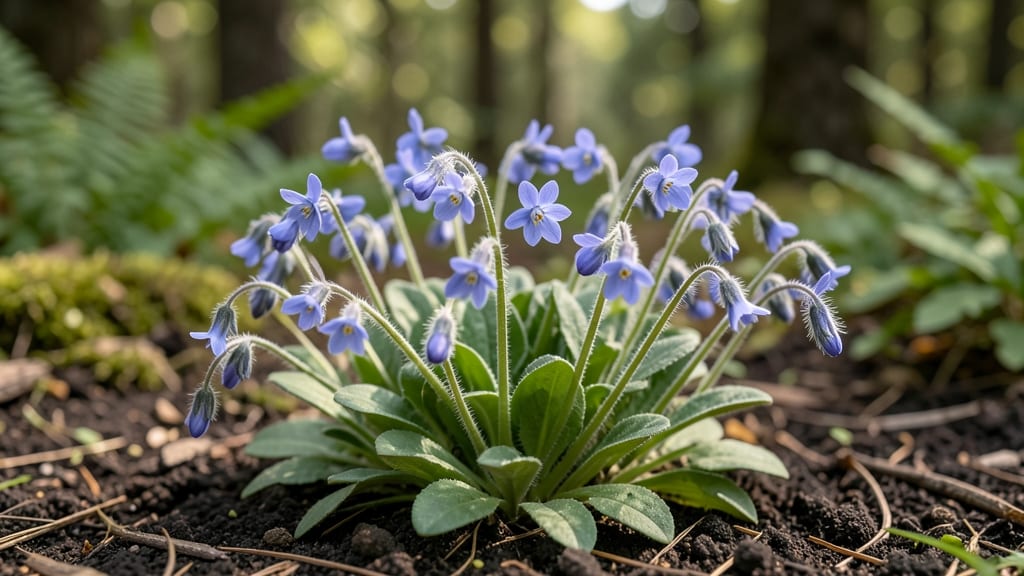
Forget-me-nots do not bloom all summer; they typically flower in spring and early summer, with some varieties reblooming lightly in fall before frost. Cold temperatures and short daylight hours halt blooming until next spring’s warmer conditions return.
Forget-me-nots are cool-season flowers, which means they thrive in temperatures between 50°F and 70°F—anything hotter or colder signals their blooming cycle to pause. 🌸 The plants enter dormancy when nights grow chilly, conserving energy until spring’s warmth returns.
Some varieties may produce a second flush of blooms in early fall, but this is usually brief and depends on your local climate and daylight length.
If you’re hoping to enjoy forget-me-nots longer, focus on deadheading spent blooms regularly to encourage new growth and mulching heavily in winter to protect roots from extreme cold.
Planting cold-hardy varieties like 'Blue Boy' or 'Lily White' can also extend your blooming window slightly, though they’ll never flower continuously through summer’s heat.
💡 In This Article
- Forget-Me-Nots’ Natural Blooming Season and Climate Dependence
- Extending Forget-Me-Nots’ Bloom Time with Gardening Hacks
Forget-me-nots’ natural blooming season and climate dependence
Forget-me-nots (Myosotis spp.) are cool-season annuals and perennials, meaning their blooming cycles are tightly regulated by temperature and daylight. Their primary flowering period occurs when daytime temperatures hover between 55°F and 75°F, with nighttime lows above 45°F.
This range triggers their photoperiodic response—longer daylight hours in spring and early summer signal the plant to produce flowers, while shorter days in late summer and fall suppress blooming. 🌿 The key mechanism here is vernalization, a process where exposure to cold temperatures (typically 35°F to 45°F for 4-6 weeks) primes the plant for flowering in warmer months.
The transition from spring to summer heat is critical. When soil and air temperatures exceed 80°F, forget-me-nots often go dormant to conserve energy, especially in regions with high humidity. This is why they rarely bloom in midsummer—heat stress causes flower buds to abort.
Perennial varieties like Myosotis sylvatica may produce a second, weaker bloom cycle in early fall if temperatures remain mild (above 50°F), but this is short-lived. Annual varieties, such as Myosotis alpestris, typically bloom only once in spring before dying back entirely.
Daylight length plays an equally important role. Forget-me-nots are short-day plants, meaning they flower in response to decreasing daylight hours. In northern latitudes, this explains why they bloom prolifically in May-June (when days are long but cooling) but taper off by July.
In contrast, southern climates may see a delayed spring bloom or even a fall flush if temperatures stay moderate. Frost is the ultimate trigger for dormancy—even a light freeze (32°F) can halt blooming and prompt the plant to focus on root development for the following season.
One common misconception is that forget-me-nots can bloom continuously with proper care. In reality, their genetic programming favors a biennial or short-lived perennial cycle: the first year focuses on leaf and root growth, while the second year (or spring of the second year for perennials) prioritizes flowering.
This is why even well-maintained plants rarely produce flowers beyond 6-8 weeks in a single season. The exception? Hybrid varieties bred for extended bloom times, such as Myosotis 'Blue Ball,' which may linger in bloom for 8-10 weeks under ideal conditions.
Comparing varieties reveals stark differences in reblooming tendencies. Perennial types like 'Blue Boy' often produce a secondary bloom in fall if temperatures dip into the 50s°F range, while annuals like 'Dwarf Blue' are one-and-done.
The trade-off? Perennials require more winter protection (mulch, shelter) to survive and rebloom, whereas annuals offer vibrant color with minimal upkeep. Understanding these distinctions helps gardeners set realistic expectations for their local climate.
For example, in USDA Zone 5 (where winters dip below 0°F), forget-me-nots typically bloom from late May to early July, with a brief fall revival in September if frost is delayed. In milder Zone 8, they may bloom from March to May and again in October-November.
The lesson? Forget-me-nots are seasonal performers, not year-round stars—embracing their natural rhythm ensures the most vibrant displays when they do bloom. 💫