
Blooming
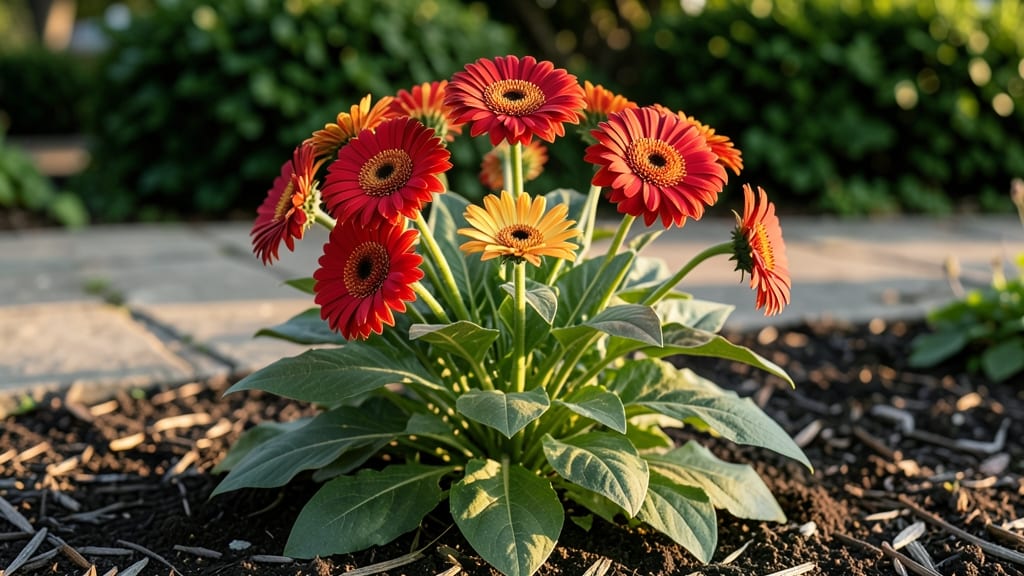
Gerbera daisies bloom all summer in mild climates but struggle in extreme heat or prolonged drought, with most varieties producing continuous flowers from late spring through early fall with proper care.
Gerbera daisies thrive when daytime temperatures stay between 60°F and 75°F, which is why they flourish in spring and fall but often fade in scorching summer heat. 🌞 The key to summer blooms lies in consistent moisture—they need about 1 inch of water per week, and mulching helps retain soil dampness.
Some heat-tolerant varieties like 'Red Damask' or 'Greenlake' can handle brief spikes above 80°F, but prolonged exposure over 90°F will cause buds to drop and leaves to wilt.
What makes gerberas so rewarding is their ability to rebloom if you remove spent flowers regularly. I've found that pruning back leggy stems by one-third encourages bushier growth and more flowers.
For extra protection, provide afternoon shade during peak summer months, especially in regions with high humidity, as this prevents fungal issues that can stunt blooming.
💡 In This Article
- Gerbera Daisy Bloom Cycles and Heat Tolerance Limits
- Extending Gerbera Blooms Through Summer Care
Gerbera daisy bloom cycles and heat tolerance limits
Gerbera daisies follow a natural blooming rhythm tied to daylight length and temperature. In ideal conditions, they produce flowers continuously from late spring through early fall, typically peaking in summer when daylight exceeds 14 hours.
The science behind this involves photoperiodism—the plant's response to light duration—which triggers flowering hormones like florigen. Most varieties need 6-8 hours of direct sunlight daily, but temperatures above 85°F disrupt this process by causing metabolic stress.
Heat stress manifests in several ways: buds may fail to open, leaves turn yellow or crisp at the edges, and roots can suffer from dehydration. The optimal temperature range for flowering is 60-75°F during the day and 50-60°F at night.
When temperatures climb above 90°F for more than a few days, gerberas enter a survival mode, redirecting energy to root protection instead of blooming. This explains why summer blooms often taper off in hot climates unless you take specific precautions.
Not all gerbera varieties react the same to heat. For example, the 'Greenlake' series is bred for better heat tolerance and can handle brief spikes to 85°F, while traditional varieties like 'Red Damask' may struggle above 80°F.
The difference lies in their genetic adaptations—heat-tolerant types have thicker cuticles on leaves to reduce water loss and deeper root systems to access moisture. 🌡️ Understanding these limits helps you select the right variety for your climate.
Humidity plays a hidden role too. In dry climates, gerberas may shut down blooming to conserve water, while high humidity can promote fungal diseases that weaken the plant. The ideal relative humidity for continuous blooming is 40-60%.
In regions with extreme summer conditions, you'll need to combine heat-resistant varieties with proper watering techniques to maintain summer flowers.
What's fascinating is how gerberas respond to temperature fluctuations. A sudden drop below 50°F can shock the plant, while gradual cooling in late summer often triggers a second blooming cycle. This explains why many gardeners see a late-summer revival when daytime highs dip into the 70s°F again.
The key is maintaining consistency—abrupt changes in temperature or light disrupt the delicate balance that keeps gerberas flowering.
For visual gardeners, think of gerbera blooms like a thermometer: they expand in moderate temperatures but close or drop in extremes. The petals themselves contain pigments that are sensitive to heat—bright colors like red and orange may fade under prolonged heat stress, while whites and yellows remain more stable.
This color shift is your first warning that conditions are becoming too harsh for optimal blooming.