
Blooming
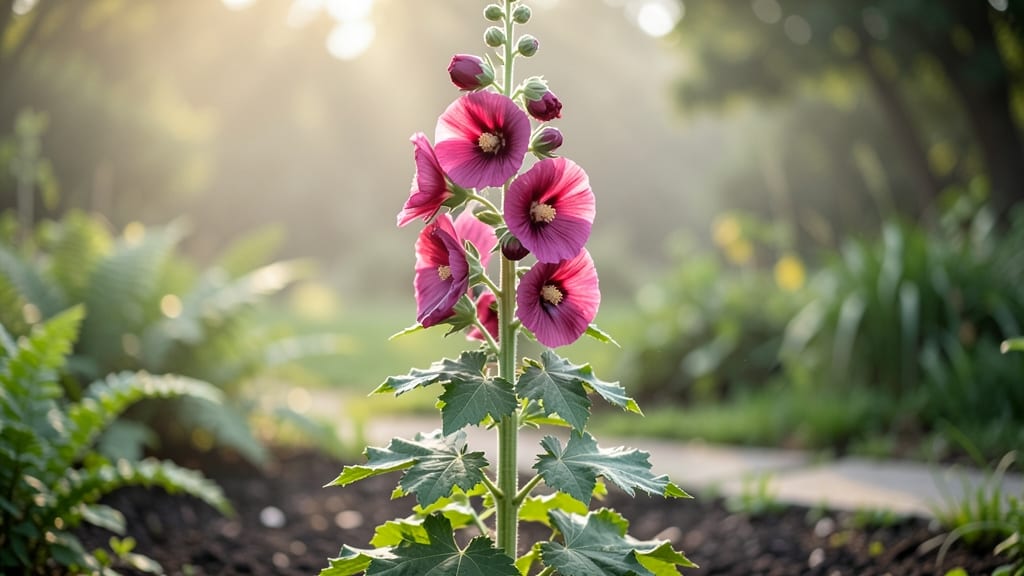
Hollyhocks don't bloom all summer—most varieties produce a single burst of flowers in early summer, though some perennials may show limited reblooming later with proper care. Annual types typically last just 4-6 weeks before fading, while deadheading can coax occasional secondary blooms in select cultivars like 'Black Prince' or 'Peach Blossom'.
Most hollyhocks follow nature's seasonal rhythm, with their blooming triggered by specific daylight changes. 🌸 The early summer flush is their primary show, though perennials like 'Russian Prince' might surprise you with a few late-season blooms if you maintain consistent care.
Annual varieties, unfortunately, treat their bloom period like a one-time performance—once those flowers fade, that's typically it for the season. The key to extending their display lies in understanding each variety's unique needs, from watering schedules to strategic pruning.
What's fascinating is how different cultivars respond: some, like 'Chater’s Double', naturally produce more abundant blooms, while others focus their energy on fewer but larger flowers. This variation means your garden's hollyhock performance depends heavily on what you plant.
I've found that combining early-, mid-, and late-summer bloomers creates a more continuous display, even if no single plant flowers all season long.
💡 In This Article
- Hollyhock Bloom Cycles: Annual vs Perennial Differences
- Extending Hollyhock Blooms: Pruning and Care Tips
Hollyhock bloom cycles: annual vs perennial differences
Hollyhocks follow strict biological clocks tied to daylight hours, which explains their seasonal bloom patterns. Annual varieties like 'Black Knight' or 'Peach Blossom' complete their entire life cycle in one season, triggered by increasing daylight in spring.
These plants allocate all their energy to a single 4-6 week bloom period because they're focused on seed production before dying back. Perennials, however, have evolved to survive multiple seasons, storing energy in their roots and stems for potential reblooming.
The science behind this involves photoperiodism—the plant's response to daylight length. Most hollyhocks need 14-16 hours of daylight to trigger flowering, which occurs naturally in late spring and early summer.
After this peak, daylight hours gradually decrease, signaling the plant to shift energy toward seed production rather than new blooms. 🌿 Perennials like 'Russian Prince' might produce a few late-season flowers because they've stored enough energy to attempt a secondary bloom cycle, but this is never as robust as the initial flush.
Temperature also plays a crucial role. Hollyhocks thrive in 60-75°F ranges, with cooler nights actually stimulating flower production. When summer heat exceeds 85°F for prolonged periods, many varieties simply shut down flowering to conserve water and energy.
This explains why you'll often see hollyhocks bloom most vigorously in cooler coastal climates compared to hot inland areas.
Variety selection makes all the difference in your garden's performance. Early bloomers like 'Lady Alice' typically flower in late May to June, while mid-season types such as 'Chater’s Double' peak in June-July.
Late summer cultivars like 'Persian Night' might produce a few blooms in August-September if conditions are ideal. The key difference between these groups isn't just timing but their genetic ability to respond to secondary environmental cues.
What most gardeners don't realize is that hollyhocks actually belong to the mallow family, which has evolved to prioritize seed production over extended flowering. This biological focus explains why even with perfect care, you'll rarely see continuous blooming.
The trade-off is that when they do flower, the results are dramatic—each bloom can last 7-10 days on the plant, providing long-lasting color despite the limited bloom window.
For those wanting summer-long color, combining 3-5 different varieties with staggered bloom times creates the illusion of continuous flowering. I've found that planting early bloomers in full sun, mid-season types in partial shade, and late varieties near water sources extends the visual impact significantly.
The secret lies in understanding each plant's natural rhythm rather than trying to force them against their biological programming.