
Blooming
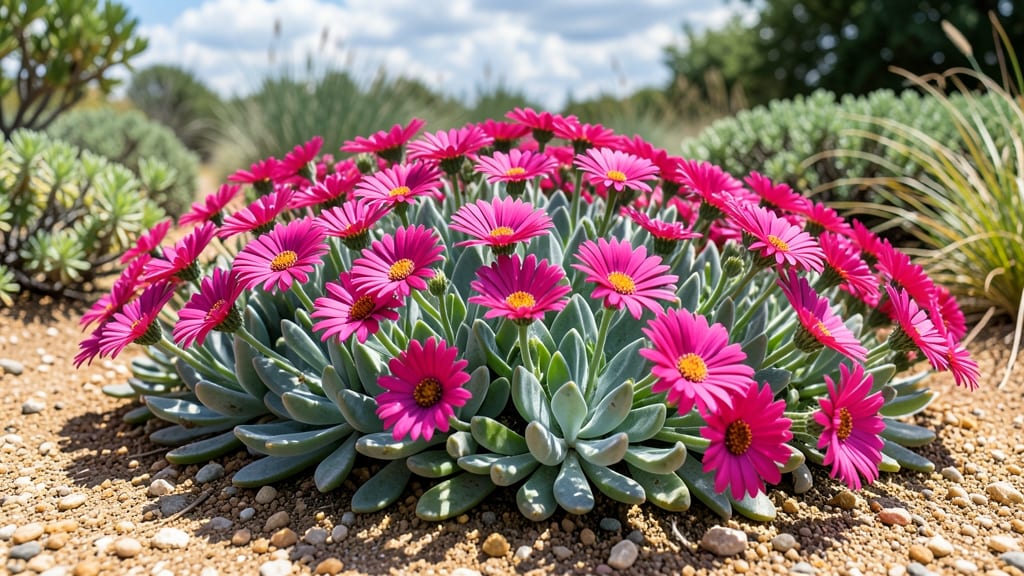
Ice plants can bloom all summer long when given the right conditions—specifically, consistent temperatures between 65°F and 85°F and at least 6-8 hours of direct sunlight daily. Varieties like Delosperma and Lampranthus thrive under these conditions, producing continuous vibrant blooms from early summer through fall. However, they may slow down or stop flowering during extreme heat or high humidity without proper care.
Ice plants are famous for their long-lasting blooms, but their flowering seasons depend heavily on environmental factors. 🌡️ While they're drought-tolerant, consistent moisture (especially during heatwaves) helps maintain vibrant blooms.
The key is balancing sunlight exposure—too much intense heat can stress the plants, while partial shade during peak afternoon sun can actually prolong flowering.
I've found that varieties like Lampranthus often bloom more prolifically in coastal climates where temperatures stay moderate, while Delosperma varieties handle inland heat better with proper watering adjustments.
What many gardeners don't realize is that ice plants have built-in survival mechanisms. When temperatures rise above 90°F or humidity spikes, they'll temporarily pause blooming to conserve energy. This isn't permanent damage—once conditions improve, they'll often rebound with even more vigorous flowering.
The trick is to monitor your plants closely during summer's peak and adjust care accordingly.
💡 In This Article
- Heat and Light Requirements for Year-Round Ice Plant Blooms
- Pruning and Care Tips to Extend Ice Plant Flowering Seasons
Heat and light requirements for year-round ice plant blooms
Ice plants trigger their blooming cycles through a fascinating biological process called photoperiodism, where they respond to specific light and temperature cues. The optimal range for continuous flowering is between 65°F and 85°F, where metabolic processes like photosynthesis and nutrient transport peak.
Below 60°F, growth slows dramatically, while above 90°F, the plants enter a form of heat stress that halts blooming to conserve energy. This is why coastal regions often see more consistent blooms—the ocean breeze helps moderate temperatures naturally.
The role of sunlight is equally critical. Ice plants require 6-8 hours of direct sunlight daily to produce the energy needed for flowering. Varieties like Delosperma thrive with full sun exposure, while Lampranthus can tolerate slightly more shade (about 4-6 hours of direct light) in hotter inland climates.
What's surprising is how the intensity of sunlight matters: bright, diffuse light (like morning sun) promotes healthier growth, while intense midday rays can scorch delicate petals. The secret is to plant them where they get morning sun and afternoon shade during peak summer months.
Drought stress plays a counterintuitive role in blooming. While ice plants are famously drought-tolerant, a moderate watering schedule (about 1 inch of water every 2-3 weeks) during heatwaves actually encourages more prolific flowering.
This is because slight water stress triggers the plant to produce more flowers as a survival mechanism. However, overwatering in hot climates can lead to root rot and stunted blooms.
The key is to let the soil dry out completely between waterings—ice plants store water in their thick leaves, so they rarely need frequent irrigation.
Different varieties respond uniquely to these conditions. Carpobrotus (Hottentot fig) varieties, for example, often bloom more aggressively in coastal environments where humidity is lower, while Delosperma species handle the dry heat of desert landscapes better.
The color of the flowers also provides clues: deeper reds and purples typically indicate varieties adapted to hotter, drier climates, while softer pinks and whites suggest those that prefer slightly cooler, more humid conditions.
This adaptation explains why some ice plants bloom year-round in Southern California but may need a winter rest in colder northern climates.
What most gardeners overlook is how soil temperature affects blooming. Ice plants prefer well-draining soil that stays between 60°F and 80°F at root level. In hot climates, mulching with 1-2 inches of gravel or coarse sand helps reflect excess heat away from the roots while retaining moisture.
This simple adjustment can make the difference between a plant that blooms sporadically and one that produces continuous flowers from spring through fall. The science behind this is that cooler root zones encourage the plant to focus energy on flowering rather than stress responses.
For those in regions with extreme summer heat, a strategic approach works best: provide afternoon shade during the hottest months (July-August) and gradually reintroduce full sun as temperatures drop. This mimics the natural seasonal shifts ice plants experience in their native habitats.
The result? A plant that blooms prolifically when conditions are ideal and gracefully pauses when they're not—without permanent damage. 🌿