
Blooming
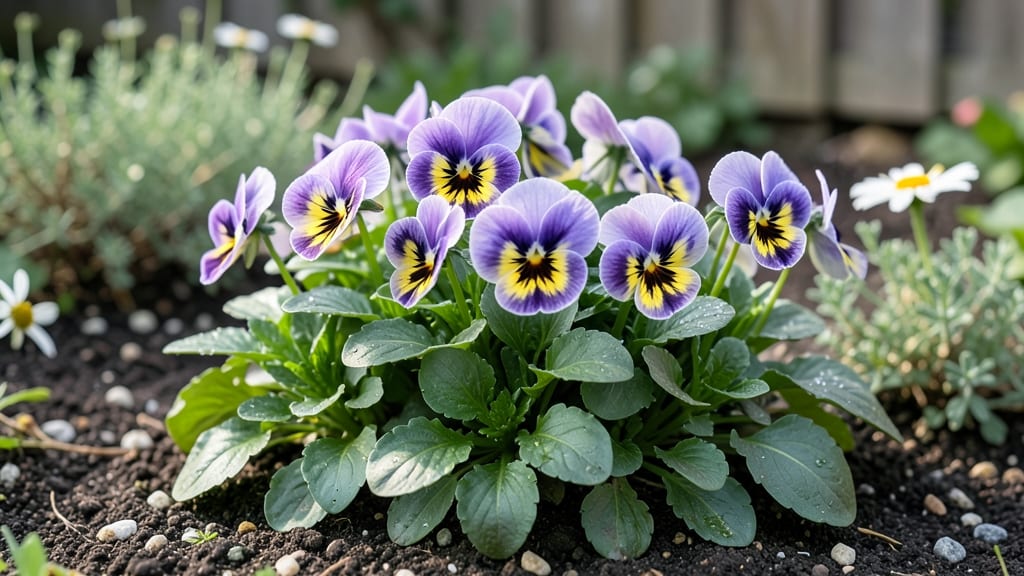
Pansies bloom all summer only in cooler climates—they prefer spring and fall temperatures and typically fade by mid-summer unless given shade and consistent moisture. Heat stress forces them to stop flowering and sometimes die back entirely.
Pansies are cool-season flowers at heart, which is why they shine brightest when temperatures hover between 50°F and 70°F.
When summer heat hits 80°F or higher, they often go dormant to conserve energy, a survival tactic that can look like poor care. 🌸 Some gardeners extend their blooming season by planting varieties like 'Majestic Giant' in partial shade or using mulch to keep roots cool—this can buy you an extra month or two of color in late summer or early fall.
What many don't realize is that pansies actually rebloom in autumn when temperatures drop again. This two-season performance makes them one of the most reliable annuals for gardeners in temperate zones. The key is choosing the right varieties and providing afternoon shade during peak summer heat.
💡 In This Article
- Pansy Bloom Cycles: Why They Fade in Summer Heat
- Best Pansy Varieties for Extended Summer Blooms
Pansy bloom cycles: why they fade in summer heat
Pansies are genetically programmed to follow a vernalization cycle, meaning their flowering is triggered by cooler temperatures after a period of dormancy. During spring and fall, when daytime highs stay between 55°F and 75°F, they produce hormones like florigen that signal blooming.
When summer temperatures climb above 80°F, their metabolic processes shift into survival mode—photosynthesis slows, and energy is redirected to root development rather than flower production. This is why you'll often see pansies stop blooming in July, even if they look healthy.
The stress response becomes even more pronounced when combined with heat stress and water loss. Pansies have shallow root systems that can't absorb enough moisture during dry spells, causing their leaves to wilt and flowers to drop.
Their natural defense is to enter a semi-dormant state, where they conserve water by reducing transpiration through smaller leaves. Some varieties may even bolt—sending up tall, seed-producing stems—when exposed to prolonged heat, which is their last-ditch effort to reproduce before dying back.
Day length also plays a crucial role. Pansies are day-neutral plants, meaning they flower regardless of light duration, but extreme heat disrupts their internal circadian rhythms. When nights stay above 70°F, their ability to reset and prepare for the next day's growth is compromised.
This is why pansies often struggle in regions with hot, humid summers—they're not just fighting the heat but also the lack of thermal relief at night. In contrast, cooler climates with moderate summer days (like the Pacific Northwest) allow pansies to bloom nearly year-round.
What most gardeners overlook is the thermo-sensitive flowering mechanism in pansies. Their flowers contain pigments that are sensitive to temperature fluctuations, and when heat exceeds 85°F, these pigments degrade faster, causing blooms to fade within days.
This is why even well-watered pansies in full sun may look vibrant one morning and wilted by afternoon. The solution lies in mimicking their natural habitat—cool, moist conditions with partial shade during peak heat hours.
Consider this comparison: In Zone 5 (where winters drop below -20°F), pansies often bloom from April through June, then rebound in September-October. But in Zone 9 (mild winters), they may flower continuously from October through March before needing a break.
The key difference is the thermal amplitude—the range between day and night temperatures. Pansies thrive when this range stays within 15-20°F; wider swings trigger stress responses.
For those hoping to extend summer blooms, the secret is microclimate control. Planting pansies under 30-50% shade cloth can reduce leaf temperatures by 10-15°F, while mulching with 2-3 inches of straw keeps roots 5-10°F cooler than ambient air.
These small adjustments can transform a heat-stressed plant into one that continues flowering well into August.